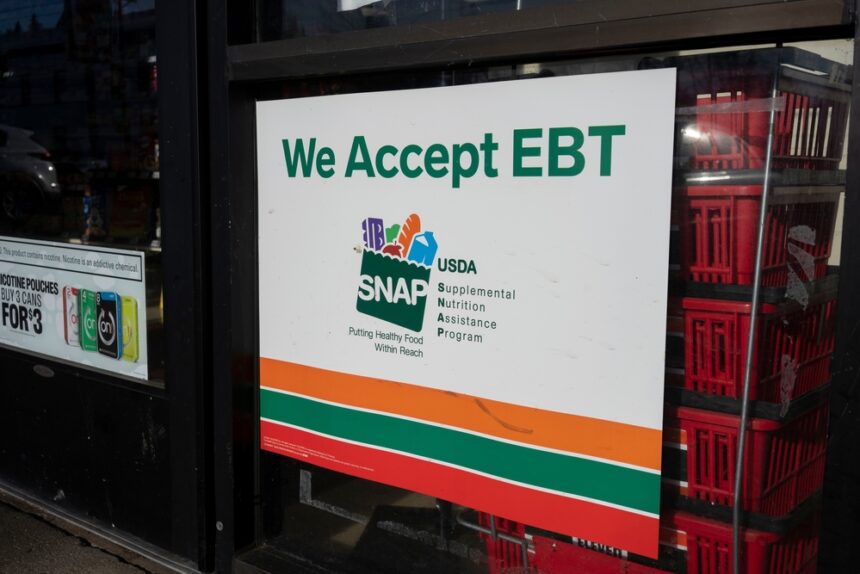
States are racing to reduce food stamp payment errors before new federal financial penalties take effect in October 2027, with reforms already triggering a significant drop in program enrollment and four states reportedly considering leaving the program entirely.
The Supplemental Nutrition Assistance Program, known as SNAP, had an overall payment error rate of 10.6 percent in 2025, meaning nearly one in nine benefit payments went to an ineligible recipient or was paid in an incorrect amount. Total SNAP erroneous payments exceeded $10 billion that year, with more than 87 percent from overpayments.
Under rules included in the One Big Beautiful Bill Act passed in July 2025, states with error rates of 6 percent or higher beginning in October 2027 will cover 5, 10, or 15 percent of SNAP benefit costs, depending on the rate. Forty-one states and the District of Columbia exceeded the 6 percent threshold in the 2025 fiscal year. Nine states fell below it, including Idaho, Iowa, Kentucky, Nebraska, South Dakota, Utah, Vermont, Wisconsin and Wyoming.
The financial stakes
California, New York and Florida collectively face potential cost-sharing obligations exceeding $1 billion if they fail to reduce their error rates. Texas would owe approximately $750 million. Nearly half of all states are looking at penalties exceeding $100 million each.
Agriculture Secretary Brooke Rollins attributed a 12 percent decline in SNAP enrollment since the bill’s passage, representing more than 5 million fewer recipients, to a crackdown on fraud and ineligible recipients. Total enrollment stands at approximately 37 million as of April.
A provision known as the Alaska Carveout gives states with rates of 13.34 percent or higher a two-year delay before cost-sharing requirements apply. Six states and the District of Columbia currently qualify, including Alaska, New Mexico, Delaware, Georgia, Illinois and Oregon. Critics argue the provision could reward the worst-performing states by reducing their incentive to correct problems quickly.
Why error rates are so high
Payment problems can originate with state agencies or with recipients. State agencies make mistakes in verifying citizenship, employment status, income, identity, residency and household size. Recipients may fail to report income changes or new household members.
The Government Accountability Office found that state agencies made improper payments primarily because eligibility was not verified before benefits were distributed. Prior analyses found that states hired outside consultants to address individual cases rather than fixing root causes.
Researchers at the Center on Budget and Policy Priorities have characterized most payment problems as honest mistakes rather than intentional fraud, while the Agriculture Department has maintained that even unintentional mistakes reflect inadequate state accountability.
What states are doing
A July 2025 survey of 39 states by the American Public Human Services Association found SNAP agencies actively working to reduce error rates through workforce training, root-cause analysis and technology upgrades. Louisiana is offering staff bonuses for maintaining low error rates and is automating income verification. Mississippi is updating a 35-year-old eligibility system. Minnesota is investing to modernize decades-old administrative technology. Virginia has ended self-attestation of eligibility, requiring SNAP applicants to document rather than self-report expenses and income.
Four states have indicated they may drop out of the SNAP program entirely as a result of the cost-sharing provisions, according to the survey, though the report did not identify which states are considering that step.
States also reported that increased accuracy requirements have slowed payments and delayed updated EBT card technology.