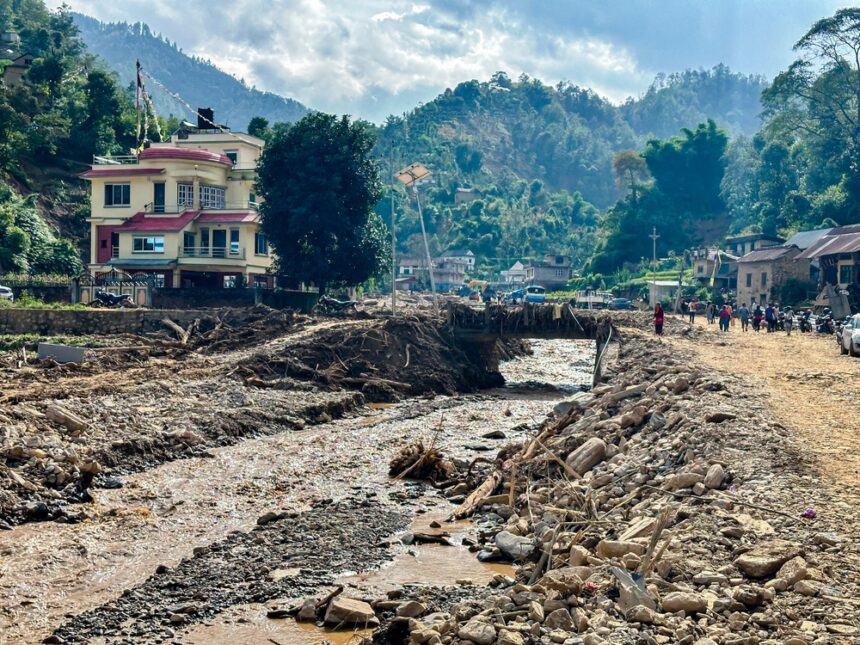
A catastrophic flood struck the Nepal-Tibet border region on Wednesday after what appeared to be a wall of mud and rock collapsed into a river along the Himalayan frontier, killing at least nine people and leaving hundreds of tourists missing in a disaster still unfolding as of Wednesday evening.
Verified videos showed dozens of people being swept away at the border crossing. Officials on both sides said they feared far higher casualties. Tibetan authorities in the county of Gyirong reported their own missing persons after a mudslide hit a land crossing on the Chinese side.
Nepal’s foreign minister Shisir Khanal told parliament on Wednesday that initial reports suggested an earthquake in the area may have triggered an avalanche that caused the flooding. Local media reported his account, though the disaster’s cause and full scope remained under investigation.
At least 384 travelers were reported missing, according to Nepal’s tourism authority. Among them were 105 Indian nationals, 93 Nepali citizens, three Americans and 12 British nationals. South Korean news agency Yonhap separately reported that approximately eight of its nationals were also unaccounted for in Nepal.
The destruction on the Nepali side
Houses, roads and power generation infrastructure were swept away in the floodwaters. The scale of the physical destruction was significant, compounding the human toll and complicating rescue operations in an area that is remote and difficult to access.
The border region is mountainous terrain at extreme elevation. Access routes in the area are limited, and the combination of flooding, mudslides and infrastructure damage makes reaching affected areas by road extremely difficult. Helicopter operations are typically the primary means of reaching isolated communities in the Himalayan border zone, and those are dependent on weather conditions.
The scale of the missing
The 384 missing figure, if it holds or grows, it would rank among the more significant flood-related missing persons events in the Himalayas in recent years. The region is a destination for trekkers and mountaineers traveling between Nepal and Tibet, and the Gyirong border crossing is one of the primary legal crossing points between the two sides.
The multinational list of missing persons indicates the disaster struck during a period of significant tourism activity in the region.
Search and rescue operations
Authorities on both sides of the border were mobilizing in response to the disaster as of Wednesday. The flood was still considered to be unfolding, meaning the death toll and missing persons count were expected to change as information came in from remote areas.
The country has experienced severe flooding events along its Himalayan borders before, and its disaster response systems have been built for such events. The presence of international citizens among the missing is expected to trigger diplomatic engagement from their home governments.
No official coordination announcement between the two countries had been made public as of Wednesday evening.
The disaster continues to develop. Confirmed death and missing persons figures are expected to change significantly as rescue operations reach affected areas.