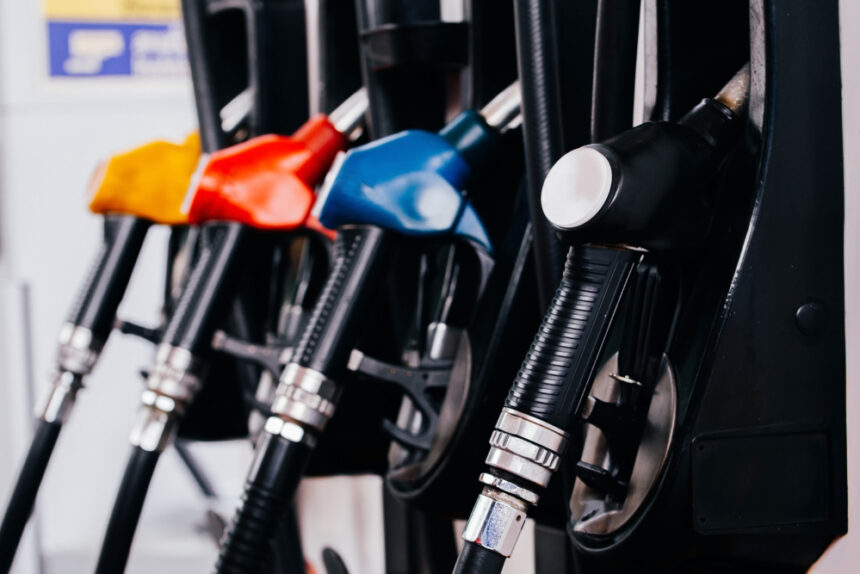
Gasoline prices crossed a threshold that tends to capture national attention on Monday, with the average cost of regular gasoline rising above $4 a gallon for the first time in weeks as military conflict between the United States and Iran continues to disrupt oil shipments through one of the world’s most critical energy chokepoints.
The nationwide average reached $4.003 a gallon, according to the American Automobile Association, after sitting just below that level on Sunday. It was the first time the national average had cleared $4 since June 17, when it briefly touched approximately $4.02 before retreating.
The jump was directly tied to volatility in global crude markets. Escalating fighting has further curtailed tanker traffic through the Strait of Hormuz, the narrow waterway connecting the Persian Gulf to the Gulf of Oman through which a significant share of the world’s oil supply flows. When movement through that corridor is disrupted, energy markets react quickly, and gasoline prices at the pump respond within days.
Oil benchmarks extended a historic weekly run
The momentum behind the price surge began building last week. Brent crude, the international benchmark, rose 15.9 percent over the course of the week, its largest single-week advance since April. The U.S. benchmark, West Texas Intermediate, gained 15.5 percent, the biggest weekly increase since early March. Both figures reflect how dramatically the conflict has reshaped expectations for near-term oil supply.
By early Monday morning, both benchmarks had pulled back slightly from intraday highs. Brent crude was trading near $87.94 a barrel after hitting $91.42, its highest level since June 11. West Texas Intermediate had settled near $81.81 a barrel after peaking at $85.39, a level not reached since June 12. The modest declines suggested some traders were taking profits after the prior week’s sharp run-up, but the underlying supply concern had not changed.
The Strait of Hormuz and why it matters
The Strait of Hormuz functions as the main artery through which Persian Gulf oil producers move their crude to global markets. Roughly a fifth of the world’s total oil supply passes through the strait on a daily basis, making it one of the most strategically significant geographic points on the planet. Any meaningful disruption to traffic through the waterway does not have to be total to move prices. The threat alone, combined with demonstrated interference in tanker movements, is enough to shift market sentiment.
The conflict between the United States and Iran has placed the strait at the center of a geopolitical standoff with direct economic consequences for American consumers. Iran has historically threatened to close or disrupt the strait in response to Western military or economic pressure, and any escalation that makes tanker operators and insurers more cautious about transiting the area reduces effective supply even when physical blockades are not in place.
What drivers can expect
At $4 a gallon nationally, gasoline has crossed into territory that historically triggers political attention and consumer behavioral changes. Drivers begin to notice the difference in their household budgets, and some shift patterns around discretionary travel. The threshold also puts pressure on policymakers to respond, whether through releases from strategic reserves or diplomatic efforts to stabilize the region.
Whether gasoline prices continue rising depends largely on how the military situation in and around the Strait of Hormuz develops. If fighting escalates further and additional tankers divert or delay their routes, crude benchmarks could push higher, pushing gasoline prices with them. If a ceasefire or diplomatic pause reduces the perceived risk, some of the recent gains in gasoline prices and crude benchmarks could unwind relatively quickly.
For now, the gasoline pump is reflecting a conflict thousands of miles away, and the cost of that instability shows up in the gasoline price every time a driver pulls in to fill a tank.