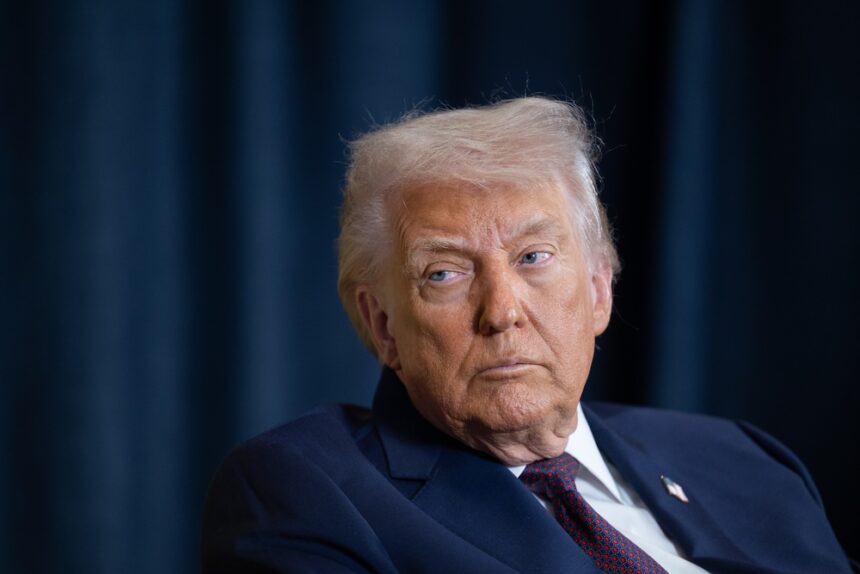
President Trump fired two of the three remaining members of the Election Assistance Commission and the third resigned, leaving the federal body that assists states with election administration without any commissioners, the White House confirmed on July 10.
The White House cited a Supreme Court decision issued June 29, which upheld the president’s authority to remove officials at independent federal agencies, as the legal basis for the terminations. The ruling had affirmed Trump’s earlier firing of a Federal Trade Commission commissioner, and the White House indicated it views that precedent as extending to officials at other independent bodies including the EAC.
Who was removed and who resigned
Trump fired EAC Chairman Thomas Hicks, a Democrat who had been appointed to the commission by former President Barack Obama, and Commissioner Benjamin Hovland, a Democrat who had been appointed to the commission during Trump’s own first term. Commissioner Christy McCormick, a Republican who was also an Obama appointee, subsequently resigned, according to the White House.
The White House framed the removals as an exercise of presidential authority over officials who may not be sufficiently aligned with the administration’s election security priorities. The statement referenced the Supreme Court ruling directly, using it to establish that the president retains broad removal authority over appointed officials even at bodies traditionally considered independent of direct executive control.
What the EAC is and why its composition matters
The Election Assistance Commission is a federal agency created to assist states and localities in administering federal elections, establishing voluntary voting system guidelines, and distributing federal funds for election administration improvements. Under federal law, the commission is structured to have four commissioners, no more than two of whom can belong to the same political party, with nominations made by the president in consultation with congressional leadership from both parties.
The bipartisan design was deliberate, reflecting the politically sensitive nature of election oversight and the intent to insulate the body from partisan control by any single party or administration. With all three remaining commissioners now gone, the EAC has no functioning leadership and cannot conduct its ordinary business until new commissioners are nominated and confirmed.
The commission had already been operating with fewer members than its full statutory complement of four, and the removal of the remaining three in a single action leaves the body entirely without leadership at a moment when election preparation for future federal cycles would normally be underway.
The legal framework behind the firings
The Supreme Court’s June 29 ruling in a case involving a fired FTC commissioner established that the president’s removal authority extends to officials at independent agencies who had previously been considered protected from at-will dismissal. That ruling reversed decades of precedent that had allowed Congress to limit the president’s ability to fire members of certain commissions and boards by requiring cause for removal.
The White House’s invocation of that ruling as the basis for the EAC terminations signals that the administration views it as broadly applicable to a range of federal bodies whose members previously operated with some degree of removal protection. Whether the ruling legally extends to EAC commissioners specifically may be a question that produces further legal challenge, though no formal challenge had been filed at the time of reporting.
The EAC’s current status, with no commissioners in place, will affect its ability to fulfill statutory obligations to state and local election administrators in the period ahead.