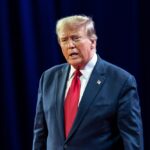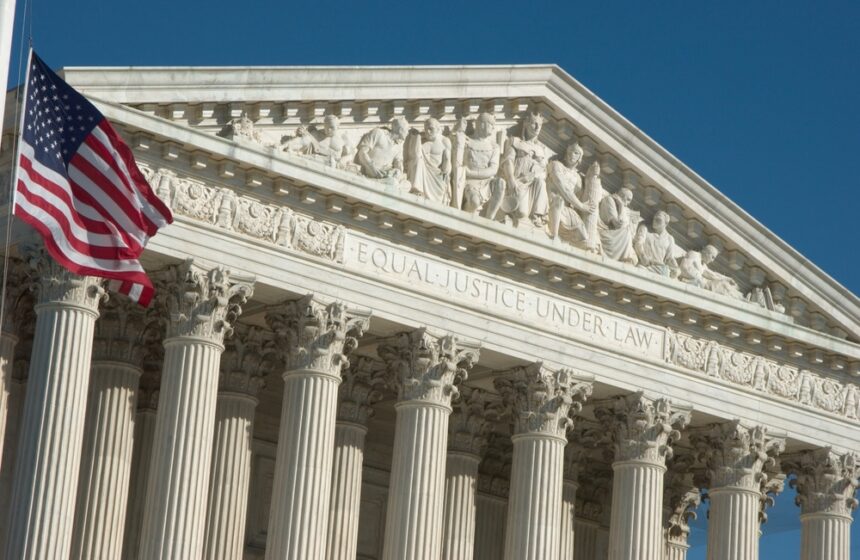
The United States Supreme Court ruled on June 30 that President Trump’s executive order excluding children of illegal immigrants and certain temporary legal visitors from automatic birthright citizenship is unconstitutional, delivering a significant defeat to one of the administration’s most consequential immigration policy efforts.
Chief Justice John Roberts wrote the majority opinion in the case, affirming that a child born on American soil and subject to American law becomes an American citizen under the Constitution. The ruling represents a definitive judicial interpretation of the citizenship clause that has governed American birthright citizenship for more than a century and a half.
What the executive order attempted to do
Trump’s Executive Order 14160 sought to reinterpret the scope of the 14th Amendment’s citizenship clause, which states that all persons born or naturalized in the United States and subject to its jurisdiction are citizens of the United States and of the state where they reside. The order attempted to exclude children born to parents who were in the country illegally or on certain temporary legal visas from automatic citizenship, arguing that such children were not fully subject to American jurisdiction in the manner the amendment requires.
That interpretation represented a significant departure from how the citizenship clause has been understood and applied since its ratification following the Civil War, when it was designed in part to guarantee citizenship to children born in the United States regardless of their parents’ status or origin.
How the justices ruled
The court’s decision was not unanimous. Justices Clarence Thomas, Neil Gorsuch, and Samuel Alito dissented from the majority opinion, signaling continued disagreement among some members of the court about the proper interpretation of the jurisdictional language in the citizenship clause. Justice Brett Kavanaugh concurred in part and dissented in part, suggesting a more nuanced position that agreed with portions of the majority’s reasoning while diverging on others.
The division among the justices reflects a long-running legal debate about the precise meaning of the phrase subject to the jurisdiction thereof, language that has been the subject of legal scholarship and occasional litigation for decades but had not previously been tested at this level against a direct executive challenge to its application.
What the ruling means going forward
The decision affirms the longstanding practice under which children born in the United States receive automatic citizenship regardless of their parents’ immigration status, a principle that has shaped American demographic and legal policy since the late 19th century. The ruling effectively closes off, at least for now, the administration’s attempt to use executive action to narrow that principle without congressional action or a constitutional amendment.
The case, formally known as Trump v. Barbara, will likely be referenced as a defining precedent on the scope of executive authority over constitutional interpretation in matters of citizenship. The ruling underscores the judiciary’s role as the final arbiter of constitutional meaning even when the executive branch attempts to advance a competing interpretation through its own administrative action.
The administration has not yet indicated what its next steps will be following the ruling, though the decision likely forecloses similar executive efforts to redefine birthright citizenship eligibility absent a change in the composition of the court or a future case presenting different legal questions. For now, the citizenship clause’s traditional application remains intact, ensuring that children born on American soil continue to receive the constitutional guarantee of citizenship regardless of their parents’ immigration status.