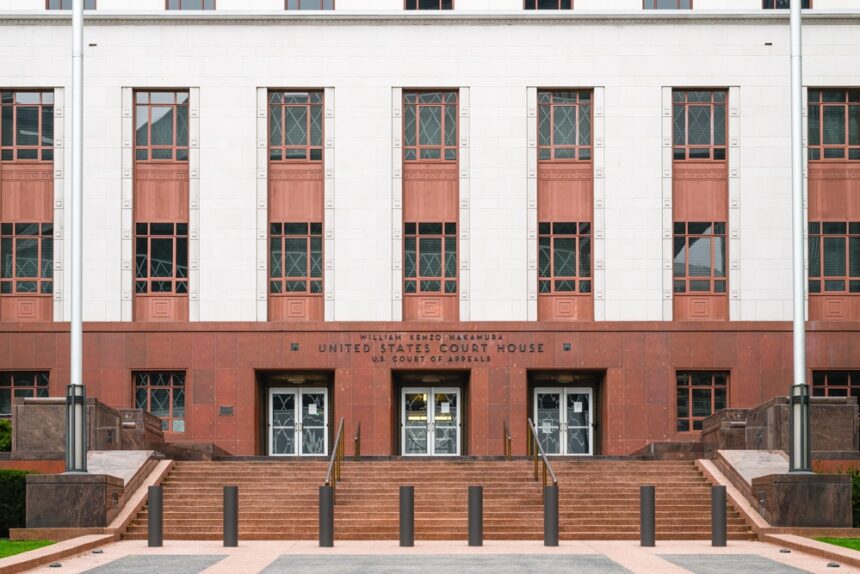
A unanimous panel of the United States Court of Appeals for the Ninth Circuit ruled on June 17 that President Trump has the legal authority to exclude certain federal agencies from collective bargaining protections, delivering a significant victory for the administration in its effort to curtail union rights among portions of the federal workforce.
The ruling affirmed that existing federal law grants the president authority to remove agencies or subdivisions from union protections when those entities are primarily engaged in intelligence, counterintelligence, investigative, or national security work, and when applying standard union protections to them cannot be done consistently with national security requirements. The decision was unanimous among the three-judge panel.
The executive order and what it covered
Trump signed an executive order in March 2025 invoking that statutory authority to exclude multiple federal agencies from collective bargaining, including the Department of Justice, along with certain subdivisions of other agencies. The order cited the national security provisions in federal labor law as the basis for the exclusions, framing the move as a necessary step to ensure that agencies conducting sensitive national security work could operate without the constraints that collective bargaining agreements can impose.
The breadth of the order attracted immediate legal challenge. The American Federation of Labor and Congress of Industrial Organizations, one of the largest labor federations in the country, filed suit alleging that the order was motivated not by legitimate national security concerns but by the administration’s hostility toward unions and was designed to punish organized labor for exercising constitutionally protected speech.
The lower court and the injunction that followed
A federal district judge sided with the unions at the preliminary stage, issuing an injunction that blocked enforcement of the order. The judge concluded that the unions were likely to succeed on their claim, pointing to evidence of the administration’s antagonistic posture toward organized labor and finding that the order had a chilling effect on union members’ free speech rights by creating uncertainty about whether their advocacy could result in further retaliatory action.
That ruling created a temporary barrier to the executive order’s implementation, but the Ninth Circuit moved later in 2025 to pause the injunction while the appeal proceeded. In issuing that stay, the appeals court signaled skepticism about the lower court’s reasoning, noting that the administration would likely have issued the same order regardless of any inflammatory rhetoric contained in official communications about it.
What the ruling means going forward
The June 17 decision removes the legal obstacle that had been blocking the order’s full enforcement and affirms that the president’s use of the national security exception was within the bounds of what the law authorizes. It does not address whether every specific exclusion in the order was warranted, and legal challenges to individual agency designations may continue through the courts.
For organized labor, the ruling represents a meaningful setback in an already difficult period for federal employee unions. The administration’s approach to the federal workforce has included not only the union exclusion order but a range of other measures affecting the size, composition, and working conditions of the government workforce. The Ninth Circuit’s validation of the national security rationale provides a legal foundation the administration can point to as it continues those efforts, and makes future challenges to similarly structured executive actions more difficult to sustain.