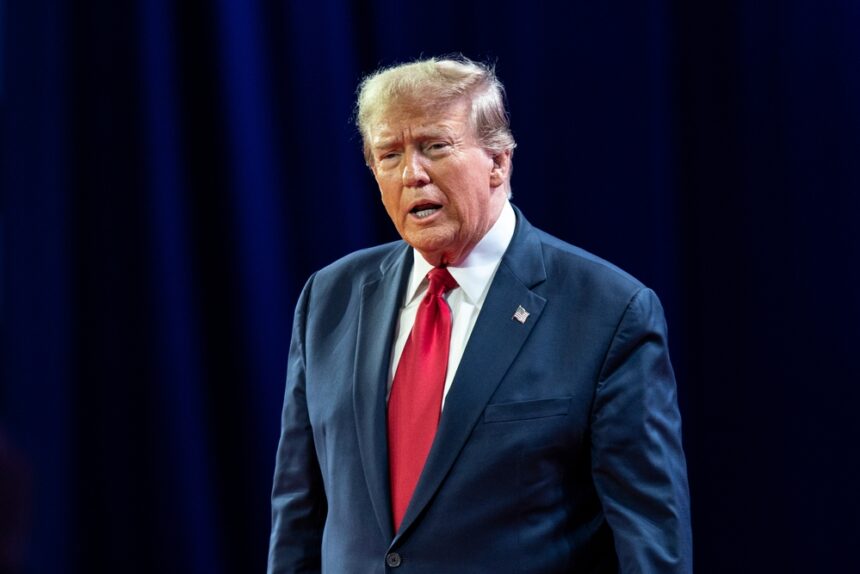
President Trump announced late Wednesday that he had cancelled planned military strikes against Iran after negotiations reached what he described as the highest levels of Iranian leadership and appeared to produce a breakthrough agreement supported by more than a dozen nations.
The announcement marked a sudden and dramatic shift in a confrontation that had been escalating sharply over the previous 48 hours, during which Trump had promised relentless military strikes following Iran’s downing of a United States Army Apache helicopter near the Strait of Hormuz. The de-escalation came without warning and suggested that back-channel diplomacy had been advancing even as the public rhetoric pointed toward widening conflict.
A deal backed by a sweeping coalition
The framework described by Trump in his announcement goes well beyond a bilateral arrangement between Washington and Tehran. The agreement as outlined carries the backing of Israel, Saudi Arabia, the United Arab Emirates, Qatar, Turkey, Pakistan, Bahrain, Kuwait, Jordan, Egypt, and additional parties. The breadth of that coalition is striking, bringing together nations with historically competing interests and sharply different relationships with Iran under a single diplomatic outcome.
Trump indicated that discussions had been approved in both broad concept and specific detail by all parties involved, suggesting the agreement is not a preliminary understanding but something considerably more advanced. A formal signing ceremony was described as imminent, with the time and location to be announced shortly.
The blockade stays in place
Despite the cancellation of the strikes, Trump made clear that the naval blockade of Iranian ports would remain fully operational until the transaction, as he termed it, is formally completed and signed. That condition preserves American leverage in the final hours before any agreement is sealed and signals that the administration views the deal as real but not yet irreversible.
The blockade has been one of the most consequential elements of the standoff, cutting off Iranian oil exports and applying sustained economic pressure on Tehran. Keeping it in place until signatures are on paper reflects a negotiating posture that trusts process over promises and is unwilling to give up its strongest card before the outcome is locked in.
A rapid reversal with enormous implications
The speed of this reversal is remarkable. Less than two days ago, Trump was publicly vowing repeated and forceful military strikes against Iran, expressing frustration that nuclear negotiations had stalled and accusing Iranian negotiators of deliberately running out the clock. That language gave way almost overnight to an announcement of a deal supported by virtually every major power in the Middle East.
If the agreement holds and the signing takes place as described, it would represent one of the most significant diplomatic outcomes in the region in decades. A deal that permanently blocks Iran from acquiring nuclear weapons, backed by a coalition spanning the Gulf states, Israel, and major regional players, would reshape the security landscape of the Middle East in ways that previous administrations spent years attempting without success to achieve.
The naval blockade remains the last piece of leverage on the table. When it lifts, the nature of that achievement will become fully clear.