

A Wisconsin family is grieving, and state health officials are urging residents to protect themselves from a disease once thought to be under control. The loss marks a grim milestone in an outbreak that has grown for months.
An infant has died in connection with the measles outbreak in southwestern Wisconsin, the state Department of Health Services said Thursday, Nov. 5, 2026. It is the first death of its kind in Wisconsin since 1990.
What do officials know about the death?
The coroner listed measles as the immediate cause of death. To protect the family’s privacy, the department said it would not release any more details. Officials did not say where the child lived or how old the infant was.
The department’s secretary said her heart is broken for the family. She said any child’s death is a tragedy, especially when it involves a disease that vaccines can prevent, and urged residents to assess their risk and take steps to protect their families.
How big is the measles outbreak?
Wisconsin has reported 431 measles cases in 13 counties so far this year, the most in more than 35 years, according to state data. Nine people have been hospitalized with severe symptoms. The numbers continue to climb as health workers trace contacts and track new infections.
The measles outbreak in southwestern Wisconsin accounts for nearly 400 of those cases across four counties, including Grant County, according to reports. Cases in several other counties are not linked to that outbreak.
A recent report found vaccination rates in parts of the state are lower than the level needed to stop the virus from spreading, according to reports. Health experts say about 95% of a community needs to be vaccinated to prevent measles from spreading.
Why are infants at risk in a measles outbreak?
Babies are among the most vulnerable to measles because they are usually too young to be fully vaccinated. The first dose of the measles, mumps and rubella vaccine is typically given between 12 and 15 months of age, with a second dose between 4 and 6 years.
During a measles outbreak, doctors may recommend an early dose for infants as young as 6 months.
In a measles outbreak, infants depend on the people around them being vaccinated, which helps protect those too young to get the shot themselves. This is often called community immunity.
What are the symptoms of measles?
Measles is a highly contagious virus that spreads through the air when an infected person coughs or sneezes. It can linger in a room for up to two hours. About nine in 10 unvaccinated people exposed to the virus will become infected.
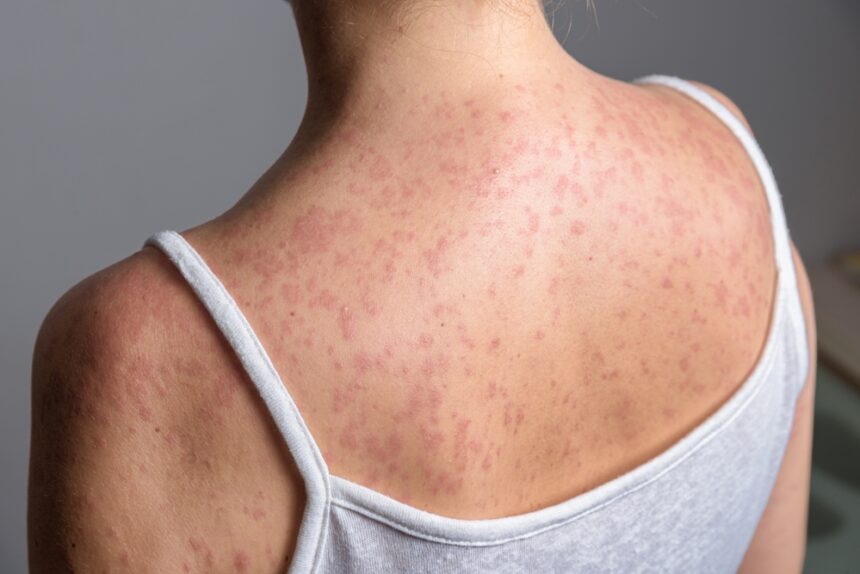
Symptoms usually begin with a high fever, cough, runny nose and red, watery eyes, followed by a rash that starts on the face and spreads down the body.
Serious complications can include pneumonia, brain swelling and death, especially in young children. Measles can also weaken the immune system for months after infection.
How can families protect themselves during the measles outbreak?
Health officials say two doses of the vaccine are about 97% effective at preventing measles. People unsure of their vaccination status can check with their doctor or local health department. Many clinics and pharmacies offer the vaccine, often at low or no cost.
Anyone who develops symptoms should call a doctor before visiting a clinic so staff can prevent exposing others. Measles spreads easily in waiting rooms.
Officials hope the tragedy will prompt more families to get vaccinated and help bring the measles outbreak under control. Their message to families is to check vaccine records and get protected.