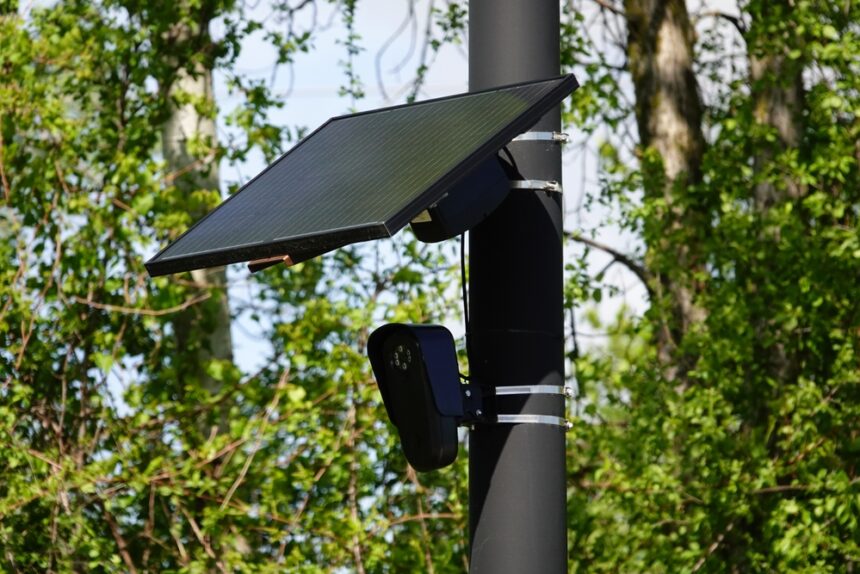
Approximately 30 residents of Maricopa, Arizona, protested outside a City Council meeting on Sept. 1 and urged the council to remove Flock Safety surveillance systems from the city, raising concerns about privacy, free speech and what they described as AI-enabled mass surveillance of residents through license plate reading technology.
During the public comment portion of the meeting, residents addressed the seven council members directly. One resident asked the council to take what he characterized as a simple step, removing the Flock cameras from the city. He said the devices are not simply license plate readers but a means of profiling residents, and urged the council not to replace them with any other system that provides the same type of surveillance. He said a license plate is just the beginning.
A second resident said the technology represents a move in the wrong direction and that citizens are being forced into a surveillance environment without meaningful consent.
What Flock Safety cameras do
Flock Safety systems are automated license plate recognition tools that photograph vehicle plates and cross-reference them against databases of vehicles of interest to law enforcement. In addition to plate numbers, the cameras can capture data about vehicle make, color, body type and other characteristics. The company markets its systems to local governments and law enforcement agencies as a tool for solving property crime and locating stolen vehicles.
Critics argue that the same technology that helps locate a stolen car also creates a searchable database of where residents’ vehicles were, when, and how frequently. That data, stored and potentially shared with other law enforcement agencies, amounts to a passive location surveillance system for everyone whose vehicle passes a camera, regardless of whether they are suspected of anything.
The broader debate
Arizona has been among the states where adoption of license plate reader technology has accelerated, and the pushback in Maricopa reflects a national conversation about the balance between law enforcement utility and civil liberties concerns. Cities that have adopted the technology often argue that the crime-solving benefits are documented and that the surveillance concerns are overstated. Civil liberties advocates argue that the lack of meaningful oversight of the data and the potential for it to be used beyond its stated purposes make the trade-off unacceptable.
The Maricopa council did not announce a decision during the Sept. 1 meeting. Whether the protest and public comment will affect the council’s position was not immediately clear.
Flock Safety’s reach
Flock Safety has expanded rapidly across the United States in recent years, with systems now deployed in thousands of jurisdictions. The company has made the argument that its technology reduces crime rates in the areas where it is deployed, and has pointed to cases in which its cameras helped identify suspects in serious crimes. Opponents have raised concerns not just about the devices themselves but about data retention policies, access by other agencies and the potential for the technology to be used in ways that go beyond the original crime-solving rationale.
The Maricopa protest is one of a growing number of local challenges to Flock Safety deployments across different states, reflecting increased public awareness of how the data is collected and used.