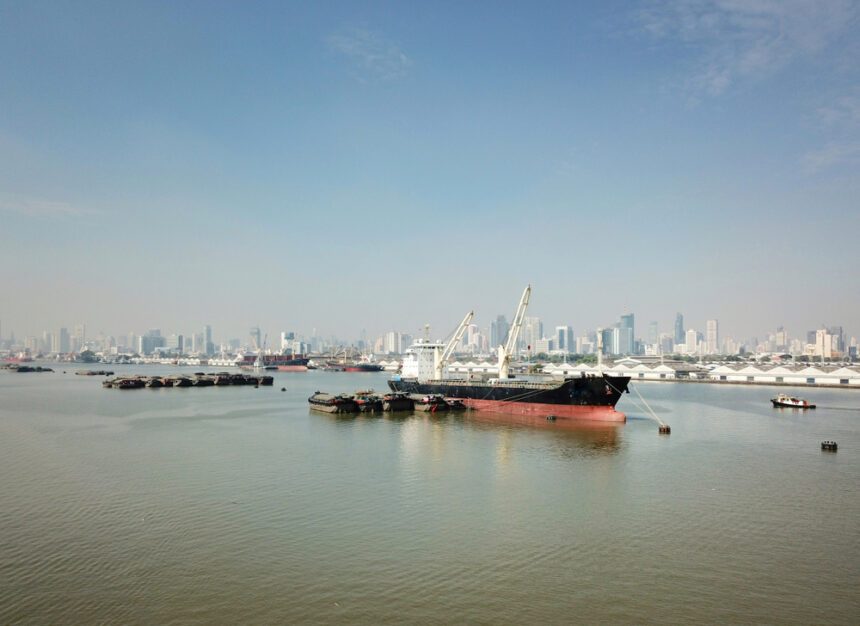
Crude oil is still moving through the Strait of Hormuz, but only in a trickle, carried by a makeshift shuttle system orchestrated by Abu Dhabi and Kuwait that both Iran and the United States appear to be tolerating without actively confronting, at least for now.
The arrangement was described in detail during a Lloyd’s List Intelligence weekly update on Aug. 13, where analysts who track global shipping traffic through the strait and the Red Sea’s Bab el-Mandeb Strait characterized the current situation as an uneasy equilibrium with no clear indication of how long it can hold.
Tomer Raanan, the senior maritime intelligence analyst at Lloyd’s List, said that ships load inside the Gulf, transit through Hormuz, and then conduct ship-to-ship transfers in the Gulf of Oman. He said it would not be accurate to describe oil flowing freely, but that oil is still coming out of the Gulf. He noted that many of the vessels involved are handled by the state-owned Abu Dhabi National Oil Company and Kuwait Petroleum Corporation, and that the ships move through the southern, or Omani, side of the 104-mile strait. That routing draws threats from Iran but has not drawn fire.
The shuttle system and why it is working so far
The logic of the shuttle arrangement is relatively straightforward. Rather than sending large crude tankers on a direct transit of the strait and into open waters where they would be exposed throughout, vessels load inside the Gulf and then transfer their cargo to ships waiting outside in the Gulf of Oman through ship-to-ship operations. The cargo changes hands without any single vessel making the full journey through contested waters under maximum exposure.
That the state-owned oil companies of Abu Dhabi and Kuwait are managing this process suggests coordination at the government level, and the apparent tolerance of both Iran and the United States for this specific arrangement implies a tacit understanding that some oil flow is preferable to a complete shutdown. Why both sides are permitting it is not transparent from publicly available information.
Lloyd’s List Intelligence, a global shipping journal with roots dating to 1734, has been tracking the evolving situation in the strait since hostilities resumed following a weeks-long lull in mid-July. The analysts acknowledged during the update that no one knows how long the current arrangement will last, and that the murky world of maritime logistics, shadow fleets and dark transits often finds paths that formal government positions do not anticipate.
The broader picture of shipping disruption
The Strait of Hormuz carries a significant portion of the world’s oil and gas exports, and the parallel disruption in the Red Sea’s Bab el-Mandeb Strait has compounded the pressure on global shipping routes. Oil that does not move through Hormuz must find alternative paths, typically at significantly greater cost and with longer transit times.
The shuttle system, if it continues to function, provides a partial release valve for that pressure. It is not a solution and it is not restoring anything close to normal commercial traffic through the strait. It is a workaround that moves limited volumes under conditions that could change rapidly if either party decides to stop tolerating it.
The Lloyd’s List analysts noted that the standoff has shown little change since mid-July, with no resolution appearing imminent. For now, a small amount of Gulf crude is reaching the market through a route that no one has officially endorsed and no one has officially shut down.