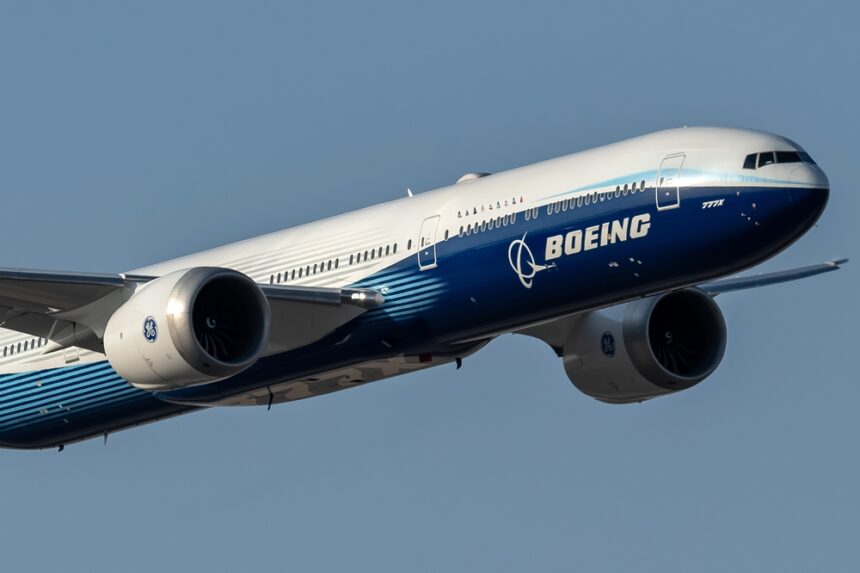
The aircraft manufacturer has regained one of the most significant privileges the federal government had taken away. The Federal Aviation Administration announced on July 17 that it has restored Boeing’s authority to issue its own airworthiness certificates for newly produced 737 Max and 787 aircraft, effective July 20.
An airworthiness certificate is the final verification step in an aircraft’s production process, the official confirmation that a plane is safe to operate. The authority to issue such certificates had been stripped from the company in 2019 following two catastrophic crashes that together killed 346 people and triggered one of the most consequential safety crises in modern aviation history.
The FAA said the restoration follows months of detailed data review and safety assessments that demonstrated consistent production quality at Boeing’s facilities. The agency described the decision as an expression of its confidence in the company’s ability to issue the certifications appropriately while remaining under FAA oversight.
How Boeing lost the authority
The sequence of events that led to the original revocation began in October 2018, when a Lion Air flight crashed into the Java Sea off the coast of Indonesia shortly after takeoff. All 189 people aboard were killed. Less than five months later, in March 2019, an Ethiopian Airlines flight went down shortly after departing Addis Ababa, killing all 157 passengers and crew members.
Both crashes were connected to a flight control system on the 737 Max called the Maneuvering Characteristics Augmentation System, which investigators determined had activated incorrectly and driven the nose of the aircraft downward in both incidents. The system’s design, and the FAA’s original certification of it, became subjects of intense regulatory and congressional scrutiny.
The FAA grounded the entire 737 Max fleet globally in March 2019, a decision that lasted 20 months. The grounding represented a profound disruption to the manufacturer’s business and to the airlines that had ordered the model in large numbers. During that period, regulators around the world scrutinized the company’s internal safety culture and quality control practices in ways it had not previously experienced.
A long road back
Restoring full airworthiness certification authority is not a step the FAA takes lightly, particularly with Boeing. The company has operated under heightened federal scrutiny for years, with regulators monitoring its production processes and quality management systems more closely than at almost any other time in its history.
The review that preceded the July 17 announcement was described by the FAA as thorough, spanning months and drawing on production data collected across Boeing’s facilities. The agency’s stated confidence is significant, but it comes with the qualification that oversight continues. The manufacturer does not operate with the same latitude it had before 2019, and the FAA has made clear that the restoration of certification authority is conditional on that oversight remaining in place.
For Boeing, the practical implications of regaining this authority are substantial. The ability to self-certify airworthiness allows the company to move completed aircraft through the final stages of production and delivery more efficiently. When that authority was restricted, the FAA had to be more directly involved in each certification, adding time and administrative complexity to a process that the company had historically managed largely on its own.
What has changed at Boeing
The years since the crashes have brought significant changes to Boeing’s leadership, its quality control systems and its relationship with the FAA. The company replaced its chief executive, restructured internal safety reporting processes and invested in production quality programs designed to address the failures that regulators identified.
Critics, including some aviation safety advocates and families of those who died in the two crashes, have continued to argue that deeper structural changes are still needed and that Boeing’s safety culture has not fully transformed. Their concerns are part of the context in which the FAA made its restoration decision, and the oversight role that remains in place reflects how much still needs to be rebuilt.
The 346 people who lost their lives in Indonesia and Ethiopia remain central to how this chapter of aviation history is understood. The restoration of Boeing’s certification authority marks a regulatory milestone, but it does not change the weight of what those crashes cost.