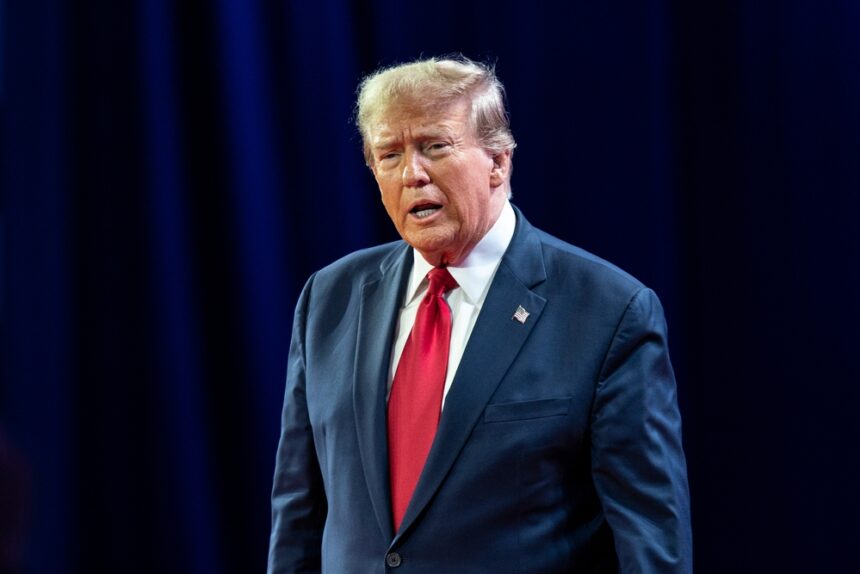
President Donald Trump said on Aug. 9 that the United States is deliberately taking a restrained approach to talks with Iran, describing a strategy of allowing economic pressure and a naval blockade to weaken Tehran’s position rather than pushing negotiations aggressively.
Trump told Axios that the U.S. is only semi-negotiating with Iran, suggesting that the administration is content to watch Iran’s economic situation deteriorate rather than rushing to a deal. He said Iran’s economy is in very bad shape and that the country lacks the funds to pay its troops, pointing to the ongoing U.S. naval blockade of Iranian ports as a contributing factor.
He described the conflict and the negotiation process as something like a chess game, expressing confidence that it would ultimately work out.
The military posture and the naval blockade
The U.S. military had conducted daily strikes for approximately two weeks before Trump announced a halt to create better conditions for negotiation. The naval blockade of Iranian ports remains in effect.
Over the weekend, U.S. Central Command, which oversees American military operations in the Middle East, reported that 53 commercial ships heading to or from the country were redirected, while two vessels were disabled and two more were boarded. The operations represent a continuation of economic pressure through maritime enforcement even as direct strikes have paused.
What the strategy means
The posture Trump described, reducing military activity while maintaining the blockade and watching for economic collapse, reflects a theory of negotiating leverage that relies on degrading the adversary’s capacity to resist rather than engaging in detailed diplomatic exchange. Whether that approach produces a negotiated resolution depends on how Tehran responds to the pressure and how long both sides are willing to sustain the current situation.
Tehran has not publicly confirmed the economic distress Trump described, and officials have at various points maintained that the country is prepared to continue indefinitely. The gap between Trump’s public confidence and Iran’s public posture has been a consistent feature of the conflict’s public communication throughout the past several months.
The naval blockade as a tool of economic pressure has precedent in U.S. foreign policy but is also subject to international legal debate regarding freedom of navigation and the rights of commercial vessels. The Central Command’s reporting of redirected and disabled ships indicates active enforcement rather than a symbolic posture.
The state of negotiations
Trump’s description of the talks as only semi-negotiating does not correspond to any previously announced formal channel, and Tehran has maintained in its own public communications that any diplomatic contact is taking place through intermediaries such as Oman rather than directly with the United States. Whether direct or indirect talks are producing any substantive movement toward a resolution is not clear from the public statements of either side.
The conflict began approximately six months ago and has been characterized by escalation and de-escalation cycles, with the U.S. military striking Iranian targets, pausing, and resuming, while the naval blockade and associated economic pressure have continued throughout. Trump’s comments on Aug. 9 suggest the current phase is intended to be a period of sustained economic attrition rather than active military engagement.
Whether that approach produces the resolution Trump projects, or extends the situation further, will depend on developments that are not visible in public statements.