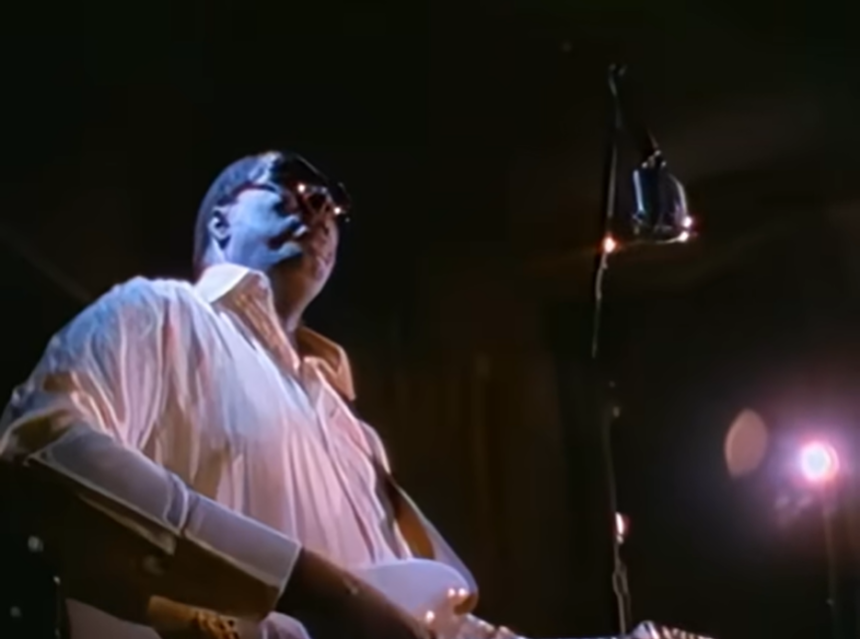
Clarence Carter, the blind soul singer whose gritty voice and storytelling genius made him one of the most enduring figures in American R&B, has died at 90. His passing was confirmed on Thursday, May 14, after Rodney Hall, the president of FAME Studios in Muscle Shoals, Alabama, shared the news with Rolling Stone. A family spokesperson confirmed Carter had recently been diagnosed with stage 4 prostate cancer and died from complications related to his illness.
The Alabama born icon leaves behind more than six decades of music that helped define Southern soul, and a catalog of songs that still find new audiences today.
From Montgomery to Muscle Shoals
Born on Jan. 14, 1936, in Montgomery, Alabama, Carter lost his sight to glaucoma as a child. Rather than allowing the condition to define his path, he channeled everything into music developing a bluesy guitar style and a gravelly baritone that would eventually set him apart from nearly every other voice in the genre.
He studied music at Alabama State College and launched his career alongside partner Calvin Thomas as a duo known as the C and C Boys, recording at the legendary FAME Studios in Muscle Shoals. When a car accident sidelined Thomas and ended the partnership, Carter pressed on alone and what followed was nothing short of a breakout.
The hits that built a legacy
Carter signed with Atlantic Records and quickly proved he was built for the spotlight. His 1968 single Slip Away, a tender and aching plea wrapped in Southern soul warmth, climbed to No. 6 on the pop charts and announced him as a force to be reckoned with. That same year, Too Weak to Fight further cemented his standing, and Patches a gripping narrative about a poverty stricken farm boy losing his father became a No. 1 R&B hit that crossed over to mainstream audiences and earned him a Grammy nomination.
Those three recordings alone would have been enough to secure his place in the history of American music. But Carter kept going.
Strokin and a second life in popular culture
In the late 1980s, Carter released what would become arguably his most culturally persistent song. Strokin, an unapologetically adult slow jam, found a devoted following on Black radio charts and gradually grew into a staple of Southern club culture. Decades later, the track experienced a full on revival through social media, introducing Carter’s catalog to a generation that had not yet been born when the song was first released.
The resurgence was a testament to the timelessness of Carter’s appeal his music never felt dated because it was rooted in something deeply human. The humor, the swagger, the unfiltered emotion were all distinctly his own.
Still on the road into his late 80s
What made Carter’s story particularly extraordinary was his refusal to stop performing. Well into his late 80s, he continued to take the stage, connecting with audiences who had loved him for decades alongside younger fans discovering his work for the first time. That kind of longevity is rare in any industry, and in the music world it speaks to an artist whose relationship with performing was never about commerce it was about calling.
His former wife, singer Candi Staton, was among those close to the family at the time of his passing, according to Rolling Stone.
A voice that shaped Southern soul
Carter’s influence stretches across generations and genres. His recordings at FAME Studios are part of a foundational chapter in the story of Muscle Shoals music, a scene that shaped artists from Aretha Franklin to Wilson Pickett. His particular gift blending raw vulnerability with irresistible groove made him a singular talent in a field full of extraordinary voices.
Clarence Carter is survived by his family and by a catalog that will continue to move people for decades to come. He was 90 years old.