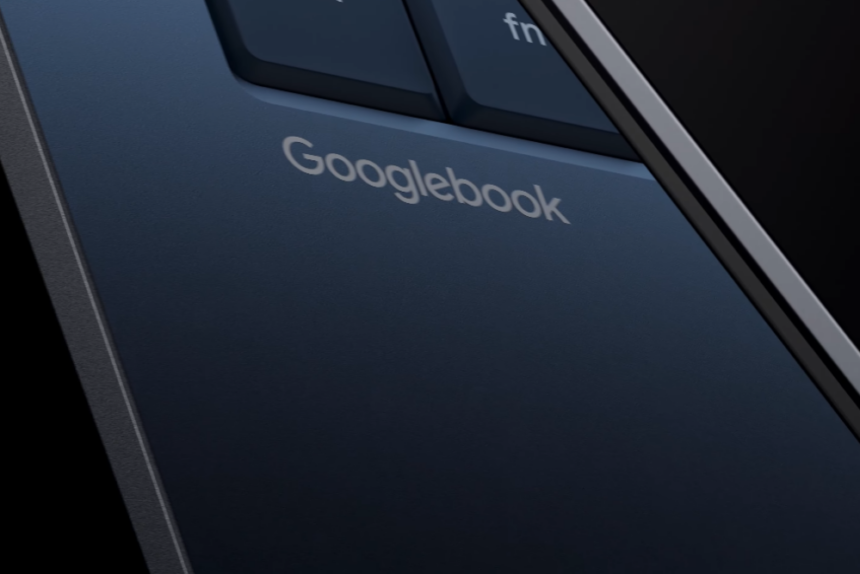
More than 15 years after the Chromebook reshaped what people expected from a laptop, Google is making its move again. The company has unveiled Googlebook, a new line of laptops built from the ground up around Gemini Intelligence — a product that signals Google’s shift from operating systems to what it is now calling an intelligence system.
The announcement, made Tuesday, positions Googlebook not as a simple hardware refresh but as a reimagining of the laptop category itself. The devices blend the app ecosystem of Android with the browser-first muscle of ChromeOS, wrapping both in premium hardware and a design language meant to feel instantly recognizable.
Google has not yet announced pricing or specific release dates, but confirmed the devices would be available in the fall through a partnership with Acer, ASUS, Dell, HP and Lenovo.
Gemini at the Center of Googlebook
The centerpiece of the Googlebook experience is a feature called Magic Pointer, developed in collaboration with Google DeepMind. Rather than rethinking the keyboard or the display, Google went after the cursor — a tool that has remained largely unchanged since right-click was introduced.
With Magic Pointer, wiggling the cursor causes it to activate Gemini, surfacing quick and contextual suggestions based on what is currently on the screen. Hovering over a date in an email can prompt an option to schedule a meeting. Selecting two images — a living room photo alongside a furniture listing, for example — can produce an instant visual preview of how they might look together.
The goal, Google says, is to collapse the steps between having an idea and completing a task.
A second feature, Create your Widget, lets users generate custom desktop widgets through natural language prompts. Gemini can pull in data from Gmail, Google Calendar and the web to build a single personalized dashboard. A user planning a trip, for instance, could prompt Googlebook to consolidate flight details, hotel reservations, restaurant bookings and a countdown clock into one desktop view.
Googlebook and the Android Ecosystem
Building on part of the Android tech stack gives Google the ability to push updates and new features to Googlebook faster than ChromeOS alone would allow. It also opens the door to tighter integration across devices — an increasingly important factor as more people move between phones, tablets and laptops throughout their day.
One of the more practical expressions of that integration is a feature called Quick Access, which surfaces files stored on a paired Android phone directly within Googlebook’s file browser. No cable, no transfer, no cloud upload required. The files simply appear, searchable and ready to open or insert.
Google is also leaning into what it calls staying in the flow — the ability to dip into a phone app from the laptop screen without fully breaking concentration. Checking a food delivery order, completing a language lesson on Duolingo or responding to a notification can all happen within the Googlebook interface, without switching devices.
Hardware Built to Stand Out
Every Googlebook will carry a physical identifier— the glowbar. Positioned on the device chassis, it functions as both a status indicator and a design statement. Google describes it as a mark that sets the hardware apart on sight.
The company is not manufacturing the laptops itself. Instead, it is working with its five hardware partners to produce a range of form factors — different sizes, materials and configurations — all meeting a premium build standard that Google says will be consistent across the lineup.
Full specifications have not been released, though Google indicated more details will follow closer to the fall launch window.
What Googlebook Means for the Laptop Market
The Chromebook found its audience largely in schools and budget-conscious buyers. Googlebook appears aimed at a different tier entirely — one where Gemini serves as a genuine productivity layer rather than a novelty feature, and where the hardware is expected to compete with premium Windows machines.
Whether the Gemini integration delivers on that promise in day-to-day use remains to be seen. But the ambition is clear— Google wants Googlebook to be the laptop that makes every other laptop feel like it was built for a different era.
More details are expected later this year at googlebook.com.