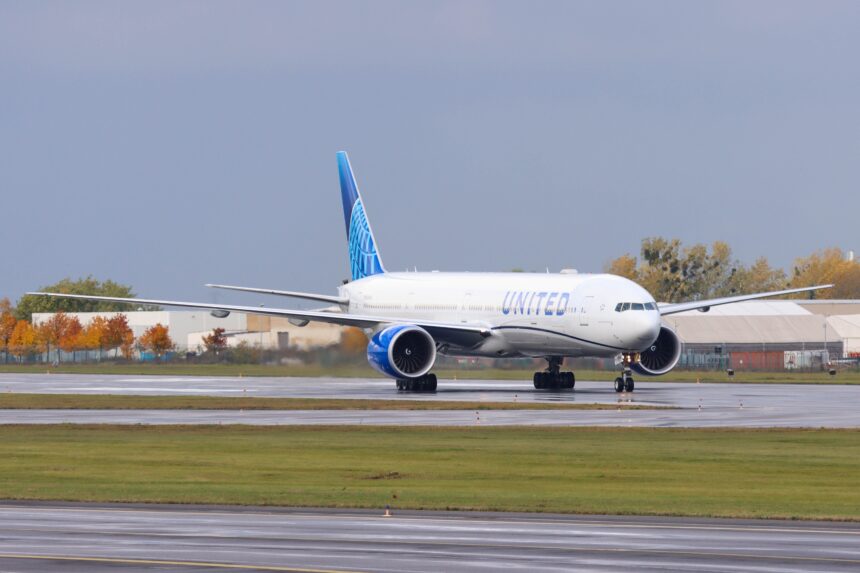
United Airlines will reduce its daily flight schedule at one of the country’s most trafficked airports this summer after a federal mandate left the carrier with no choice but to scale back operations significantly.
Chicago O’Hare International Airport will see United pull back from roughly 780 planned daily departures to approximately 650 a reduction of about 130 flights per day starting in June. The airline’s vice president of O’Hare operations addressed employees directly, confirming the revised June schedule and noting that updates covering the rest of the summer months would follow in the coming days.
The cuts are a direct result of an order issued by the Federal Aviation Administration in mid-April. Working alongside U.S. Transportation Secretary Sean Duffy, the FAA announced a cap on daily operations at O’Hare after determining that the airport had been dangerously overscheduled heading into the busy summer travel season. On peak days, more than 3,080 flights had been booked at the airport. Under the new federal limits, that number cannot exceed 2,708 daily operations.
Why O’Hare was targeted
The FAA describes O’Hare as the busiest airport in the country by total flight volume, and last summer’s performance data underscores the problem. Fewer than 60% of arrivals and departures at the airport were on time during that period a figure that federal officials were determined not to repeat. Before issuing the formal order, the FAA held a series of meetings with major carriers and airport representatives to discuss the chronic congestion and identify solutions that could bring the delay rate down meaningfully.
The April 16 press release announcing the action made clear that the agency viewed the scheduling cuts as a necessary step toward a more reliable summer travel experience for millions of passengers passing through the Illinois hub.
What changes and what doesn’t
Despite the scale of the reduction, United’s leadership was careful to frame the new schedule in a broader context. Even with 130 fewer daily departures, the revised June timetable still represents an 11% increase over what United flew out of O’Hare during the summer of 2025. The airline also emphasized that its most popular departure windows flights between 7 a.m. and 8 p.m. have largely been preserved, with only minimal adjustments made to the busy afternoon peak.
The letter to employees did not specify which exact routes or flight numbers would be affected by the cuts. However, the airline made a point of reassuring its workforce that the scheduling changes would not translate into job losses.
No staffing cuts expected
United made clear that its workforce plans remain intact. The airline had already been in the process of increasing its headcount ahead of the summer rush, and with the flight schedule now finalized, it does not expect to reverse course on hiring. The carrier said it plans to continue bringing on both frontline workers and management personnel despite the reduced departures.
That assurance will likely come as a relief to O’Hare based employees who may have feared the operational pullback could signal broader cutbacks. United’s message was consistent: the airline is adapting to a federal requirement, not retreating from the market.
United’s response to the FAA
When the FAA order was first announced in April, United acknowledged the development and said it was evaluating the next steps. The airline expressed appreciation for the collaborative process that led to the mandate, crediting federal transportation leadership for working toward a resolution that balanced the needs of airlines, passengers and the airport itself. A follow up from the carrier was promised once its internal review was complete and the revised June schedule appears to be the first concrete outcome of that process.
For travelers with summer plans running through Chicago O’Hare, the changes may affect specific departure times or connection options, though United’s effort to protect its core daytime schedule suggests the impact on most itineraries could be limited. Passengers are encouraged to check directly with the airline for updates on any affected bookings.