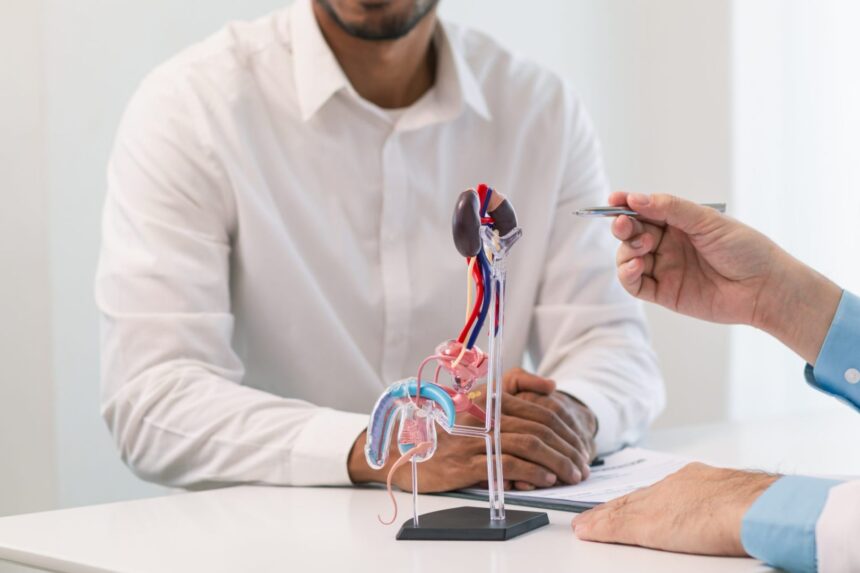
Most men do not think much about their prostate until something goes wrong, and by that point the conversation has already shifted from prevention to management. The prostate is a small gland roughly the size of a cherry tomato, shaped like a donut and positioned directly beneath the bladder. The urethra, the tube responsible for carrying urine out of the body, passes straight through the center of it. That anatomical detail is what makes prostate health so directly tied to one of the most basic and unavoidable aspects of daily life.
The gland serves a reproductive function, contributing fluid that mixes with sperm during ejaculation. But its more disruptive characteristic is one that affects virtually every man over time. The prostate never stops growing. As it expands, it puts pressure on the urethra, making urination increasingly difficult and laying the groundwork for a range of complications if left unaddressed.
What to watch for at any age
The symptoms of an enlarged prostate are consistent regardless of age, though they tend to develop gradually, which makes them easy to overlook until they become harder to ignore.
A weakened urinary stream and difficulty fully emptying the bladder are among the most common early signs. Urinating more than eight times in a typical day, particularly with an urgent and sudden need, is another indicator worth noting. The most telling sign for many men is nocturia, which refers specifically to waking two or more times per night because the urge to urinate pulled them out of sleep. If waking for other reasons and incidentally needing to use the bathroom, it is likely unrelated to the prostate.
The issue younger men face more than they realize
Men under 55 who experience urinary symptoms are often dealing with prostatitis, an inflammation of the prostate that does not always originate within the gland itself. A condition known as chronic prostatitis and chronic pelvic pain syndrome has become recognized as a far more common culprit than the bacterial infections doctors once assumed were responsible.
The pelvic floor muscles surrounding the prostate are highly sensitive to the kinds of habits that define modern sedentary life. Extended periods of sitting, whether at a desk or behind a wheel, can irritate these muscles significantly. Activities that apply pressure to the perineum, such as cycling, can contribute to the same pattern of tension. When those muscles become inflamed, the prostate often follows. The resulting nerve disruption can manifest as erectile dysfunction or as pain during or after ejaculation.
Managing this condition typically involves reducing inflammation through medication, relaxing the affected muscles through warm water therapy or through targeted pelvic floor physical therapy, and in some cases addressing an underlying bacterial infection if one is confirmed.
What changes after 50
Once men reach their fifties, a different prostate condition becomes increasingly common. Benign prostatic hyperplasia, a hormone-driven enlargement of the gland, affects roughly half of men in this age group to some degree. The name may sound alarming but it is a structural issue rather than a cancerous one, though it can become disruptive enough to require treatment.
Behavioral adjustments like timed urination schedules and techniques that improve bladder emptying can help manage milder symptoms. Medications exist to shrink the prostate or to relax the muscles around the urethra and improve flow. For men who do not respond adequately to other interventions, surgical options have advanced considerably in recent years, with newer minimally invasive techniques offering meaningful results with fewer side effects than older procedures.
Understanding prostate cancer risk
Roughly one in eight men will receive a prostate cancer diagnosis at some point in their lives. The majority of prostate cancers are slow-growing and may never require aggressive treatment. Screening through a prostate specific antigen blood test is generally recommended beginning between 45 and 50 for most men, and closer to 40 for those with a family history of the disease or who are Black, as both groups carry a higher risk.
When cancer is detected at a low-risk stage, many men choose active surveillance, a monitored approach that avoids unnecessary treatment while keeping close watch on the cancer’s behavior. More aggressive cases may require surgery or radiation, though focused ultrasound and cryotherapy represent less invasive options that have gained traction in recent years.
Surgical treatment for either enlargement or cancer can carry sexual side effects, including retrograde ejaculation or temporary erectile dysfunction. Most men who experience the latter see meaningful recovery within one to two years, and a range of treatment options exist to support that process.