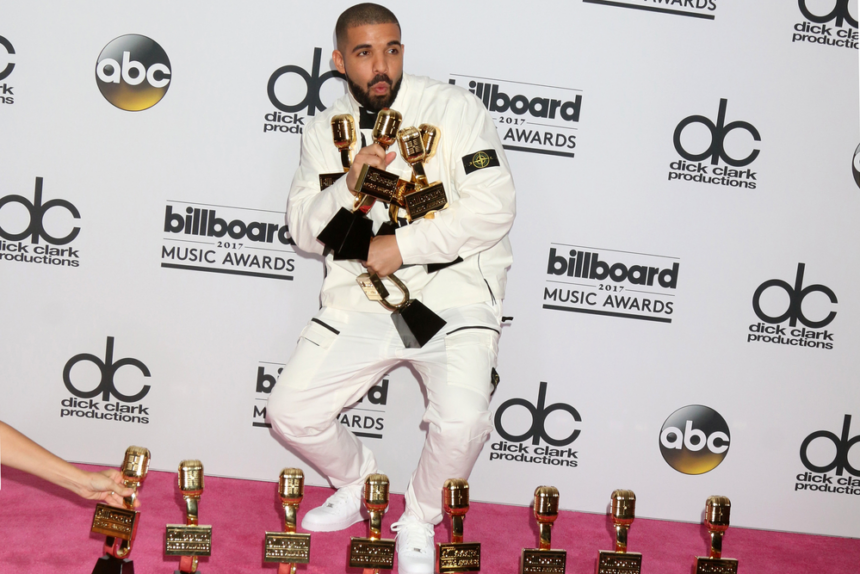
When Drake released Views as an Apple Music exclusive in the spring of 2016, the conversation around him was complicated. A months-long, very public feud with Philadelphia rapper Meek Mill had left his reputation bruised at least in the eyes of hip-hop purists. The ghostwriting allegations that Meek lobbed his way weren’t just tabloid noise; they cut at the very identity Drake had carefully built as one of the most credible voices in rap. What happened next, however, told a very different story.
Rather than retreating or doubling down on proving himself as a lyricist, Drake did something far more interesting. He evolved and Views became the clearest evidence of that evolution.
The beef that quietly reshaped his trajectory
By 2015, Drake had already earned a reputation as one of rap’s fiercest competitors. His response to Meek’s accusations came swiftly in the form of diss tracks, including Back to Back, which earned a Grammy nomination and became one of the most talked about moments in recent hip-hop history. But even as he won the public battle, the experience appeared to shift something in Drake’s creative ambitions.
He had spent years staking a claim as the best rapper alive. After the Meek Mill chapter, that pursuit seemed to matter less. What emerged in its place was something broader, and arguably more lasting.
How Views introduced a new era
Released exclusively on Apple Music and accompanied by the massive single One Dance, Views arrived as a statement about where music was headed. That song, which topped charts across more than a dozen countries, is widely credited with bringing Afrobeats to mainstream American audiences a cultural bridge that few artists at Drake’s level had the instinct or influence to build at the time.
The album itself leaned into atmospheric, mood driven production rather than rap showcases. It was cinematic in its scope, designed less to prove a point and more to soundtrack a feeling. Critics were divided, but audiences were not. Views spent 13 non consecutive weeks at No. 1 on the Billboard 200, a feat that underlined just how far Drake’s reach had extended beyond traditional hip-hop listeners.
The sound that defined a summer
Toronto has always been central to Drake’s identity, and Views made that relationship explicit. The album felt like a love letter to the city its seasons, its moods, its contradictions. Tracks moved between introspective moments and dancehall influenced grooves, reflecting a man comfortable enough in his success to stop performing toughness and simply make music that felt honest.
Songs like Controlla drew from Caribbean rhythms that spoke to Toronto’s cultural diversity, while others leaned into the melancholy that had long been Drake’s emotional signature. The result was an album that wasn’t trying to be the greatest rap record ever made and was stronger for it.
A legacy that only grew with time
A decade on, the impact of Views is clearer than ever. It arrived at a moment when genre lines in popular music were dissolving rapidly, and Drake’s willingness to move fluidly across sounds helped accelerate that shift. The album didn’t just succeed commercially it helped rewrite the rules for what a rap album could sound like and who it could reach.
The ghostwriting cloud never fully disappeared, but it also never meaningfully slowed him down. His touring numbers, streaming records and business ventures through OVO Sound and beyond have continued to grow, suggesting that the audience ultimately cares far more about connection than credibility debates.
What Views ultimately proved is that Drake understood something his critics didn’t that the biggest artists aren’t always the purest ones. Sometimes, they’re the ones willing to meet the world where it is.