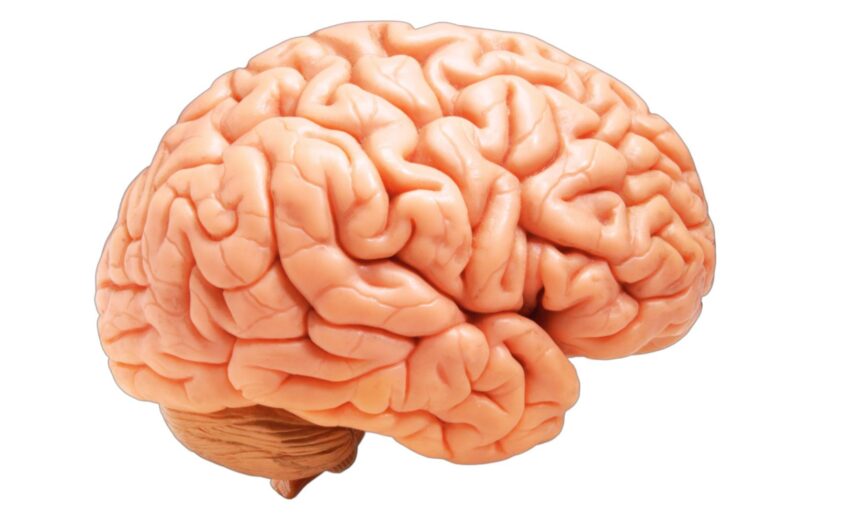
Brain research has long been driven by a simple assumption. For decades, neuroscientists have chased the brightest neural activity they could find. The boldest signals, the connections that lit up most prominently on imaging scans, were assumed to be the ones that mattered most. Everything quieter operating in the background was largely treated as irrelevant interference.
A major new study is pushing back on that assumption in a significant way. After analyzing data from more than 12,000 people, researchers found that those weaker signals are far from meaningless. In fact, they can predict human behavior just as reliably as the stronger ones, a finding that could reshape how scientists study the mind and how doctors approach mental health treatment.
What researchers discovered about brain connectivity
The study used neuroimaging technology, which tracks neural activity by measuring blood flow and the communication patterns between different regions. Researchers pulled from four large datasets and examined how various areas interact with one another.
Standard practice in neuroscience has long involved filtering out weaker signals to concentrate on the strongest and most active pathways. The logic was straightforward: if a connection is prominent, it is probably important. Quieter connections were deprioritized or discarded altogether.
This research challenges that logic directly. Weaker connections between regions, it turns out, still carry meaningful and measurable information about cognition and behavior. By filtering them out, earlier studies may have been working with an incomplete picture of how the mind actually functions.
The idea had surfaced before on a smaller scale. A 2014 study found that differences in intelligence were largely explained by the efficiency of weak, long-distance neural connections rather than dominant short ones. Those distant pathways often link regions associated with reasoning, memory, and language processing, pointing to the idea that intelligence depends on broad communication rather than isolated bursts of activity in one area.
What makes the new research notable is its scale. Across more than 12,000 participants, the pattern held consistently. The brain does not appear to rely on a few dominant routes but instead operates through a dense, overlapping web of networks functioning together.
What this means for mental health treatment
The implications extend well beyond academic neuroscience. If the mind works through these highly individualized and distributed networks, it may help explain one of the most persistent frustrations in mental health care: why the same treatment works brilliantly for one person and barely at all for another.
Research has already begun mapping this complexity. A 2023 study examining neural connectivity in more than 1,100 people with major depressive disorder identified two distinct neurological subtypes, each with different patterns of connectivity and different responses to antidepressant medication. Another 2023 study found four distinct subgroups within autism spectrum disorder, each linked to unique connectivity patterns and different symptom profiles.
Taken together, these findings point toward a more nuanced understanding of mental health conditions. People do not just differ in their symptoms. They may differ in the underlying networks generating those symptoms, which means the most effective treatments may need to differ as well.
A more personal picture of the mind
There is no single correct way for a brain to be wired. Neural architecture varies considerably from person to person, and that individuality is not a flaw in the system but a feature of it.
As this line of research develops, it opens the door to more personalized approaches to mental health care, ones that account for a fuller range of neural activity rather than privileging only the loudest signals. The quieter parts of the mind, it seems, have been waiting a long time to be heard.