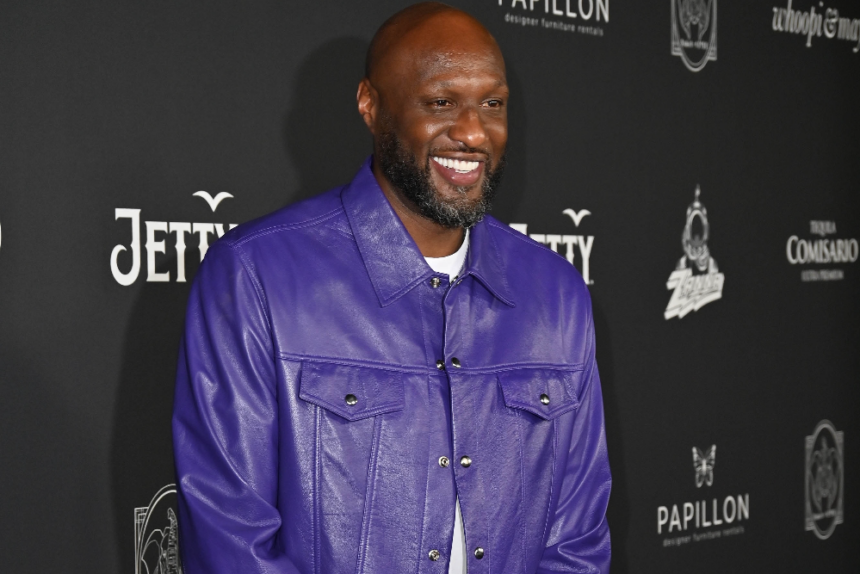
Lamar Odom has lived through moments that would have broken most people. His Netflix documentary, Untold: The Death and Life of Lamar Odom, released last month, does not shy away from any of them. It traces his battle with substance abuse, his professional highs as a two-time NBA champion, the brotherhood he shared with the late Kobe Bryant and the 2015 overdose that nearly ended his life. But when asked which moments were hardest to revisit, Odom pointed not to his most public struggles but to the losses he has carried the longest.
The deaths of his mother and his infant son, he said, are the two wounds he is not sure ever fully heal. He lost his mother when he was just 12 years old. In 2006, at 26, he lost his six-month-old son Jayden to sudden infant death syndrome. Jayden’s mother is Liza Morales, Odom’s former fiancée and high school sweetheart, with whom he also shares two other children, Destiny Odom and Lamar Odom Jr. The grief of losing Jayden put an irreparable strain on their relationship, and the couple eventually separated.
A grief that crossed generations
The documentary also surfaces a quieter but deeply affecting detail from Odom’s history with loss. His grandmother, who died in 2003 on her 80th birthday, was someone he honored throughout his basketball career by wearing the number seven jersey, her lucky number. What he discovered in the aftermath of Jayden’s death brought a strange and painful symmetry to both losses. His son died on June 29, 2006, the same date on which his grandmother had passed away years earlier.
Rather than compounding his grief, Odom has described that shared date as the unexpected beginning of his healing. The connection between the two deaths gave him a way to hold both losses together, and in that, he found something to hold onto.
Substance abuse and the weight of grief
The documentary is candid about the relationship between Odom’s grief and his addiction. He has acknowledged that the pain of losing Jayden became something he used as a justification for using substances, turning a wound that needed tending into a door he kept opening in the wrong direction. His 2015 overdose at a Nevada brothel was the most public expression of how far that pattern had taken him, and it became the event that forced a reckoning he had been postponing for years.
That reckoning is ongoing. Odom has spoken about sobriety as a daily commitment rooted in faith, a practice of choosing his future over his past one day at a time. The work he is doing now, he has said, is the way he intends to honor the people he has lost, by showing up fully for the people still in his life.
Moving forward without forgetting
What makes the documentary compelling is not the catalog of hardship but the evidence of someone actively choosing to move through it. Odom does not present himself as someone who has arrived at peace. He presents himself as someone still in the process of getting there, clear-eyed about what it costs and committed to the effort anyway.
His grandmother and his son share a date that will never leave him. But rather than a marker of compounded tragedy, he has chosen to let it function as something else, a reminder that grief and love are not so far apart, and that honoring the dead sometimes means insisting on living well for the people who remain.