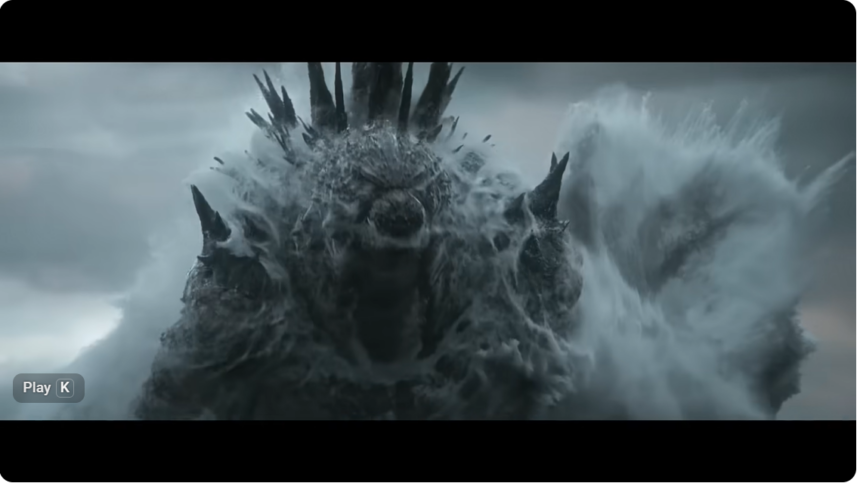
The return of Godzilla Minus Zero marks a pivotal moment for modern kaiju cinema. Directed once again by Takashi Yamazaki, the film arrives with expectations shaped by the success of its predecessor, Godzilla Minus One.
That earlier film did more than revive a franchise. It redefined it. With a modest budget and a grounded emotional core, it resonated far beyond typical monster movie audiences. Now, the follow up carries both momentum and pressure.
Teaser debut draws early reactions
The first glimpse of Godzilla Minus Zero debuted at CinemaCon on April 14, where anticipation quickly filled the room. The footage offered only fragments, but it was enough to suggest a broader and more ambitious scale.
Yamazaki acknowledged the challenge of building a sequel in a genre where many second installments lose direction. His approach appears focused on deepening the story rather than simply expanding spectacle. The shift from Minus One to Minus Zero hints at a narrative that may explore origins, consequences or both.
From breakout success to rising expectations
Godzilla Minus One succeeded in ways few expected. Produced on a budget estimated between 10 million and 15 million dollars, it went on to earn more than 115 million worldwide. It also secured an Academy Award for visual effects, a rare achievement for a film in this category.
That success has changed the stakes. Godzilla Minus Zero is no longer an experiment. It is a test of whether that formula can evolve without losing its impact.
The creative team remains largely intact, offering continuity. That consistency could prove critical as the franchise moves into more ambitious territory.
Familiar faces and a shifting threat
The teaser confirms the return of Ryunosuke Kamiki and Minami Hamabe, whose performances helped anchor the previous film. Their characters are expected to carry emotional weight into the sequel, grounding the chaos that surrounds them.
Godzilla himself appears changed. Early visuals suggest a more imposing version of the creature, one that may operate on a larger stage. Brief shots hint at movement beyond Japan, including imagery tied to Western landmarks.
That expansion raises a key question. Will the story introduce new kaiju threats, or will Godzilla remain the central force of destruction?
The focus keyword Godzilla drives global scale
Godzilla’s presence has always defined the franchise, but this installment appears to stretch that presence across a wider landscape. The imagery teased so far suggests a shift toward global consequences rather than localized devastation.
That change could reshape the tone. A broader setting introduces new stakes, new perspectives and potentially new conflicts. It also invites comparisons to larger scale monster franchises, though Yamazaki’s style has traditionally leaned toward restraint and human storytelling.
Balancing those elements will likely determine how the film is received.
What to expect before release
Godzilla Minus Zero is scheduled to arrive in theaters on November 6, 2026. Until then, much of the story remains under wraps.
Speculation continues to build around the direction of the plot. Some expect a deeper exploration of Godzilla’s origins, while others anticipate new adversaries emerging to challenge him. The teaser leaves room for both interpretations.
What is clear is that anticipation is growing. Each new detail adds to a sense that the sequel is aiming higher, even as it risks the pitfalls that often come with that ambition.
A defining moment for the franchise
The success of Godzilla Minus One created a rare opportunity. It showed that a kaiju film could be both intimate and expansive, grounded yet visually striking.
Godzilla Minus Zero now carries that legacy forward. Whether it builds on that foundation or struggles under its weight will shape the future of the franchise.
For now, the excitement feels measured but real. The monster is returning. The expectations are larger. And the outcome remains uncertain.