When oil prices start to come down, the instinct is to treat it as good news. Cheaper fuel means lower costs at the pump, reduced pressure on household budgets, and a bit of breathing room for businesses watching their energy bills climb. But the decline now underway is being driven by something far less reassuring than a return to market stability.
The International Energy Agency issued a report this week describing what economists call demand destruction, a process in which prices rise so sharply that consumers and businesses simply stop buying. The trigger in this case is the closure of the Strait of Hormuz, the narrow waterway through which a significant share of the world’s oil and natural gas flows. As supplies tightened and prices climbed, the cost of energy reached a point where entire economies began pulling back.
What demand destruction actually looks like
The effects are already visible across multiple regions. Countries in Asia, Europe, and parts of the Middle East that rely on supplies moving through the strait have begun cutting back on natural gas use, absorbing waves of flight cancellations tied to fuel costs, and implementing policies aimed at reducing overall energy consumption. These are not abstract projections. They are policy responses to conditions that are already straining economies on the ground.
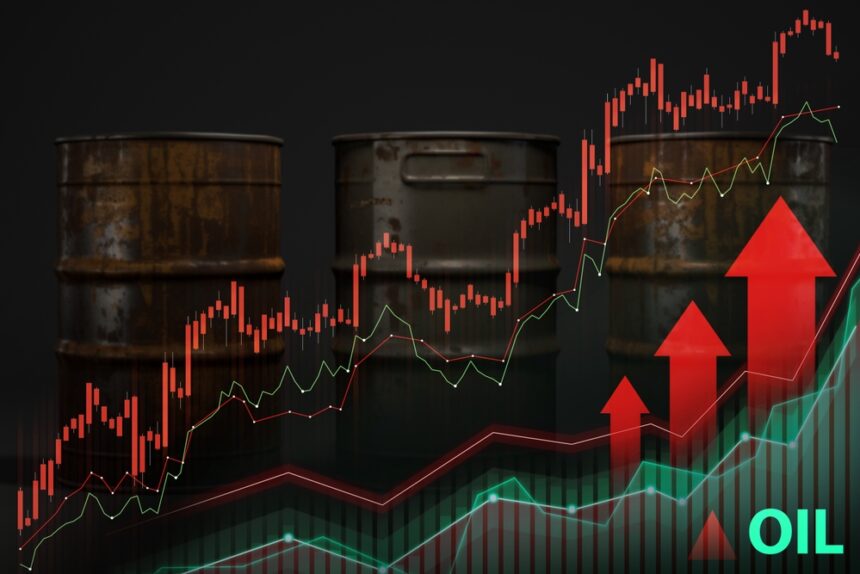
Oil prices reflect this shift. International crude, which climbed as high as $118 per barrel earlier this month, has since fallen below $98. American crude followed a similar path, dropping to around $95 after reaching approximately $113. Gasoline prices in the United States have also begun edging down from recent peaks, though they remain elevated by recent historical standards. Part of that easing reflects cautious optimism around a ceasefire announced last week, but the pullback in demand is also playing a measurable role.
The American economy and its limits
The United States sits in a somewhat different position than most other major economies when it comes to oil shocks. The country now produces more oil than it consumes, and decades of improvements in energy efficiency mean that the economy generates significantly more output per unit of energy than it did in the early 1980s. The shift toward remote work has reduced transportation fuel demand as well, and more fuel-efficient vehicles have softened the blow of rising prices at the pump. Analysts have described these factors as meaningful buffers.
Major American financial institutions reported this week that they have not yet seen significant changes in consumer spending patterns as a direct result of higher oil prices. The language used to describe the situation was measured: notable but not alarming, at least for now.
But the buffers have limits. Economic analysts have warned clearly that those protections were never built to absorb a disruption of this scale, hitting this many commodities simultaneously. The Strait of Hormuz crisis is not only about crude oil. Other industrial inputs that move through the region are also seeing price spikes, and the combined effect could extend demand destruction well beyond what standard economic models would typically predict.
What comes next if the strait stays closed
The timeline matters enormously. Energy analysts and economists have drawn a clear line around the summer months as a threshold. If the strait remains closed past that point, the probability of a recession in the United States rises sharply, potentially crossing above 50 percent according to some estimates. That would represent a dramatic shift from the current state of the American economy, which has so far managed to absorb the pressure without visible contraction.
The agency overseeing global energy data was equally direct in its assessment of what a resolution would require. Reopening the strait, it noted, remains the single most important variable in easing the strain on energy supplies, prices, and the broader global economy. Until that happens, falling oil prices may signal not relief but retreat, a global economy quietly stepping back from the edge rather than moving forward.