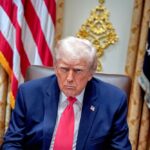
President Donald Trump’s weekend post on Truth Social sent a jolt through Washington after he declared that Democrats had become the greatest enemy facing the United States. The statement came as the country entered the fourth week of a military operation against Iran, and it did not go unanswered for long.
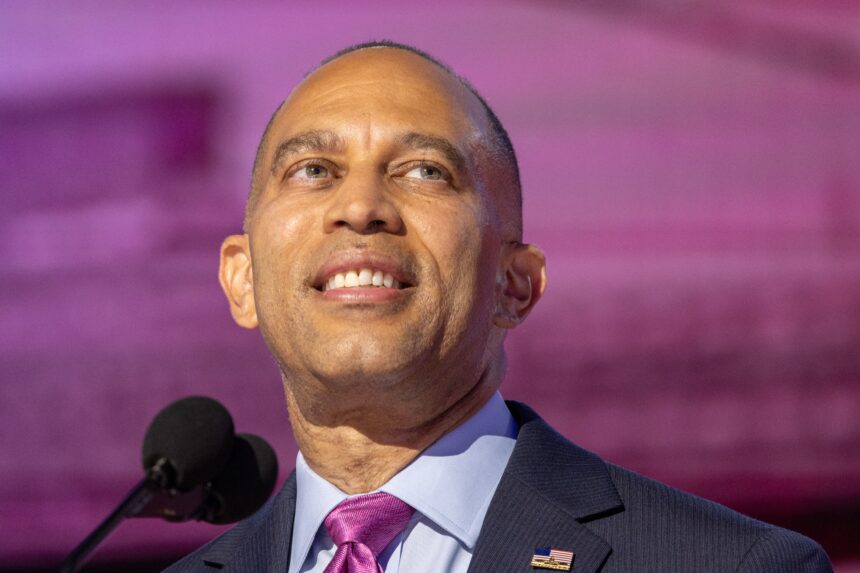
House Minority Leader Hakeem Jeffries appeared on CNN that same Sunday morning and, in the final moments of the interview, delivered one of his most direct rebukes yet. Responding to the post, Jeffries told the anchor that the president needed to stop speaking so recklessly before his words led to serious harm.
The exchange quickly drew attention, not only for its sharpness but for what it revealed about the deepening hostility between the White House and House Democrats heading into a turbulent spring.
What Trump actually posted
In the Truth Social post, Trump tied his attack on Democrats directly to the ongoing military conflict, which the administration has named Operation Epic Fury. The war began on Feb. 28 with joint strikes carried out alongside Israeli forces and has continued to generate both military and political debate at home.
Trump has offered shifting timelines for when the conflict might end. In one conversation he suggested operations would wrap up soon because targets had largely been exhausted. Days later, in a separate radio interview, he described the ending as something he would feel instinctively rather than plan strategically. Administration officials have not offered a consistent picture either, leaving lawmakers and the public with little clarity on what comes next.
Jeffries pushes back on ICE airport deployment
The back and forth over Trump’s post was not the only flashpoint during the CNN appearance. Jeffries also took direct aim at a separate announcement the president made that same day, revealing that Immigration and Customs Enforcement agents would be deployed to airports beginning March 23 to assist Transportation Security Administration workers.
The move came in response to a partial government shutdown that began in mid-February after Congress failed to pass funding for the Department of Homeland Security. The shutdown has caused staffing shortages at TSA checkpoints across the country, a problem that has grown more pressing as spring break travel season gets underway.
Trump attributed the shutdown to Democrats, while Jeffries argued the deployment of ICE agents into airport security environments created its own set of serious risks. He described ICE personnel as inadequately trained for the kind of sensitive, high contact work that airport security demands and warned the situation could become dangerous for the traveling public.
Jeffries a central voice in a divided Washington
Jeffries has emerged as one of the most consistent and vocal critics of the Trump administration since Republicans returned to full control of Washington in January. His willingness to challenge the president directly and in pointed language has made him a frequent target of White House criticism, even as it has solidified his standing among House Democrats navigating an increasingly combative political environment.
The confrontation over the greatest enemy post underscores how raw the tensions between the two parties have become, particularly as the Iran conflict stretches into its second month with no clear endpoint in sight and domestic pressures continue to mount on multiple fronts.
Whether the war winds down on the president’s instinct, as he suggested, or drags further into the year, the political battle at home shows no sign of cooling.