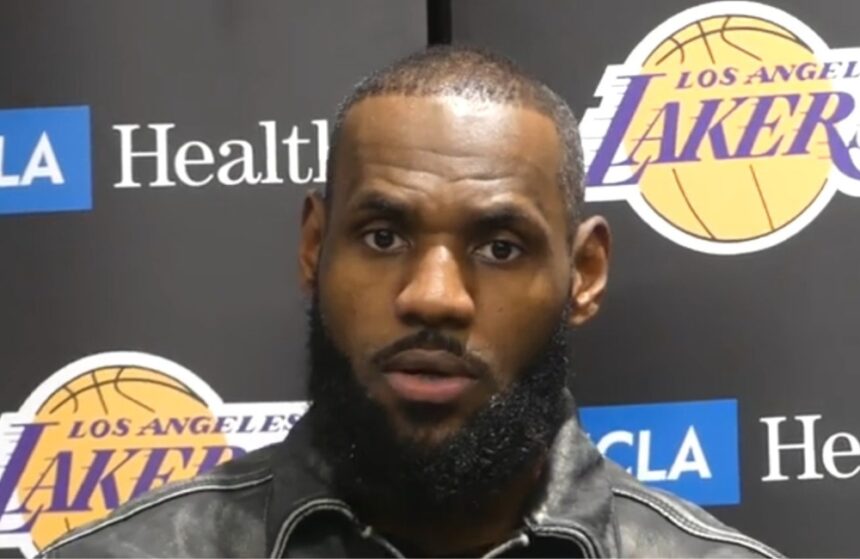
In the summer of 2020, a screenshot began making the rounds on social media that appeared to show LeBron James making deeply anti-white remarks. The post spread quickly, fueling sharp reactions from people who took the words at face value. There was just one problem. The quote had been stripped of every shred of context that made it make sense.
The comments had originally been made during the premiere episode of The Shop, LeBron’s HBO talk show, back in August 2018. When they resurfaced nearly two years later, they were presented as a straightforward expression of racial hostility. Multiple fact-checking organizations stepped in and found that interpretation to be false.
What he actually said
The full version of LeBron’s remarks told an entirely different story. He was describing his mindset as a 14-year-old kid from Akron, Ohio, stepping into a predominantly white Catholic high school for the first time. Having grown up in a community where the relationship between Black residents and white institutions had always felt distant and distrustful, he walked into that environment with his guard fully up. His words reflected the fear and defensiveness of a teenager navigating an unfamiliar world, not the views of the adult and public figure he would become.
He explained that his entire frame of reference up to that point had been shaped by a neighborhood where the sense that white America did not want Black people to succeed ran deep. Arriving at St. Vincent-St. Mary High School in Akron felt like entering foreign territory, and his instinct was to keep his circle tight and his focus narrow. He was there to play basketball, full stop.
From walls up to bonds built
That initial guardedness did not last long. Maverick Carter, LeBron’s longtime friend and business partner who also appeared on the episode, recalled that it did not take much time before LeBron began warming up to his white classmates, forming genuine friendships and finding common ground. The walls came down, and what replaced them were relationships that shaped the rest of his high school years.
At St. Vincent-St. Mary, LeBron and a tight group of friends including Sian Cotton, Dru Joyce III, Willie McGee and Romeo Travis built something extraordinary together. The group dominated Ohio high school basketball and captured the state championship in their senior year, becoming one of the most talked-about prep teams in the country.
A bigger conversation
The episode pointed to something larger than a single misquoted comment. It highlighted how social media can flatten nuance and turn a moment of personal vulnerability into ammunition for outrage. A teenager processing racial anxiety for the first time in a new environment became, in the hands of an out-of-context screenshot, evidence of something sinister. The fact-checkers caught it, but by then the damage to public perception had already been done for many who never saw the correction.
LeBron has spoken openly about race throughout his career, including in 2017 when his Los Angeles home was vandalized with a racial slur. That incident reinforced his long-held view that despite progress, the United States still has a significant distance to travel before Black Americans experience true equality.
His willingness to stay vocal on that subject, even knowing that his words can be twisted and weaponized, reflects the kind of courage that defines his public life as much as anything he has done on a basketball court.