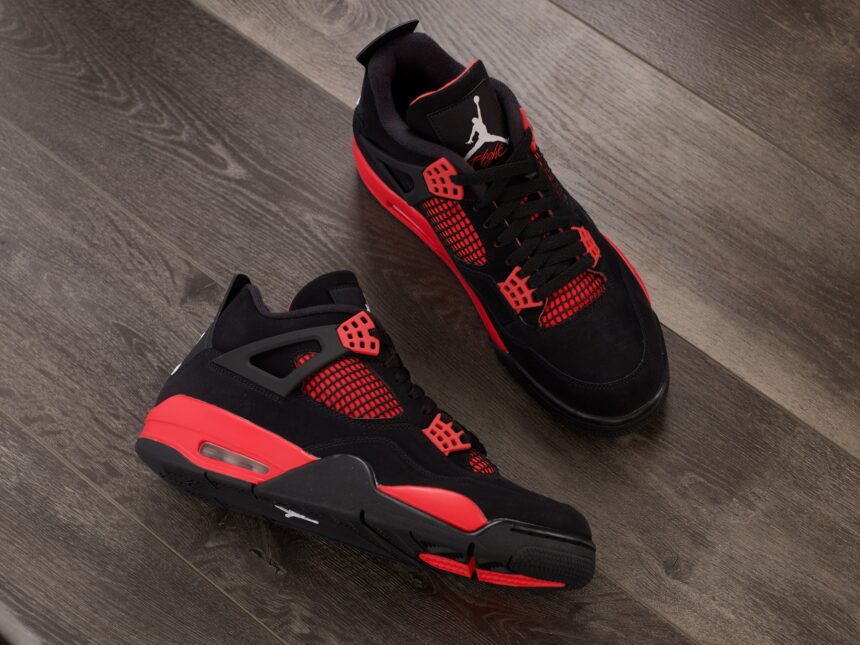

Jeff Staple has a credibility problem with this year’s sneaker of the year winner and he is not keeping it to himself. The designer behind the Nike SB Dunk Pigeon, one of the most culturally significant sneaker collaborations ever produced, used a recent podcast appearance to challenge the decision to hand the sport’s most prestigious individual honor to Nigel Sylvester’s Brick After Brick Air Jordan 4. His argument is straightforward and deliberately provocative: a different color on a 30-year-old silhouette does not constitute the kind of innovation that a sneaker of the year award should recognize.
Staple’s willingness to say this publicly matters precisely because of who he is. He is not a casual observer or a contrarian commentator operating from the margins. He is a designer whose career has been built on understanding what makes a sneaker culturally significant rather than merely commercially successful, and his opinion carries the weight of that history behind it.
The core of Staple’s argument
The question Staple posed during the podcast cuts to the heart of a debate that the sneaker community has been having quietly for years: at what point does a collaboration become genuinely creative rather than simply well executed? His framing asking how a colorway change on a decades-old model earns the sport’s top award is a direct challenge to the criteria being applied.
To illustrate the point, he drew a parallel to the automotive industry, suggesting that awarding a 1984 Honda Civic in red the car of the year would be considered absurd. He extended the analogy further, arguing that putting a new frame on a 30 year old painting does not make the painting new. The logic is consistent: aesthetic refinement and genuine innovation are not the same thing, and awards designed to recognize the latter should not be given for the former.
What the Sylvester Jordan 4 actually is
The Brick After Brick Air Jordan 4 was a collaboration between Nigel Sylvester, the professional BMX rider and creative force who has built a reputation for thoughtful Nike partnerships, and Jordan Brand. The release generated significant demand across both the sneaker and BMX communities, and by most measures it was considered one of the cleaner, more compelling Jordan 4 colorways of the year.
But Staple’s point is precisely that compelling colorway and sneaker of the year are not equivalent categories. The Jordan 4 silhouette was designed by Tinker Hatfield and debuted in 1989. Whatever Sylvester and Jordan Brand produced together, the foundational design work was done more than three decades ago. The collaboration sits within that legacy rather than creating something outside of it.
What genuine sneaker innovation looks like
Staple’s own career provides the implicit counterexample to his critique. The Nike SB Dunk Pigeon, released in 2005, was celebrated not simply for its colorway but for what it represented a story about New York City, a community connection and a limited release strategy that helped define how scarcity and cultural narrative could be woven into a sneaker’s identity. The shoe was innovative not because it introduced a new silhouette but because it introduced a new way of thinking about what a sneaker collaboration could communicate.
That distinction between a well chosen color story and a genuinely new idea is what Staple is defending. And his argument raises a legitimate question for the institutions that hand out these awards: what exactly are they rewarding, and does their answer reflect what sneaker culture actually values?
Why the debate matters beyond this specific award
The conversation Jeff Staple has opened is about more than one sneaker or one award cycle. As collaborations have become the dominant commercial and cultural force in the sneaker industry, the line between genuine creative contribution and brand approved aesthetic variation has blurred considerably. Limited releases built around heritage silhouettes have become the default format for high profile partnerships, and the market has rewarded that approach consistently enough to make it the industry standard.
Whether the Air Jordan 4 sneaker of the year criteria should evolve alongside that reality or push back against it is a question the community is now having in more direct terms because Staple was willing to raise it publicly. His critique may not change how awards are decided, but it has reintroduced a standard worth defending: that the highest recognition in sneaker culture should go to work that moves the culture forward rather than work that honors where it has already been.