President Donald Trump formally submitted his nomination of former Federal Reserve governor Kevin Warsh to the U.S. Senate on Wednesday, setting in motion a confirmation process that is already drawing intense scrutiny from financial markets, economists and anyone paying close attention to the future of American monetary policy.
On paper, Warsh is a credentialed and relatively conventional choice. He attended Stanford as an undergraduate, earned a law degree from Harvard, built a career at Morgan Stanley and became the youngest person ever appointed to the Federal Reserve Board of Governors. The resume is polished and the pedigree is hard to argue with. Wall Street’s initial reaction when the nomination was announced last week was one of measured relief, a sense that Trump had chosen a recognizable institutionalist rather than a purely partisan loyalist.
But the more closely observers have examined the nomination, the more complicated the picture has become.
The condition Trump attached to the job
What has unsettled analysts and market watchers is not Warsh’s background but the explicit terms Trump has attached to the role. The president has stated publicly that anyone who disagrees with him will never serve as Fed chair, a declaration that cuts to the heart of what central bank independence is supposed to mean. The Fed chair appointment is widely considered one of the most consequential decisions any president makes, and the idea that it comes with a loyalty requirement is a significant departure from decades of institutional norms.
This places Warsh in a genuinely difficult position before he has even been confirmed. Winning Senate approval will require convincing lawmakers and financial markets that he is capable of exercising independent judgment. At the same time, the circumstances of his selection make it impossible to fully separate his candidacy from the president’s stated desire for a central banker who supports lower interest rates and faster economic growth.
Warsh’s record adds more complexity
Beyond the structural tension, Warsh’s own history has attracted scrutiny. Analysts have pointed to his widely documented misreading of the economic recovery that followed the 2008 financial crisis. His reputation as a monetary policy hawk, favoring higher interest rates, has also raised eyebrows given Trump’s longstanding and loudly expressed preference for cheap money. Some observers have noted that Warsh appeared to soften his public stance on inflation risks following Trump’s reelection, a shift that struck some as more politically timed than analytically driven.
By early this week those specific concerns had somewhat faded from the foreground as attention shifted to stronger than expected manufacturing data and a stock market that ended Monday just shy of a record close. But the underlying questions about Warsh’s independence have not gone away.
Trump’s campaign against the Fed
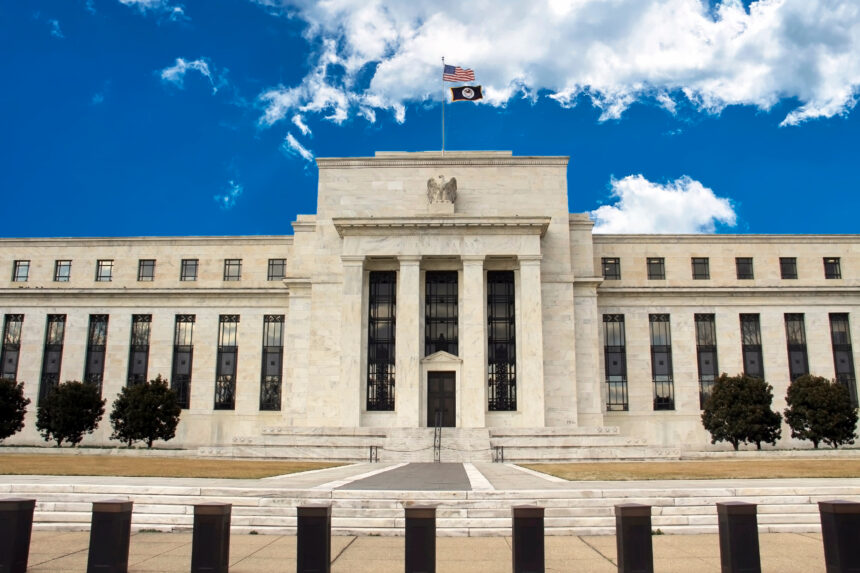
The Warsh nomination did not arrive in a vacuum. Trump has spent years applying pressure to the Federal Reserve through a combination of public attacks, personnel moves and, most recently, legal escalation. He has repeatedly threatened to remove current Fed Chair Jerome Powell, at one point suggesting Powell posed a greater threat to the country than foreign adversaries. An attempt to remove a Biden-appointed Fed governor on contested legal grounds is now working its way toward the Supreme Court. And last month the Justice Department opened a criminal investigation into the Fed itself, a move that drew a rare public response from Powell.
Against that backdrop, Warsh accepted the nomination fully aware of what he is walking into. The job he is seeking is one of the most influential in the world, overseeing interest rate decisions that ripple through every corner of the global economy. But it is also a job that, under the current political climate, comes loaded with expectations that have nothing to do with economics and everything to do with loyalty.
Whether Warsh can navigate that tension without compromising the institution he would be leading is the question that will define his confirmation and, if he succeeds, his entire tenure.