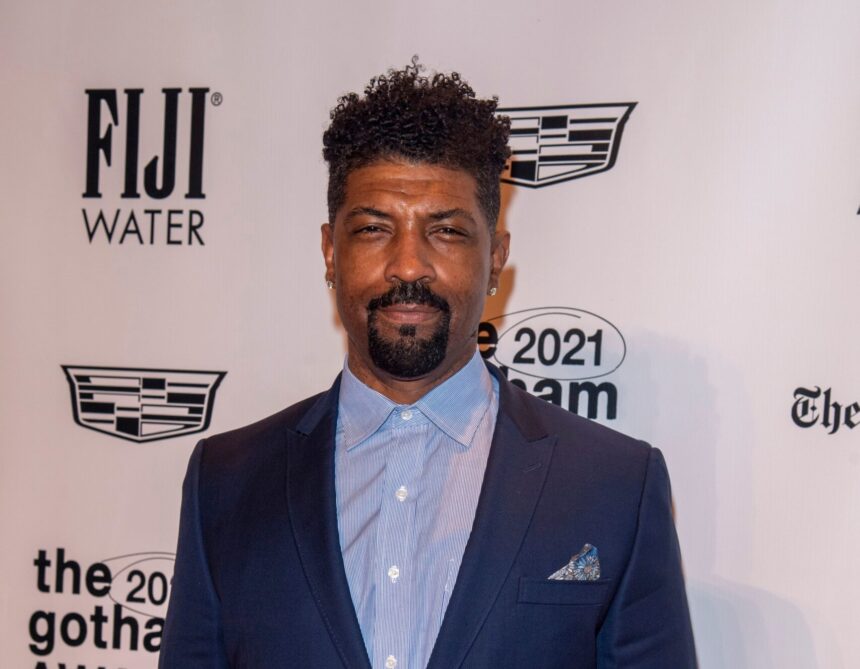
It lasted about eleven seconds. By Sunday afternoon it had become something else entirely. When comedian Deon Cole took the stage at the 57th NAACP Image Awards in Pasadena on February 28, he opened with the kind of preacher-style bit that awards show hosts have leaned on for decades. He blessed a few celebrities, took a gentle swing at a few others, and then landed on Nicki Minaj with a punchline that referenced her documented history with cosmetic procedures and a recent political pivot that has reshaped how much of her audience sees her.
The crowd responded. The clip spread. And then Cole’s inbox became a very different kind of conversation.
What the joke was actually about
The bit was not constructed from thin air. Minaj has spoken openly in the past about receiving cosmetic enhancements, and that context gave Cole a foundation to work from. But the sharper edge of the joke pointed at something more recent. In January 2026, Minaj appeared at a White House event tied to a new investment program connected to President Trump’s tax legislation, describing herself as an enthusiastic supporter and pledging a substantial financial contribution. She later posted about receiving a commemorative card from the administration and mentioned she was in the process of finalizing citizenship paperwork.
Whether that sequence of events reads as a genuine political evolution or a jarring departure from her public persona depends entirely on who is doing the reading. For Cole, it offered exactly what hosts need: a current, recognizable and instantly debatable target. He took the opening. The room laughed. The cameras moved on.
Then the messages arrived
Cole later shared screenshots on social media showing what he described as the response to his monologue. The messages ranged from crude to threatening, arriving in volume and at speed. There is no suggestion that Minaj directed anyone toward Cole. The more striking detail is the source of the outrage, which did not come from a single direction. Portions of Minaj’s fanbase mobilized, as they reliably do when they perceive an attack on her. But accounts aligned with pro-Trump political circles also joined the pile-on, framing the joke as a political attack dressed up as comedy.
Two groups with almost nothing in common arrived at the same target through entirely different doors. Almost nobody commenting on the story appeared to find that convergence worth examining. It is the part of the story that deserves the most attention.
Three ways to read this and only one that holds up
The responses to the backlash have settled into predictable camps. One side argues that major celebrities are fair game and that an awards show monologue is not a personal attack. Another side contends that body-based humor is a lazy choice when sharper political material was readily available. Both positions have some merit and neither fully accounts for what actually happened.
The more honest reading acknowledges that the joke can be criticized on its own terms while also recognizing that harassment is not a reasonable response to a comedy bit. A punchline at a televised ceremony and threats sent to a private inbox are not equivalent acts, regardless of how one feels about the original material. That position is also the least popular one online, precisely because it does not generate content or consolidate any particular audience.
A fandom, a political moment and a shared operating system
What the Cole episode makes visible is something that has been building for years. When celebrity fandom merges with political identity, the rules of engagement change. Minaj’s fanbase has long been known for its intensity and its willingness to treat criticism of her as a provocation requiring a response. That dynamic did not shift when she aligned herself with a political movement. It simply found new allies and new fuel.
The question worth sitting with is not whether the joke was worth telling. It is what it means when a comedian faces a coordinated response from pop stans and political extremists simultaneously, and whether the celebrity at the center of both camps bears any responsibility for the world her platform helped create.