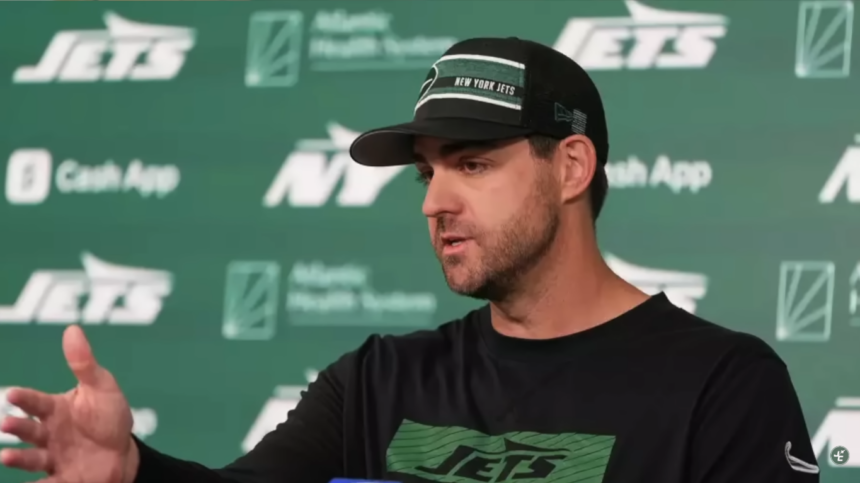
Aaron Glenn parts ways with OC after 3-14 disaster as New York searches for fresh start on both sides
The New York Jets are blowing up their coaching staff. Tanner Engstrand is done as offensive coordinator after just one season, parting ways with the team on what both sides are calling a “mutual decision.” But let’s be real: when a team finishes 3-14 and the head coach has “multiple conversations” with his OC about the future, mutual decision usually means the coordinator saw the writing on the wall. Either way, Engstrand is gone, and the Jets are now searching for both a new offensive coordinator and a new defensive coordinator simultaneously. That’s not ideal. That’s actually pretty desperate.
Aaron Glenn is already in rebuild mode, and he’s only been head coach for one season. The Jets went 3-14 in his first year a catastrophic start that left everyone questioning whether this organizational reset is actually working. Now Glenn is essentially saying: I need new coordinators to do my job properly. New offensive system. New defensive scheme. Fresh start across the board. When you’re making those moves after one year, it’s an admission that the entire infrastructure needs to be rebuilt.
Engstrand’s departure came after conversations with Glenn about his role moving forward. The team announced they’d part ways mutually, but those conversations happened because the offense was a disaster. The Jets ranked last or near-last in just about every meaningful offensive metric. They couldn’t score. They couldn’t protect the quarterback. They couldn’t establish rhythm or consistency. Whether Engstrand was the problem or just part of a larger organizational issue is debatable, but the Jets apparently decided they needed to find out with someone else.
When one year isn’t enough—or it’s exactly enough
Here’s the question hanging over this decision: Is one year enough time to evaluate an offensive coordinator? Or is it exactly the right amount of time to realize things aren’t working? The Jets’ offensive performance last season suggests the latter. The team was historically bad. When your offense produces that little production with talent like Garrett Wilson and Breece Hall in the backfield, the playcalling and scheme have to take some blame.
Glenn came in with the mandate to turn around a franchise that’s been a disaster for years. Year one was supposed to be a foundational reset. Instead, it was a complete implosion. The offense under Engstrand couldn’t establish an identity. There was no consistency. There was no progression. Just week after week of struggles and minimal output.
Now Glenn gets his chance to install his own offensive system with a new coordinator. Whether that coordinator actually has the vision to elevate this offense is the real question. The Jets have talented pieces. Garrett Wilson is an elite receiver. Breece Hall is a dynamic back. The team has draft capital to add more help. But the offense needs to function at a basic level first, which it didn’t last year.
The dual search nightmare
What makes this situation particularly challenging is that the Jets need to find both an OC and a DC almost simultaneously. Steve Wilks was already fired as defensive coordinator in December. Now, with Engstrand gone, the Jets are essentially rebuilding their entire coaching infrastructure on both sides of the ball. That’s not building incrementally. That’s starting over.
The offensive coordinator search starts immediately. So does the defensive coordinator search. Glenn is going to be interviewing candidates for both positions, evaluating both systems, and trying to find coordinators who understand his vision for what the Jets can become. That’s a lot of moving pieces for a second-year head coach who just finished 3-14.
Year two is make-or-break for Glenn
This is Glenn’s message heading into 2026: we’re getting a complete reset. New offensive coordinator. New defensive scheme. Presumably new energy and direction. If the Jets still struggle offensively next season, it won’t be on Engstrand anymore. It’ll be on Glenn’s ability to select and empower the right coordinators.
The 3-14 record gave Glenn some leeway. Ownership and fans understood that year one would likely be rough while he established culture and infrastructure. But year two? Year two is when results actually matter. If the Jets go out and hire promising coordinators and still can’t get better, then questions will start turning toward whether Glenn is the right guy for this job.
For now, though, the Jets are moving on. Engstrand is out. The search begins. And Glenn gets his chance to build the coaching staff he actually wants.