

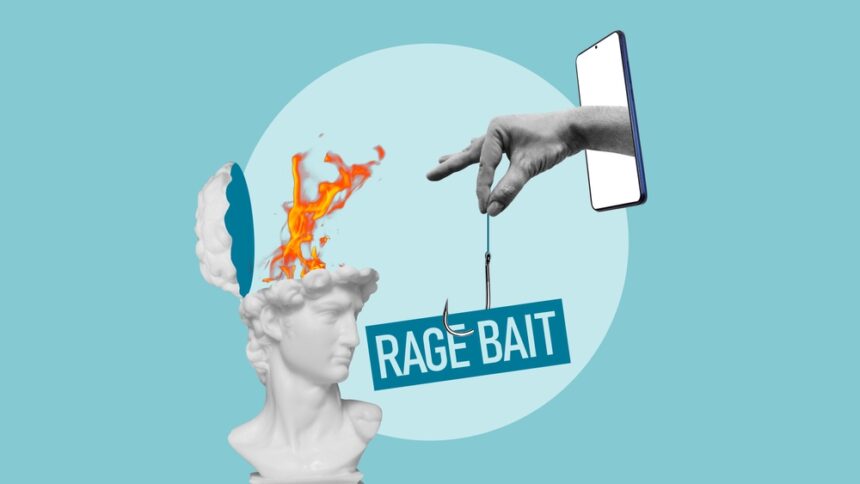
That infuriating video in your feed may have been designed to make you angry.
Creators are using artificial intelligence to produce rage bait, content built to spark outrage, because anger drives the comments, shares and views that turn into money.
How does AI rage bait work?
The founder of a small software company told The Epoch Times he has used the tactic himself. A creator uses AI to make a video that looks like a real person filmed it, often pushing a provocative opinion.
For example, a video promoting a weight loss app might claim people who are not losing weight are not trying hard enough, then show the person opening the app. Angry viewers pile into the comments and share it, and some ask for the app’s name.
He said the comment asking for the name is often written by the app’s founder or a second account. He said the videos go viral because of the emotional spike, as people replay them and send them to friends.
Why does rage bait make money?
A content coach who runs faceless YouTube channels said outrage drives comments and shares that push videos to more people. He said the money is not in the anger itself but in the views the anger buys.
Creators cash in through ad revenue, payout programs on platforms like X, Facebook and TikTok, affiliate links and paid courses. An AI expert said rage content can draw five to 10 times as many comments and shares as neutral posts.
Facebook paid creators nearly $3 billion last year, a 35% increase and its highest annual total ever, according to The Epoch Times. A Kingston University researcher has written that more likes, comments, shares and saves on short video platforms mean more revenue for creators.
How big is the problem?
A 2026 analysis of 340 Facebook pages by the Canadian Digital Media Research Network found a coordinated group, operating mostly from Vietnam, using AI fabricated stories to drive users in Canada, the United States and Europe to fake news sites for ad revenue.
European nonprofit AI Forensics reviewed 354 TikTok accounts and found that more than 43,000 mostly AI generated posts drew 4.5 billion views in one month last year, including sexualized content and anti immigrant narratives.
AI has made rage bait cheap. One expert said a single person can now produce dozens of videos a week for close to nothing.
What are platforms doing about rage bait?
Meta has warned that accounts gaming engagement for money can face reduced reach and limits on monetization. YouTube treats inflammatory or shocking content as potentially unsuitable for ads, and X lists engagement bait as ineligible for payouts.
TikTok does not specifically ban posts meant to provoke, though it prohibits false information that could cause significant harm. Experts say much rage bait lives in a gray area, since intent is hard to prove.
A behavioral scientist said people often share content they disagree with to signal disapproval, which spreads it further. He urged platforms to target coordinated manipulation while leaving room for honest disagreement.
How can you avoid falling for rage bait?
Before commenting or sharing, pause and ask whether a post seems designed to make you angry. Engaging, even to criticize, can boost its reach.
Watch for signs of AI, such as odd details or accounts with no history, and be wary of comments that conveniently ask for a product name.
Experts warn that rage bait can backfire on creators, eroding trust and leaving audiences more cynical about everything they see online, including honest reporting. The coach said lasting channels are built on useful or entertaining content, not manufactured anger.