
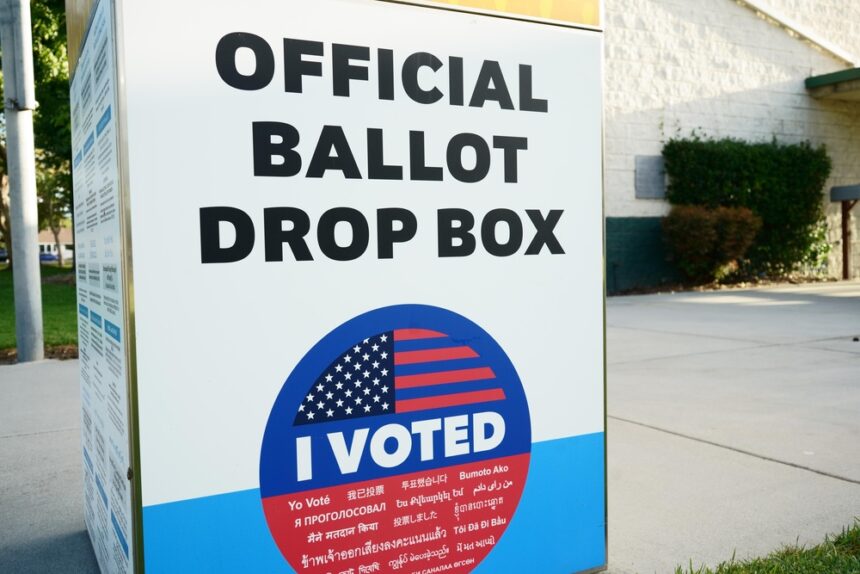
With midterm voting well underway, a federal appeals court is weighing whether Washington can tell California how to handle some of its ballots.
A federal appeals court on Sunday, Oct. 25, 2026, expressed skepticism over the Trump administration’s bid to make California set aside mail ballots from voters the government suspects are noncitizens.
What happened at the appeals court hearing?
A panel of three judges on the Ninth Circuit Court of Appeals held an emergency hearing by video on the mail ballots dispute after the Justice Department asked the court to step in. The hearing lasted nearly two hours.
Judge Mark Bennett, an appointee of President Donald Trump, said California has authority under the Constitution’s Elections Clause to decide how it runs its elections, including how it handles any votes from noncitizens.
He said Congress has not overridden the law California adopted and suggested the government was asking for an order entirely inconsistent with that law.
Bennett and Judge Gabriel Sanchez, an appointee of President Joe Biden, also questioned whether the appeals court should rule before a lower court judge holds his own hearing on Tuesday. Judge Patrick Bumatay, another Trump appointee, focused more on the government’s concerns about ineligible voters. The panel did not issue a decision at the end of the hearing.
What does the Justice Department want?
The department sued California on Oct. 15, asking a federal judge to order the state to separate mail ballots returned by about 20,000 people on a federal list of suspected noncitizens and not count them until their citizenship is verified. The suit also accused state officials of missing a deadline of 48 hours to review the names.
A Justice Department lawyer said the department sought emergency help after California reported processing more than 330,000 mail ballots. He argued that letting noncitizens vote would cause harm that cannot be undone and called the lower court’s schedule too slow. He described the lower court’s slow pace as effectively denying the request.
How has California responded?
State officials have rejected the demand. A lawyer for California said checking an expected 2.75 million mail ballots against the federal list would take about 140,000 hours of work, and the state disputes the claim that noncitizens are voting.
California’s attorney general accused the department of using the law as a political weapon. State officials say California already has safeguards to verify voter eligibility.
Democratic lawmakers have also pointed to problems with the federal list. In a separate lawsuit filed this month, they said more than a quarter of the people on the California list were born in the United States.
Is noncitizen voting common?
No. Studies have found that voting by noncitizens is rare. It is already a crime for noncitizens to vote in federal elections. Several studies and state audits over the years have turned up only small numbers of cases.
Critics warn that flawed federal data could wrongly flag eligible citizens and delay their mail ballots, while the administration says it is trying to ensure only citizens vote.
What happens next with the mail ballots?
Bennett said the panel would try to rule as quickly as possible. U.S. District Judge David Carter is scheduled to hold a hearing on the request Tuesday. It is unclear whether the appeals court will act before that hearing.
The outcome could affect how California processes mail ballots in the final days before the Nov. 3 midterm elections, which will decide control of Congress.
The case is one of several legal fights over the federal government’s role in state elections this fall, including a Justice Department lawsuit challenging a possible result in Alaska’s Senate race.