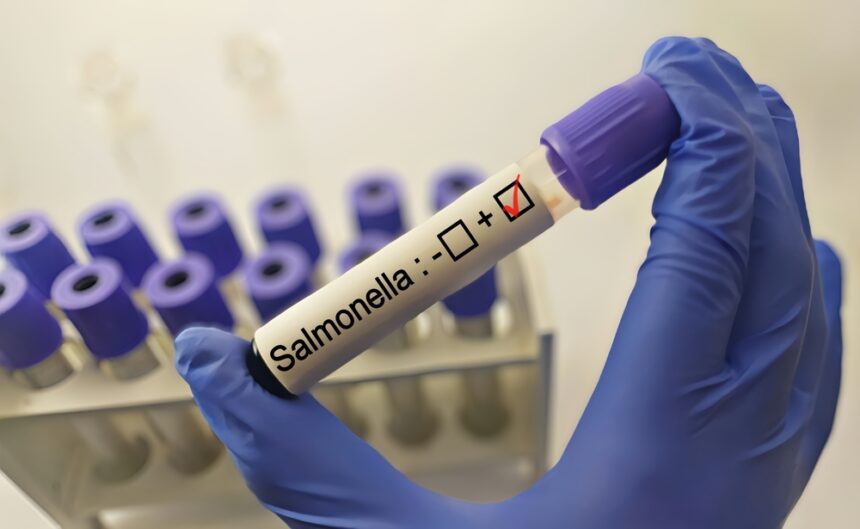
Federal health officials are investigating a Salmonella outbreak linked to jalapeño peppers grown in Sinaloa, Mexico, and distributed by Coast Citrus Distributors, with 345 confirmed cases reported across 27 states as of Aug. 4.
The Centers for Disease Control and Prevention said 36 people had been hospitalized, though complete hospitalization data was not available for all cases. No deaths have been reported. Illness onset dates ranged from June 19 through July 20, and investigators said the total number of cases is likely higher than the confirmed count, since many people recover from Salmonella infections without seeking medical care.
The strain involved is Salmonella Javiana. Federal investigators spoke with 191 people about what they had eaten before becoming ill and found that the large majority had eaten at a Mexican-style restaurant, including Chipotle Mexican Grill and QDOBA locations, between June 14 and July 14. Investigators identified 27 illness clusters at those chains across seven states, defined as two or more unrelated people who ate at the same location in the days before they became sick. Those individuals reported eating items including jalapeño peppers, red onion, cilantro and avocado.
What investigators found and where the trail led
The Food and Drug Administration traced the jalapeños at the center of the outbreak to a single grower in Sinaloa that supplies Coast Citrus Distributors. From there, the peppers were shipped to distributors, restaurants and food-service companies. Officials said the available data points to jalapeños as the likely source, though the epidemiological and traceback investigation is ongoing.
The cluster data is significant in outbreak investigations because it allows epidemiologists to narrow the source when a contaminated ingredient is shared across multiple restaurant locations. When unrelated people at multiple Chipotle and QDOBA locations in multiple states all report eating the same items and then become ill with the same bacterial strain, it creates a pattern that points toward a common ingredient in the supply chain rather than a localized preparation or handling problem at any single location.
Coast Citrus Distributors is a produce distributor, and the peppers it handled originated with a single growing operation in Sinaloa. Mexican agricultural exports, particularly fresh produce, are a regular subject of U.S. food safety monitoring because the volume of cross-border produce is substantial and growing conditions can differ from domestic standards in ways that affect contamination risk.
What Salmonella Javiana is and how people become infected
Salmonella Javiana is one of dozens of Salmonella serotypes that can cause illness in humans. Salmonella infections typically cause diarrhea, fever and abdominal cramps that begin six hours to six days after exposure and last four to seven days. Most people recover without treatment, but severe illness can occur, particularly in older adults, young children and people with weakened immune systems. Hospitalization is sometimes required when dehydration or more serious complications develop.
Fresh produce can become contaminated with Salmonella through contact with contaminated water, soil, animals or handling at any point in the production and distribution chain. Jalapeños and other peppers have been the source of previous outbreaks in the United States, including a notable one in 2008 that was initially attributed to tomatoes before investigators traced it to peppers from Mexico.
What people should do
The CDC has not issued a specific consumer advisory recommending that people avoid jalapeños broadly, as the investigation is focused on peppers distributed through a specific supply chain. However, consumers who have recently purchased jalapeños and are uncertain of their source may choose to discard them as a precaution.
Restaurants that received jalapeños through Coast Citrus Distributors or its supply partners are a focus of the investigation. Food-service operations that received product from that distribution network should consult the CDC and FDA websites for the most current guidance.
People who develop symptoms of Salmonella infection, including diarrhea, fever and stomach cramps, particularly after eating at restaurants that have been identified in the outbreak, should contact a healthcare provider. Most people recover without treatment, but medical evaluation is advisable for those experiencing severe symptoms or who fall into higher-risk categories.