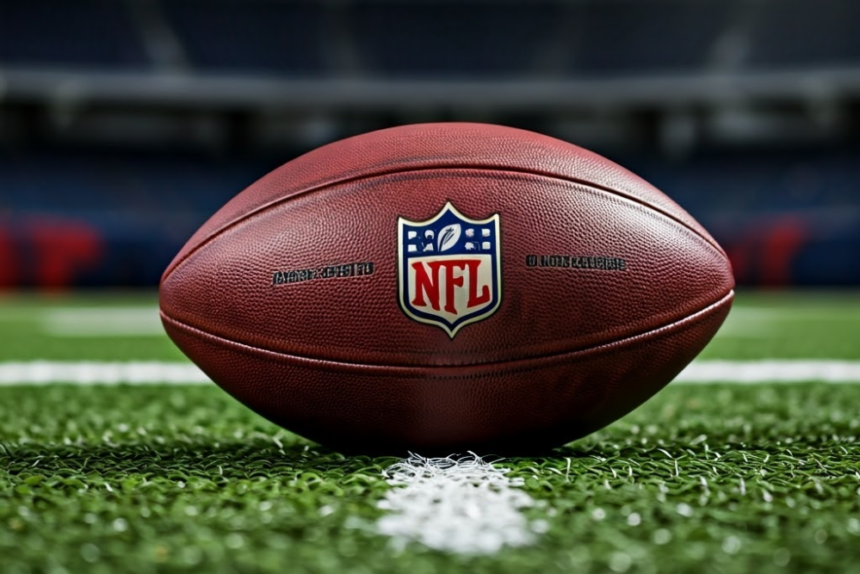
The U.S. Department of Justice has opened an inquiry into how the NFL distributes its broadcast rights, according to a report from the Wall Street Journal. The investigation centers on whether the league’s media deals restrict competition in ways that ultimately harm consumers, a question that has been building quietly in sports media circles for several years.
The timing matters. The NFL has spent the better part of the past decade migrating games away from free over-the-air television and onto platforms that require paid subscriptions, and the federal scrutiny arrives as that shift accelerates.
How the NFL’s broadcast landscape changed
Not long ago, nearly every NFL game was available on network television at no additional cost to fans. That model has been steadily unwinding. Games now appear on Amazon Prime Video, Netflix, YouTube, ESPN+ and Peacock, each requiring its own subscription. The NFL has defended this trajectory aggressively, pointing out that more than 87% of its games remain on free broadcast television and noting that the 2025 season was the most watched since 1989.
Those figures are accurate as far as they go. What they do not address is the direction of travel. Each new streaming deal moves another piece of the schedule behind a paywall, and the league’s argument that most games remain free today says little about where the model is heading.
Sunday Ticket and the price fans are actually paying
The more immediate grievance for many fans involves NFL Sunday Ticket, the out-of-market package that migrated from DirecTV to YouTube TV several years ago. The cost for non-YouTube TV subscribers reached $480 last season, a figure that has climbed steadily even as more games have been sold to streaming platforms separately.
The value equation has become harder to defend. Fans paying for Sunday Ticket to watch games that are simultaneously being carved off and sold to individual streaming services are effectively paying more for less. The league’s position is that the product remains robust. The fans writing the checks increasingly disagree.
What the DOJ is actually examining
The investigation focuses on broadcast distribution practices broadly, meaning the DOJ is looking at how the NFL structures its media rights agreements and whether those arrangements foreclose competition or create conditions that harm consumers. The NFL holds an antitrust exemption under the Sports Broadcasting Act of 1961, which permits the league to negotiate television deals collectively on behalf of all 32 teams. That exemption was designed for an era of three broadcast networks and has been stretched across an increasingly fragmented media landscape.
Whether the DOJ concludes that the league has violated the boundaries of that exemption, or that its practices outside the exemption raise separate concerns, will determine how significant the inquiry ultimately becomes.
What a finding could change
If the Justice Department determines that the NFL’s practices cross into anticompetitive territory, the consequences could reach well beyond a single streaming deal. The league could face pressure to restructure how it packages and sells rights, which would have downstream effects on what fans pay and where they watch. It could also invite closer scrutiny of how other major sports leagues handle their own broadcast arrangements.
For now, the investigation is in its early stages and the NFL has not indicated any intent to alter its current model voluntarily. The league’s statement defending its distribution practices suggests it views the inquiry as manageable rather than existential.
What fans should watch
The most consequential question is not whether the DOJ finds a technical violation. It is whether the investigation generates enough pressure to slow or reverse the migration of games away from free television. Fans in lower-income households, older viewers without streaming subscriptions, and anyone living outside a team’s local market have the most at stake in how this resolves.
The NFL built its cultural dominance on universal accessibility. Every game, every week, available to anyone with a television antenna. That era is not entirely over, but it is measurably closer to ending than it was five years ago. Federal attention, whatever its outcome, is at minimum a signal that the transformation has not gone unnoticed.