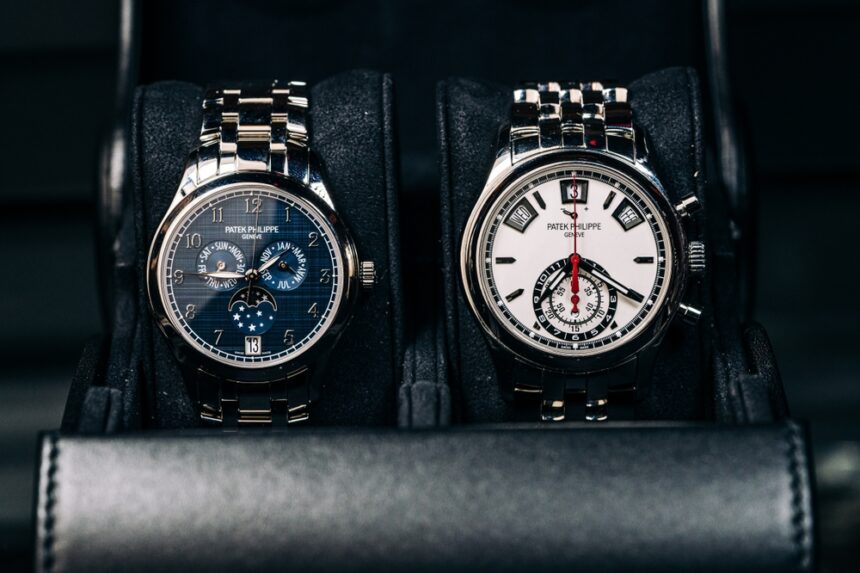
There is a saying whispered in the corridors of Geneva’s finest watchmakers — you never truly own a Patek Philippe. You merely take care of it for the next generation. It is a line the brand itself has leaned into for decades, and for good reason. Patek Philippe watches are not just instruments of time. They are financial assets, heirlooms, and status symbols rolled into one extraordinarily crafted package. In a world where luxury goods depreciate the moment they leave the boutique, Patek Philippe does something remarkable — it appreciates.
The question worth asking is simple. Why? What separates this Swiss manufacture from the hundreds of other prestigious watchmakers competing for wrist space and wallet share? The answer is a combination of scarcity, craftsmanship, legacy, and an almost obsessive commitment to quality that the market has rewarded handsomely for over 180 years.
The Scarcity Factor That Drives Demand
Patek Philippe produces a limited number of watches each year — estimates place annual production at roughly 50,000 to 70,000 pieces. Compare that to Rolex, which produces over one million watches annually, and the scarcity equation becomes immediately clear. When demand vastly outpaces supply, prices do not fall — they climb.
This is not accidental. The Geneva manufacture has deliberately kept production tight, refusing to scale in ways that would dilute exclusivity. Certain models, like the iconic Nautilus ref. 5711, have waiting lists that stretch years. When Patek Philippe discontinued the stainless steel Nautilus 5711 in 2021, secondary market prices shot past $100,000 — more than triple its original retail price.
- Limited annual production preserves exclusivity
- Discontinued models spike dramatically in resale value
- Waiting lists create sustained long-term demand
Patek Philippe Craftsmanship Sets the Standard
Every Patek Philippe watch is assembled by hand. The finishing on each movement — the beveling, polishing, and decoration of individual components — is executed with a level of detail that very few manufactures in the world can match. The brand holds the prestigious Geneva Seal, a certification that guarantees exceptional mechanical quality and finishing standards.
Beyond aesthetics, the mechanical complexity found in Patek Philippe references is staggering. The brand holds the record for producing some of the most complicated watches ever made, including the legendary Caliber 89 — a pocket watch featuring 33 complications. This technical mastery translates directly into perceived and actual value, making each Patek Philippe a masterpiece that collectors are willing to pay premium prices to acquire and hold.
Legacy and Heritage Build Irreplaceable Brand Power
Founded in 1839 in Geneva, this watchmaker remains one of the last independent, family-owned manufacturers in Switzerland. That independence carries real weight. Unlike brands absorbed into luxury conglomerates, it answers to no shareholders. Every decision — from design to distribution — is guided by long-term brand integrity rather than short-term financial pressure.
This heritage goes beyond marketing. It is backed by a proven track record. Timepieces from the 1940s, 1950s, and 1960s consistently break auction records at Christie’s and Sotheby’s. A steel ref. 1518, for instance, sold for over $11 million at a Phillips auction in Geneva — once the highest price ever paid for a stainless steel watch.
The Patek Philippe Resale Market Is Remarkably Resilient
Unlike most luxury goods, these watches have demonstrated a consistent ability to retain and grow in value even during economic downturns. During periods of market volatility, collectors and investors tend to move toward hard assets — and this brand has proven to be one of the most reliable among them.
The secondary market is deep, global, and well-organized. Platforms like Chrono24, Bob’s Watches, and major auction houses maintain consistent liquidity for these timepieces. Buyers understand that a watch purchased today carries a strong probability of appreciating in value over five, ten, or even twenty years.
- Resale prices consistently exceed original retail
- Strong global secondary market ensures liquidity
- Economic downturns rarely suppress Patek Philippe values long-term
Which Patek Philippe Models Deliver the Best Returns
Not every reference performs equally on the resale market, but several models have proven to be particularly outstanding investments over time:
- Nautilus ref. 5711 — The most coveted sports watch of the modern era, with resale prices far exceeding retail
- Aquanaut ref. 5167 — A younger, sportier sibling to the Nautilus that has seen explosive secondary market growth
- Calatrava ref. 5196 — The definitive dress watch that holds value with quiet, understated elegance
- Perpetual Calendar ref. 5320G — A complication powerhouse beloved by serious collectors worldwide
- Grand Complications ref. 5270 — A perpetual calendar chronograph that represents the pinnacle of watchmaking achievement
Each of these references shares a common trait — they are produced in limited quantities, finished to an extraordinary standard, and carry the full weight of the Patek Philippe name behind them.
Owning a Patek Philippe is rarely described as a transaction. It is more often called an initiation — an entry into a world where time is measured not just in seconds, but in generations. Whether purchased as a personal reward, a collector’s trophy, or a deliberate financial move, one truth remains consistent across decades of data and auction results. Few things in the luxury world hold their worth the way a Patek Philippe does, and even fewer have the power to pass that worth forward.