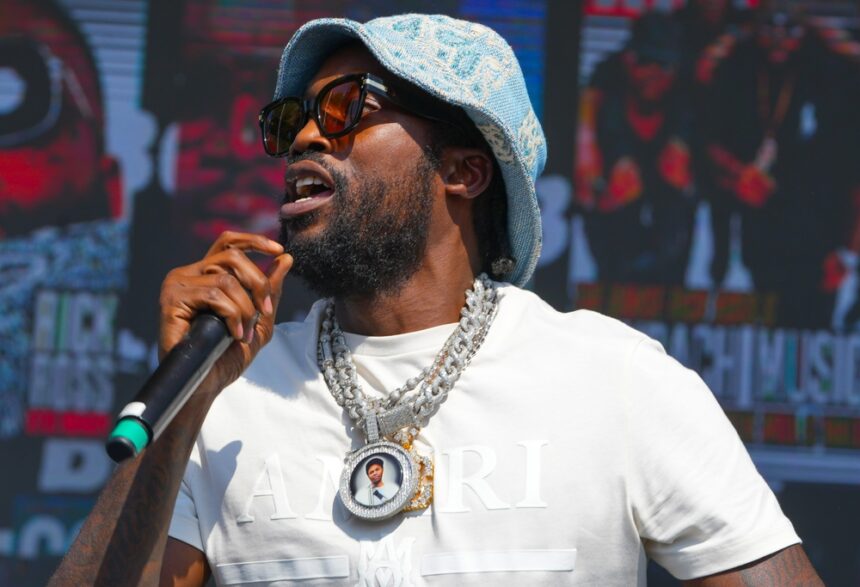
The Philly rapper pushed back hard on social media, pointing to a string of platinum releases as proof that his career has stayed on course.
The ongoing conversation about Meek Mill’s career took a sharp turn recently when Charlamagne Tha God used an episode of his podcast, Brilliant Idiots, to suggest that Meek has never fully recovered from his years long public feud with Drake. The commentary did not sit well with Meek, who wasted little time making his feelings known.
What Charlamagne said
Charlamagne, who has built a reputation on delivering blunt takes about the music industry, made the case that the highly publicized conflict between Meek and Drake left a lasting mark on the Philadelphia rapper’s career standing. He argued that Meek has spent years trying to climb back to where he was before the feud consumed much of the public conversation around him.
The comments were notable in part because Charlamagne did not frame them as an attack. He expressed genuine respect for Meek’s work outside of music, particularly his advocacy efforts through the Reform Alliance, a criminal justice reform organization that Meek co-founded. Still, the suggestion that Meek’s career arc had been permanently altered by the Drake situation was enough to draw a pointed response.
Meek Mill’s rebuttal
Taking to Instagram, Meek Mill pushed back with a direct accounting of what he has accomplished since the beef with Drake played out publicly. He pointed to a string of platinum and multi-platinum releases, including Tap, which he said reached triple platinum status, Peta at double platinum, Blue Notes 1 and 2 both achieving platinum certifications, and his collaboration with Fabolous, Uptown Vibes, also going platinum. He also cited his collaboration with Jay-Z, What’s Free, as another certified record.
The post was less about boasting and more about correcting what Meek sees as a false narrative one that he believes Charlamagne has helped keep alive. He expressed frustration that the same media figures who once amplified the idea that his career was finished have continued to use that storyline even as his output has remained consistent.
He also made clear that there is no active tension between himself, Drake, and Jay-Z, and that he wants no part of whatever media cycle is being built around those relationships.
A complicated relationship
The exchange between the two highlights just how layered the dynamic can be between artists and media personalities in hip-hop. Charlamagne’s commentary was not entirely dismissive his acknowledgment of Meek’s community work and his role as a symbol for Philadelphia added nuance to what might otherwise have read as a straightforward takedown.
That complexity is part of what makes this moment worth paying attention to. Charlamagne is not an outsider throwing stones; he is someone with genuine ties to the culture who has, at various points, supported Meek publicly. That history makes the criticism sting more and also makes Meek’s response feel more personal than a typical celebrity spat.
What it says about hip-hop and public narrative
What this exchange really illustrates is how much power the media narrative holds over an artist’s perceived legacy, and how quickly social media allows artists to challenge those narratives in real time. Meek did not wait for an interview or a press cycle to respond. He posted his receipts immediately, forcing the conversation to include facts that complicated Charlamagne‘s framing.
For Meek Mill, the message was simple: the story of his career did not end with a Drake diss track, and he has the certifications to back that up. Whether that rebuttal changes the broader conversation remains to be seen, but it is clear he has no intention of allowing anyone else to write the final word on where he stands in hip-hop.