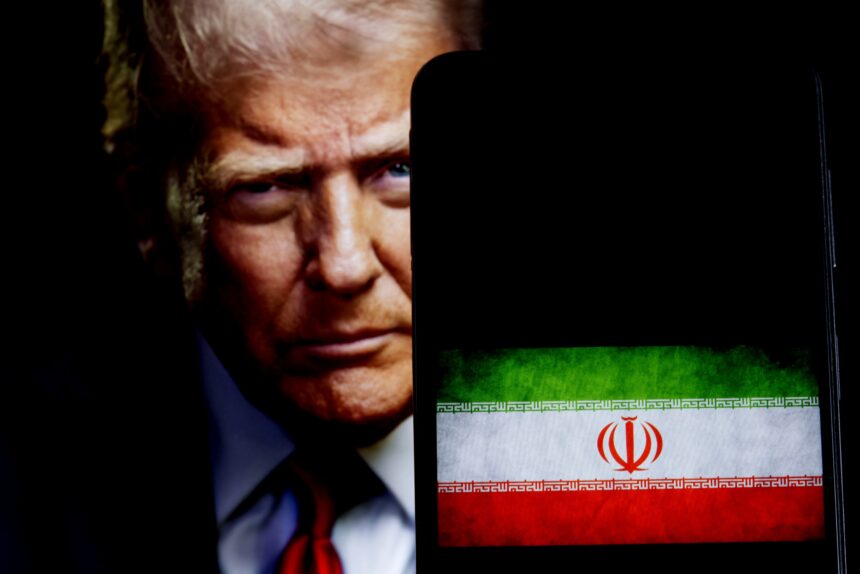
The White House confirmed Tuesday that President Donald Trump will address the nation on the ongoing conflict with Iran, with the speech set to land just days before his April 6 deadline demanding the reopening of the Strait of Hormuz. Trump told reporters the military campaign could wrap up within two to three weeks, framing the mission as effectively accomplished after strikes eliminated Iran’s supreme leader and several senior officials.
Markets, however, are not convinced.
Hormuz remains the real pressure point
While Trump described the conflict in near-conclusive terms, energy prices have been telling a far louder story. Brent crude surged roughly 55% in March, the largest monthly gain the contract has recorded since its launch in 1988. American drivers are now paying a national average of $4.02 per gallon, the steepest price at the pump since August 2022. Diesel has blown past $5 a gallon, dragging freight costs higher and pushing up prices for consumer goods across nearly every sector of the economy.
The ripple effects go well beyond the gas station. Airlines have begun adjusting fuel surcharges, logistics companies are warning of tightening margins, and small businesses that depend on delivery networks are absorbing costs they cannot easily pass on. Heating oil in the Northeast has also climbed sharply, adding financial pressure to households still managing inflation across other categories. Economists warn that if the strait remains blocked through the spring, the compounding effect on the broader economy could rival supply shocks not seen since the early 1980s.
The Strait of Hormuz, the narrow waterway through which about a fifth of global seaborne oil flows, remains largely blocked. And until tankers move freely through it again, analysts and traders say, no political declaration of victory will meaningfully cool energy costs. Futures markets are currently pricing in continued volatility well beyond any potential ceasefire, reflecting deep uncertainty about how and when the waterway reopens.
A fractured coalition and a skeptical Tehran
Trump made clear he views the reopening of the strait as someone else’s responsibility, pointing to nations that depend on the waterway for their energy supply and suggesting they take the lead in clearing it. So far, only the UAE has stepped forward among Gulf Arab states, offering participation in a naval force to restore access. Bahrain is pushing for a separate maritime task force through a United Nations Security Council resolution. No broader coalition has taken shape, and the pace of diplomacy has done little to reassure energy traders watching the clock.
Iran’s foreign minister expressed deep skepticism that any talks with Washington would produce meaningful results, further clouding the path toward a negotiated resolution.
Mixed signals from the Pentagon
Even as Trump spoke of withdrawal, the USS George H.W. Bush carrier strike group departed Norfolk on Tuesday, the third such group deployed in connection with the conflict. The movement undercut the narrative of a winding-down campaign and left traders parsing contradictory signals about what comes next. The administration has not ruled out military action if Tehran fails to meet the April 6 deadline, including the possibility of intercepting tankers carrying Iranian crude.
Bitcoin edged up about 2.2% for the month, hovering near $67,900, a modest move that stood in sharp contrast to oil’s historic rally. Across asset classes, prices remain anchored to energy costs, and that dynamic will not shift until the chokepoint at the heart of this conflict is finally cleared.
Trump’s Wednesday night address is expected to lay out the administration’s next move. Whether it brings clarity or deepens the uncertainty, the strait itself will have the final word.