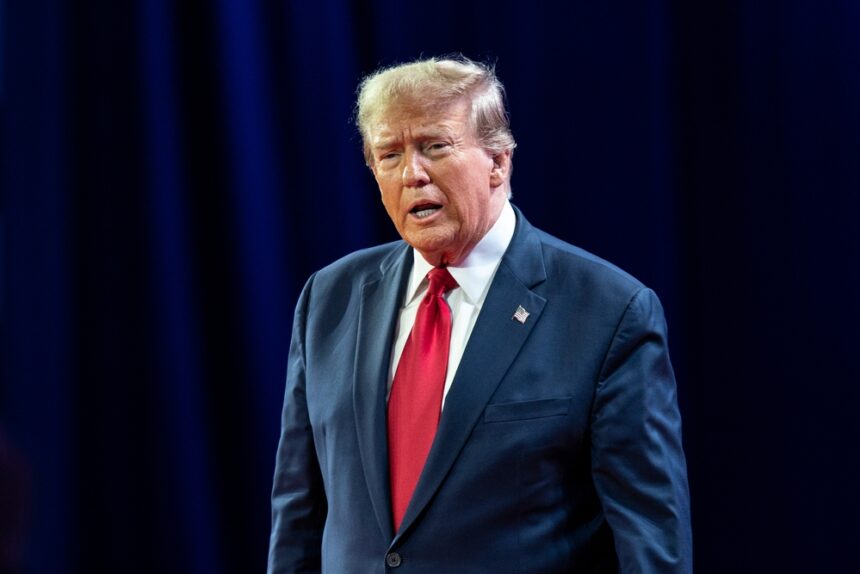
President Donald Trump took direct aim at two of his own Supreme Court nominees this week, publicly accusing them of showing disrespect toward the president who elevated them to the nation’s highest court. The rebuke, posted to Truth Social on Sunday, March 15, came weeks after the court struck down his emergency tariff plan in a 6-3 ruling that left Trump visibly frustrated and unwilling to stay quiet about it.
Justices Amy Coney Barrett and Neil Gorsuch, both nominated by Trump during his first term, joined the majority in the February ruling. Trump named both justices in his post and made clear he viewed their decision as a personal betrayal, not merely a legal disagreement.
The tariff ruling that sparked the outburst
The ruling at the center of the dispute came on Feb. 20, when the Supreme Court voted to invalidate Trump’s sweeping emergency tariffs on imports. The majority held that the authority to impose tariffs and taxes belongs to Congress under the International Emergency Economic Powers Act of 1977, not the executive branch acting unilaterally in an emergency declaration.
Trump had framed the tariffs as one of the defining policy ambitions of his return to office, and the court’s decision landing against him was not something he absorbed quietly. In his Sunday post, he described the tariff ruling as the decision that mattered most to him personally, and said the court had been fully aware of his position and how much he wanted the outcome to go the other way.
He argued that the ruling had effectively handed a financial advantage to foreign governments and corporations that had been exploiting the United States for decades, and framed the decision as a costly error with long-term consequences.
Loyalty, independence, and a direct comparison
The more constitutionally significant portion of Trump’s post involved his characterization of how justices on both sides of the ideological divide approach their role. He argued that Democratic-appointed justices reliably vote as a bloc regardless of the merits of a case, and that Republican-appointed justices undermine the presidents who nominate them by going out of their way to demonstrate independence.
In Trump’s framing, that independence is not a virtue. It is a form of disrespect toward the executives who placed them on the bench. The argument drew sharp attention from legal observers who noted that judicial independence from the president is widely considered a foundational principle of the American constitutional system, not a deficiency to be corrected.
Trump did offer praise for three other justices who ruled in his favor. Justices Samuel Alito, Clarence Thomas, and Brett Kavanaugh, the last of whom is also a Trump appointee, were thanked by name in the same post that criticized their colleagues.
Fallout and a backup plan
The aftershocks from the February ruling played out in several notable ways. At a breakfast with state governors shortly after the decision, Trump reportedly described the ruling as a disgrace and told attendees that he was already working on an alternative approach to maintaining the tariffs without relying on the emergency powers statute that the court had rejected.
In the weeks that followed, Trump made clear that he intended to pursue tariffs through other available legal channels and suggested that the court itself had acknowledged his authority to do so in a different form. Only four of the nine justices attended his State of the Union address on Feb. 24, a detail that did not escape public notice.
A question that will not go away
Trump’s post landed at the center of a recurring debate about what presidents are entitled to expect from the judges they appoint. The argument that justices owe deference to the executive who nominated them runs directly counter to the structure of lifetime tenure and the purpose it is meant to serve.
Whether the post reflects a genuine belief about how the court should operate or was primarily an expression of frustration, it put that question back at the front of the national conversation at a moment when the relationship between the executive and judicial branches is already under significant strain.