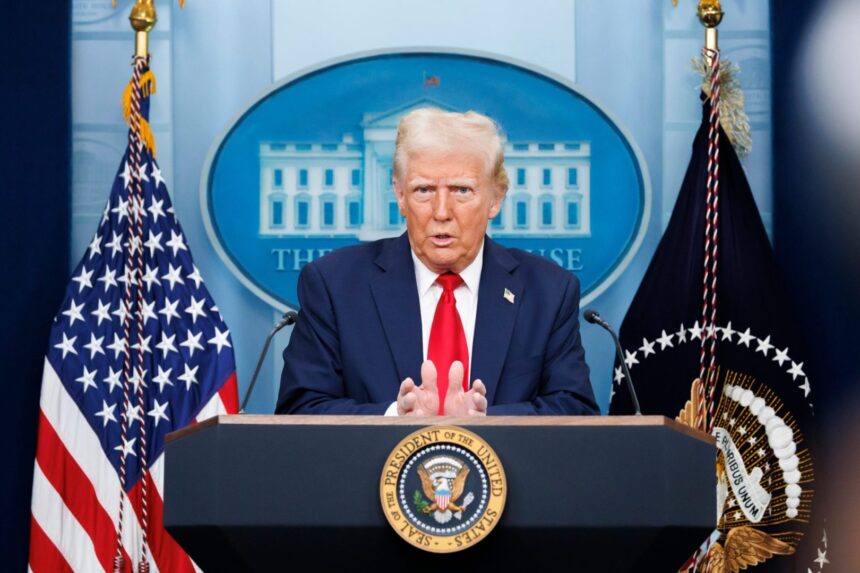
The closely watched meeting between President Donald Trump and Chinese President Xi Jinping, scheduled for the final days of March, is now in question. A series of signals from senior administration officials over the past several days has raised the prospect that the trip could be delayed, with the ongoing crisis in the Strait of Hormuz emerging as the central complication.
Treasury Secretary Scott Bessent, speaking from Paris following a round of bilateral economic discussions with Chinese officials, suggested that the timing of the visit was no longer guaranteed. He pointed to logistical concerns tied to the Iran conflict, noting that the president may feel compelled to remain in the United States to manage the situation directly rather than travel abroad at a critical moment.
A trip markets have been counting on
For economic observers and financial markets, the planned March 31 to April 2 summit had been treated as a meaningful milestone. The visit was widely seen as a likely signal about the durability of the current trade truce between Washington and Beijing, which took shape after both sides briefly imposed triple-digit tariffs on each other’s goods last year. Tensions had cooled in the months that followed, and the summit was expected to reinforce that relative stability.
The possibility of a delay landed badly in some corners of the financial world. At least one prominent policy analyst described the potential postponement as a market-negative development and suggested that even the uncertainty surrounding the visit would be enough to introduce fresh volatility until the situation was resolved.
Administration officials moved quickly to contain the reaction. Bessent said publicly that markets had no reason to respond negatively if a delay were announced, and White House press secretary Karoline Leavitt characterized any postponement as a scheduling matter rather than a sign that the summit itself was at risk.
Hormuz remains the more immediate crisis
The more pressing question hanging over the administration this week is whether Trump can assemble a workable international coalition to help reopen the Strait of Hormuz. Iranian attacks on commercial vessels in the waterway have effectively halted the movement of oil through one of the world’s most critical maritime passages, pushing prices above $100 a barrel and sending markets into a volatile stretch.
Trump has been vocal about his interest in enlisting other nations to help patrol and secure the strait. He has specifically called out China, noting that Beijing depends heavily on energy that flows through Hormuz and questioning why the burden of protecting it should fall primarily on the United States.
The prospects for Chinese involvement appear limited, however. Iran has indicated it does not intend to disrupt Chinese energy shipments, which reduces Beijing’s immediate incentive to take on a role that could complicate its relationship with Tehran. Trump acknowledged publicly that there are deeper reasons why China might hold back, though he did not elaborate.
Allies signal reluctance
The coalition Trump has been calling for has so far found few takers. Japan was among the first to indicate it was not considering a military presence in the strait, and other potential partners have expressed similar hesitation. The response stood in contrast to Trump’s public appeals on social media, where he named several allied nations as candidates for involvement.
The resistance from allies came in the same week that Trump declined an offer from the United Kingdom to contribute aircraft carriers to the effort. He brushed off the offer, suggesting the U.S. had already done the heavy lifting and did not require additional support at this stage.
Paris meetings offer a measure of stability
Despite the uncertainty surrounding the summit, Bessent described the Paris meetings with Chinese economic officials as constructive. He said the discussions had made meaningful progress on broader bilateral concerns and that a joint statement was forthcoming. Chinese state media characterized the exchanges in similarly positive terms, describing a mutual commitment to maintaining the current tariff framework.
Whether that goodwill survives a potential delay in the summit remains to be seen. What is clear is that the timing of the China trip has become one more pressure point in a week already defined by competing crises and limited room for error