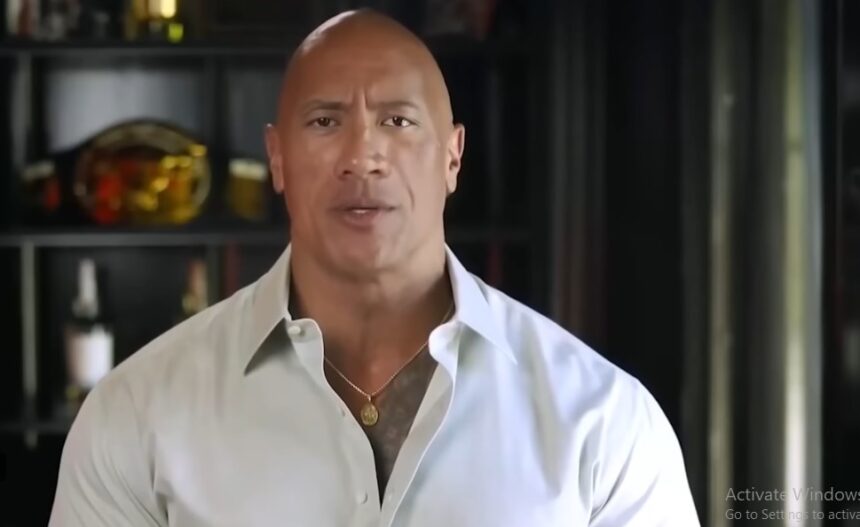

For nearly two decades Dwayne Johnson built a career around a physique that was itself a kind of brand massive, sculpted and immediately recognizable as belonging to the most bankable action star in Hollywood. His role as UFC heavyweight champion Mark Kerr in A24’s The Smashing Machine, directed by Benny Safdie, required him to dismantle that identity entirely, and the process was as demanding as anything Johnson has undertaken in his professional life.
The transformation began with a counterintuitive first step. Rather than immediately losing weight to match Kerr’s frame, Johnson spent the early phase of preparation gaining 25 to 30 pounds of muscle specific to the fighter’s body type. Only then did the systematic stripping begin, ultimately resulting in a total loss of more than 60 pounds from that elevated starting point. The two phase approach was Johnson’s own proposal, delivered to Safdie after he asked for 24 hours to devise a strategy following their initial meeting.
Four hours of training, four hours of makeup
Starting in April 2024, Johnson trained at the Black House MMA gym for four hours every day fight choreography, wrestling and conditioning work that mirrored the preparation of an elite-level fighter rather than an actor learning surface level techniques. The diet shifted with equal severity. The 8,000 calorie daily intake that had fueled previous muscle building phases gave way to high-protein, low-sugar meals built around chicken, fish and vegetables.
The physical training was only part of the daily commitment. Academy Award-winning makeup artist Kazu Hiro spent three to four hours each morning applying 22 prosthetic pieces that included a restructured brow bone, cauliflower ears from years of competitive fighting and facial scarring. Johnson’s tattoos among his most recognizable physical features were hidden beneath specialized makeup. By the time he arrived on set each day, the People’s Champion had been methodically erased.
Johnson also worked with a vocal coach to adopt Kerr’s softer, more measured speaking voice, spent time with the real Kerr to absorb the texture of his personality and listened to melancholic music to internalize the emotional weight of a story defined by addiction and struggle.
Why this role carried personal weight
Johnson’s connection to Mark Kerr predates the film by roughly 25 years. He met Kerr in the late 1990s and witnessed firsthand the pressures that ground down some of the most formidable competitors in early UFC history. Kerr battled painkiller addiction during an era when athletic support systems were minimal and the psychological cost of combat sports was rarely acknowledged.
For Johnson the role extended beyond professional ambition into something closer to tribute. Wrestling and MMA communities have lost significant figures to addiction, and several of those losses were personal to him. Embodying Kerr’s journey his dominance, his deterioration and his survival was, by Johnson’s own framing, a form of mission work as much as it was acting. The dignity with which he wanted to tell the story drove every hour of training, every morning in the makeup chair and every choice made in performance.
What the industry noticed
The response from critics and industry observers was immediate. Johnson’s performance earned a Golden Globe nomination recognition that his work in The Smashing Machine represents a genuine departure from his action star comfort zone rather than a publicity driven stunt. The transformation itself was noted as earned and intentional rather than gratuitous, with every physical and vocal choice serving the character’s specific truth rather than demonstrating Johnson’s willingness to suffer for a role.
Whether the performance ultimately translates into major awards recognition will be determined as the season continues, but the nomination and the critical attention surrounding the film suggest that Johnson has successfully made the case for a version of himself that Hollywood had not previously been asked to take seriously as a dramatic actor.