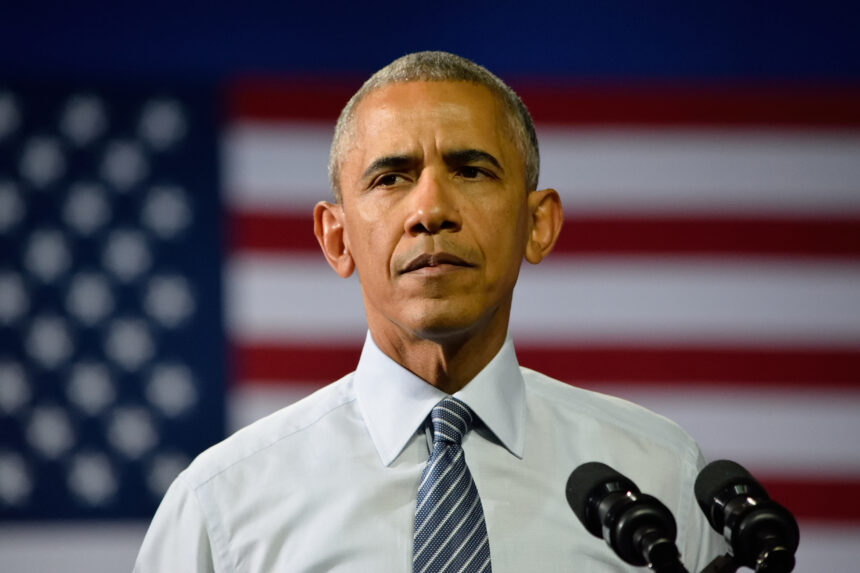
Former President Barack Obama is lending his name and his platform to a redistricting fight in Virginia that carries significant implications for the balance of power in the United States House of Representatives. His endorsement, delivered in a video message on Thursday, arrived one day after the state Supreme Court cleared the path for an April 21 referendum in which Virginia voters will decide whether to amend the state constitution to allow for a new congressional map. Early voting opened Friday.
The timing is deliberate. The redistricting battle playing out in Virginia is part of a broader national fight over congressional maps that has been accelerating since Texas moved to redraw its districts last year. That effort, pursued with the backing of the White House, produced shifts across the country that have so far resulted in nine additional seats favorable to Republicans and six that lean toward Democrats.
Obama frames the Virginia vote as a direct response to Republican map-drawing
In his video message, Obama urged Virginians to treat the April referendum as an act of political self-defense, positioning the amendment as a way to push back against redistricting moves happening elsewhere in the country. He framed a yes vote as a way to protect voter influence in the upcoming midterm elections, drawing a direct line between the Virginia referendum and the national partisan map-drawing contest.
It is not Obama’s first foray into redistricting advocacy at the state level. He previously threw his support behind a redistricting effort in California that could result in Democrats flipping as many as five Republican-held seats, making Virginia the second such high-profile endorsement in a relatively short window.
Obama watches as Democrats eye a dramatic shift in Virginia’s House delegation
The map being put before Virginia voters was drawn by Democrats, who currently control the state legislature. The proposed districts extend outward from the heavily Democratic suburbs surrounding Washington, targeting four seats currently held by Republicans. If the amendment passes and the new map takes effect, Democrats could end up holding 10 of Virginia’s 11 congressional seats, a dramatic transformation from the current six to five split that slightly favors the party.
Virginia Gov. Abigail Spanberger, who took office in January, also came out Thursday in support of the amendment, encouraging voters to seize what she described as an important moment to take direct action through the ballot. She confirmed she would personally be voting in favor of the change.
Obama draws criticism from opponents of the redistricting effort
Not everyone in Virginia views Obama’s involvement as welcome. One of the leading voices opposing the constitutional amendment sits on the advisory board of a group dedicated to keeping the state’s current bipartisan map-drawing process intact. That process, established through an earlier reform effort, vests a bipartisan commission with the authority to draw congressional districts, a system its supporters argue produces fairer outcomes than legislative control.
Critics of Obama’s endorsement noted that he was not an active participant in the effort to create the bipartisan commission in the first place, and argued that his current involvement reflects a political interest in Democratic gains rather than a principled commitment to fair representation. Opponents of the amendment contend that the existing map is already fair, pointing to the current delegation breakdown as evidence that competitive districts can produce competitive results without legislative intervention.
Obama and the amendment’s long-term implications for redistricting
One detail in the amendment is worth noting as the debate intensifies. The proposed change would allow the state legislature to implement a new map now but would return map-drawing authority to the bipartisan commission after the 2030 census. Supporters frame this as a targeted and time-limited response to a specific national redistricting moment. Opponents argue it sets a troubling precedent for bypassing a process that was specifically designed to take partisan politics out of mapmaking.
With early voting already underway and April 21 approaching quickly, Obama’s endorsement adds national visibility to a state-level vote that was already being watched closely. Virginia is now one of the most consequential battlegrounds in a redistricting war that is reshaping the congressional map from coast to coast.