Every NBA All-Star Game MVP that made history since 1951 traces a remarkable lineage of greatness — one that stretches across decades, dynasties, and defining moments. The NBA All-Star Game has long served as a celebration of the sport’s most electric talent, and no individual honor captures that energy quite like the MVP award. Since 1951, only the most dominant and unforgettable performances have earned that distinction, making it one of basketball’s most coveted single-game honors.
What began as a simple showcase has grown into a cultural institution, and the MVP at the center of it all has always told the story of the era it belonged to. The award was formally established in 1953, though the league retroactively recognized Ed Macauley as the 1951 MVP and Paul Arizin as the 1952 MVP. From that point forward, every All-Star MVP has added a new chapter to one of basketball’s most celebrated traditions.
A Legacy Built by Legends
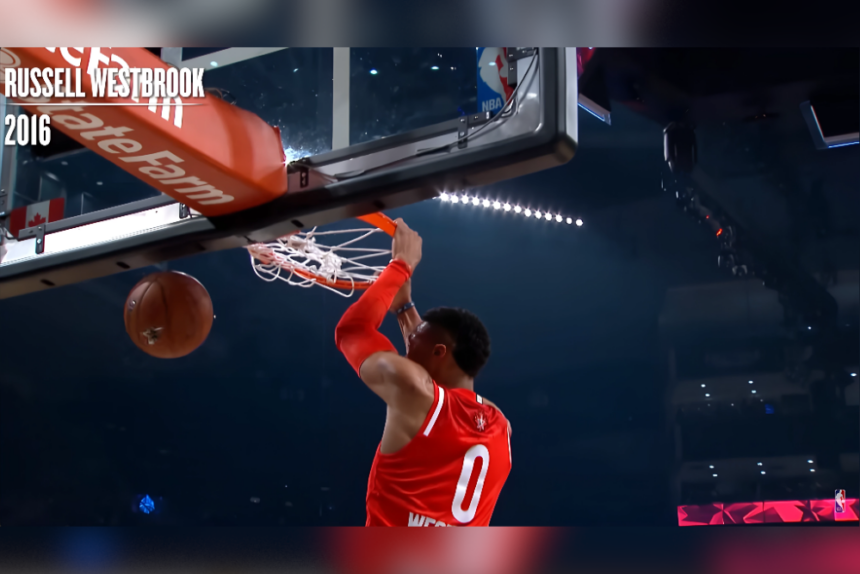
The early era of the award belonged to players who built the foundation of the modern game. Bob Pettit stands alone as one of the most dominant All-Star performers in history, claiming the MVP a record four times — a number matched only by Kobe Bryant. Pettit also won back-to-back honors in 1958 and 1959, a feat only Russell Westbrook has replicated, doing so in 2015 and 2016.
Bob Cousy, Wilt Chamberlain, Oscar Robertson, and Bill Russell each left their stamp on the award during the 1950s and 1960s, a golden era where the MVP reflected the raw dominance of giants who were reshaping professional basketball. Robertson, Jordan, and LeBron James each won the honor three times, placing them among the most celebrated All-Star performers of all time.
Michael Jordan and the Art of the Moment
No player captured the All-Star spotlight more dramatically than Michael Jordan. His three MVP wins — in 1988, 1996, and 1998 — each came in seasons where he also claimed the NBA’s regular-season award, a dual achievement he is the only player in history to accomplish more than once. Jordan’s All-Star performances were extensions of his regular-season brilliance, reminding the world that even in an exhibition setting, he competed like everything was on the line.
Magic Johnson, Shaquille O’Neal, and Isiah Thomas each brought their own electricity to the stage, while four games in history produced co-winners — the most recent being O’Neal and Bryant sharing the honor in 2009, a pairing that felt almost predestined given their shared legacy with the Los Angeles Lakers.
Kobe Bryant’s Name Lives On in the Award
In February 2020, NBA Commissioner Adam Silver renamed the All-Star Game MVP award in honor of Kobe Bryant, who passed away in a helicopter crash just weeks before that year’s game. Bryant had won the MVP four times — matching Pettit’s all-time record — and his impact on the All-Star stage made the tribute feel deeply appropriate. The renaming transformed a performance award into something more permanent, a living tribute carried forward by every future MVP who accepts it.
The Kobe Bryant MVP award now represents both individual brilliance and the memory of one of the game’s greatest figures. Every player who wins it steps into a lineage that stretches from 1951 to the present day.
Anthony Edwards Joins the MVP Club in 2026
The most recent addition to the all-time MVP list is Minnesota Timberwolves guard Anthony Edwards, who claimed the Kobe Bryant MVP award at the 2026 NBA All-Star Game held in Los Angeles. Edwards scored 32 points across three games as his USA Stars team defeated USA Stripes in the final round of the tournament format. LeBron James, never short on praise for the next generation, called it the first of many for the 24-year-old star.
Edwards now joins a list that reads like a who’s who of basketball immortality — from Robertson and Jordan to O’Neal, Bryant, and James. The award remains the clearest snapshot of who owns the All-Star moment in any given year, and in 2026, there was no question who that was.
75 Years of MVP Greatness on Full Display
The YouTube video compilation that sparked renewed interest in this history runs 34 minutes and covers every single All-Star from 1951 through 2026 — a vivid, fast-moving reminder of just how much talent has graced that stage. Watching it feels like flipping through a time capsule, one MVP at a time, each performance a reflection of its era.
The full lineage is more than a stat line or a list of names. It is a living record of the players who rose above the rest when the lights were brightest, the crowd was loudest, and the only thing that mattered was putting on a show. Seventy-five years in, the tradition shows no signs of slowing down.