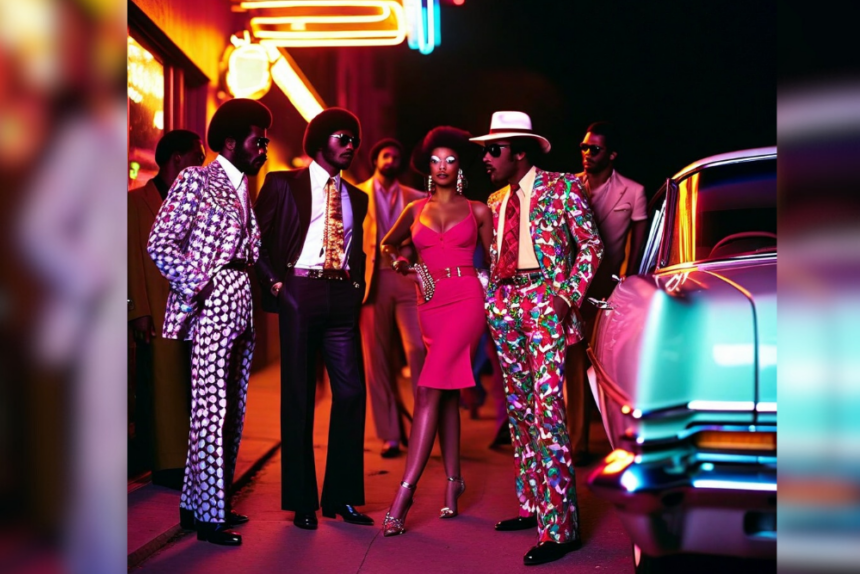
There was a moment in the 1970s — outside a nightclub, under neon light, beside a gleaming car — when streetwear was not a trend. It was a truth. The men wore wide-lapel blazers and leather jackets. The women wore flared dresses and bold shades. Everyone looked like they had somewhere important to be and zero interest in asking permission. That moment did not just belong to a decade. It launched an entire global movement.
The roots of modern streetwear run directly through Black communities in the late 1970s, particularly in New York City and Los Angeles. What started as everyday dress — practical, expressive, unapologetically bold — became the blueprint for nearly every fashion movement that followed.
The Streets Were the Runway
Before streetwear had a name, it had a vibe. In Harlem, the South Bronx, and South Central Los Angeles, Black youth were building a visual language through clothing that reflected pride, identity, and resistance. Wide-leg trousers, platform shoes, leather bomber jackets, bold prints, and natural hairstyles were not just fashion choices — they were statements. The streetwear aesthetic of the 1970s carried the energy of the Black Power Movement, which had pushed an entire generation to embrace cultural heritage through every aspect of daily life, including what they wore.
Hip-hop was just beginning to take shape in the South Bronx during this era, and it brought its own uniform with it. Athletic wear mixed with vintage pieces and bold accessories created a streetwear identity that was entirely new — raw, confident, and rooted in community.
Icons Who Defined 1970s Streetwear
No conversation about 1970s streetwear is complete without its icons. Pam Grier, the undisputed queen of Blaxploitation cinema, wore leather halters, high-waisted flares, and her signature Afro with an authority that made power look effortless. Her influence extended far beyond the screen — she made the tough, expressive, street-ready aesthetic aspirational for an entire generation.
Diana Ross brought another dimension to 1970s fashion, proving that glamour and street culture could share the same closet. Her sequined gowns and voluminous hair turned nightclubs into runways. Grace Jones pushed even further, blending androgynous silhouettes and geometric shapes into a streetwear-adjacent vision of the future that still feels ahead of its time today.
On the design side, Willi Smith was quietly revolutionizing the industry. By 1976, his label WilliWear had merged quality fashion with accessibility — making sharp, stylish streetwear available to people who were not wealthy enough to shop luxury. His work remains one of the most important and underacknowledged chapters in American fashion history.
The Pieces That Changed Everything
Certain items from 1970s fashion never really left. Platform shoes defined the silhouette of the decade and continue to resurface in contemporary collections. Hoop earrings, deeply rooted in Black and Latinx culture, became a global staple during this era — a symbol of strength that mainstream fashion repeatedly borrowed without always giving credit. The lettuce hem, invented by Black designer Stephen Burrows in the 1970s, is still everywhere today in fast fashion and luxury lines alike.
Wide-leg denim, leather jackets, bold color-blocking, and oversized outerwear — all cornerstones of modern streetwear — trace directly back to the 1970s Black communities that wore them first and wore them best.
Why 1970s Streetwear Still Matters in 2026
In 2026, this culture is a multi-billion dollar global industry. Luxury houses collaborate with niche labels. Sneaker drops sell out in seconds. But every single thread of it runs back through the 1970s — through the streets of Harlem and the clubs of Los Angeles, through the women in bold dresses and the men in leather jackets posing outside secret nightclubs at night, looking every bit like the future they were already living in.
That image is not nostalgic. It is foundational. And the world of streetwear — whether it fully admits it or not — is still catching up.