From Wolf Moons to Cold Moons, here’s what the sky is doing every month and why the names actually matter
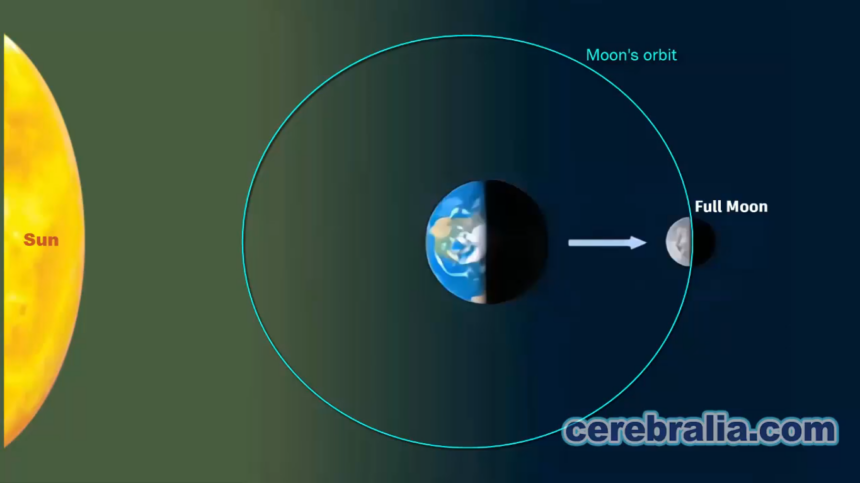
A Full Moon happens when Earth is basically sandwiched between the Sun and the Moon, making the entire side facing us light up like someone turned on the cosmic overhead light. The Moon’s orbit around Earth means the angle of sunlight hitting and reflecting back changes constantly, which creates all those different lunar phases. The next Full Moon is the Worm Moon on Tuesday, March 3, 2026 at 6:38 a.m. EST, and it’s bringing a total lunar eclipse with it. That’s the kind of double feature that makes stargazing actually interesting.
- From Wolf Moons to Cold Moons, here’s what the sky is doing every month and why the names actually matter
- Here’s the complete 2026 Full Moon schedule, because apparently we need to plan our moon gazing like it’s concert season:
- Super Moons are Full Moons that align with lunar perigee the Moon’s closest point to Earth.
Here’s the complete 2026 Full Moon schedule, because apparently we need to plan our moon gazing like it’s concert season:
The Wolf Moon starts the year on January 3 at 5:03 a.m. (and it’s a Super Moon, meaning extra large). February 1 brings the Snow Moon at 5:09 p.m. Then the Worm Moon hits on March 3 with that total lunar eclipse. April 1 gets the Pink Moon at 10:12 p.m. May actually has two Full Moons the Flower Moon on May 1 at 1:23 p.m. and the Blue Moon on May 31 at 4:45 a.m. June 29 brings the Strawberry Moon at 7:57 p.m. July 29 is the Buck Moon at 10:36 a.m. August 28 brings the Sturgeon Moon at 12:19 a.m., and it comes with a partial lunar eclipse. September 26 is the Corn Moon at 12:49 p.m. October 26 brings the Hunter’s Moon at 12:12 a.m. November 24 is the Beaver Moon at 9:54 a.m. (also a Super Moon). December 23 closes the year with the Cold Moon at 8:28 p.m. (also a Super Moon).
The names aren’t random they all mean something based on seasonal changes and nature. Wolf Moon honors hungry wolves howling. Snow Moon acknowledges heavy snowfall. Worm Moon marks earthworms signaling thawing ground. Pink Moon celebrates blossoming wildflowers. Flower Moon celebrates flowers blooming. Strawberry Moon marks prime harvest season. Buck Moon recognizes new antlers on deer. Sturgeon Moon names abundant fish. Corn Moon signifies corn harvesting. Hunter’s Moon commemorates hunting season. Beaver Moon reflects beavers building winter dams. Cold Moon evokes winter’s chill. These aren’t made-up names. They’re cultural observations compiled from Native American, Colonial American, and other North American traditions designed to help humans predict seasonal changes and track time.
Super Moons are Full Moons that align with lunar perigee the Moon’s closest point to Earth.
This proximity makes the Full Moon unusually large and bright. We get several in 2026. Blue Moons are the second Full Moon in a month that has two Full Moons (happening roughly every 2.7 years). Despite the name, they’re not actually blue atmospheric conditions might occasionally create a slight blue tint, but that’s not why they’re called Blue Moons.
A Full Moon only technically occurs during the exact moment Earth, Moon, and Sun form perfect alignment, but to our eyes, the Moon looks Full for around three days. That’s the window where you should do your moon gazing. The lunar cycle from one Full Moon to the next is roughly 29.5 days, called a synodic or lunar month.
Pay special attention to the eclipses: March 3 brings a total lunar eclipse, and August 28 brings a partial lunar eclipse. Lunar eclipses are way safer to observe than solar eclipses you can actually look at them without special equipment. Solar eclipses require eclipse glasses or you’ll damage your eyes permanently.
The Moon influences tides through gravitational pull, causing water to bulge. During both Full and New Moons, the Sun, Earth, and Moon align, creating “spring tides” that swing exceptionally high or low due to combined gravitational forces.
Mark your calendar. The Moon’s got a full schedule in 2026, and you should too.