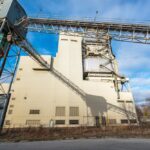
Residents of Manteno, Illinois, are in the third year of a lawsuit seeking to force a lithium battery plant out of their village, arguing the facility is a fire and chemical hazard barred by the town’s own code.
How was the deal made?
Under a nondisclosure agreement. According to records reviewed by The Epoch Times, which reported this story, the county economic development group signed an NDA in September 2022, more than a year before the project was announced. An official from that group later testified the agreement never named the company. Even the slide presentation laying out the tax break, obtained by residents through records requests, calls the project only Unity. Residents learned who was coming as the deal was being signed.
What did the village do about the objections?
Hired a public relations firm with public money. The same reporting found that as rezoning moved through town hall in late 2023, after residents had begun organising, a Chicago firm helped draft answers to residents’ questions and proposed website language. One resident who filed the records requests characterised part of the work as opposition research on residents who had been asking questions at meetings. She said payments arrived in chunks of roughly $20,000, each small enough to avoid its own line item vote.
Who carries the fire risk?
The local fire district, on a fraction of the money. The agreement caps the company’s taxes at $2 million annually for 30 years regardless of output. Roughly 7 percent reaches the fire district, about $140,000 more per year to protect a 1.6 million square foot lithium battery facility. A battery expert interviewed for the reporting described large lithium fires as generating their own oxygen, requiring enormous volumes of water and capable of reigniting days later.
Was the plant ready to operate?
The record is uncomfortable. Village files show the occupancy permit was issued on Aug. 22, 2024, the same day the company signed a letter promising to fix seven outstanding fire safety items, including an uninstalled evacuation system and an exterior fitting for firefighter hoses noted as not opening. Repairs were due eight days later. The next morning the fire chief wrote that his sign off was not an approval for final occupancy.
Has there been an incident?
One, in June, and the safety system worked. A battery pack ignited on a production line. The fire district’s report says the company’s own brigade had knocked it down, submerged the pack and removed it before the first outside officer arrived. Nobody was hurt. The damaged pack then had to be watched overnight against reignition, a job that fell to the plant’s own engineers. In August 2026 the village and company reached an agreement, adopted unanimously, requiring six certified firefighters on site at all times with the occupancy permit at risk if staffing falls short.
What is actually being built?
Assembly, not manufacturing. A company representative told the village in September 2024 that the first phase is assembly only and that cells arrive finished. The state promoted the project on a later phase producing cells, and its approved plan set a 2025 deadline for cell output that has passed. Grant records show the equipment purchased went to assembly lines. Asked whether the agreement requires cell manufacturing, the state economic development agency told the outlet that assembly is part of manufacturing and a project can be assembly only if the approved application says so.
What about the money and the jobs?
The state has paid $165 million across three grants, the last in December 2025. The deal promised 2,600 jobs. As of a November 2025 update to the village board, the company reported about 300 employees. The agency said it holds no records certifying the targets tied to the money have been met, describing the company as in compliance with its reporting. A subsidy watchdog quoted in the reporting said payment should follow performance rather than precede it.
Why can’t residents remove the officials?
Illinois permits recall of exactly one office, the governor, added by constitutional amendment in 2010. Municipalities may write their own recall provisions and almost none have. In Michigan, residents facing the same company recalled their entire township board and the project never broke ground. Michigan has since declared the company in default and is seeking roughly $24 million back. Illinois has not.