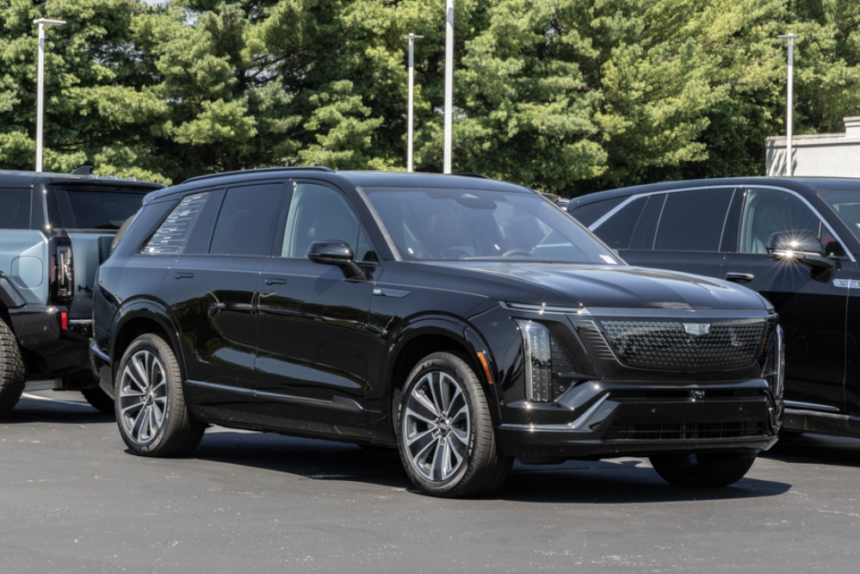
The Vistiq was never supposed to be the loudest car in the room. And yet, since it started showing up in driveways across suburban neighborhoods, it has become exactly that — the vehicle everyone seems to be talking about, debating, and quietly pricing out on their phones.
Cadillac’s three-row electric SUV slots into a deliberate gap the brand had been circling for years— the space between the relatively compact Lyriq and the enormous, commanding Escalade IQ. The Vistiq fills that gap with precision — a luxury hauler built for families who want real range, real room, and a real sense that the car they drive reflects who they are.
What the Vistiq actually offers
At its core, the Vistiq is an electric three-row SUV capable of delivering more than 300 miles on a single charge. That number matters more than most automakers care to admit. Range anxiety remains one of the most persistent barriers to EV adoption, and Cadillac has directly addressed it here. The Vistiq doesn’t ask its driver to plan their weekend around a charging stop.
The interior reflects that same philosophy of intentional comfort. Three rows of seating, premium materials throughout, and a cabin design language consistent with Cadillac’s broader push into the ultra-modern. The Vistiq isn’t mimicking its German rivals — it is making a quieter, more confident statement about what a domestic luxury marque can produce.
The Vistiq in context of the EV market
Positioning is everything in this segment. The Lyriq, for all its strengths, offers only two rows and a more modest footprint. The Escalade IQ, on the other hand, is a statement piece — massive, expensive, and not designed for those who simply need a capable daily driver with enough room for a full household and a weekend’s worth of luggage.
The Vistiq splits the difference in a way that feels less like a compromise and more like a carefully considered answer. It competes directly with the likes of the Rivian R1S and the Kia EV9, two three-row EVs that have been drawing strong interest from families making the switch. Cadillac’s bet is that luxury brand equity, domestic manufacturing, and General Motors’ Ultium platform can tip the scales.
That platform deserves attention. Ultium has matured considerably since its early deployments. The Vistiq benefits from that maturity — faster charging, improved thermal management, and better software integration than earlier GM EVs delivered. The brand has clearly been listening.
Who the Vistiq is really built for
There is a generation of buyers who grew up watching luxury be defined by European sedans and Japanese precision. That generation is now raising children, hauling sports equipment, and making decisions about what kind of car reflects their sense of self in 2026. They aren’t buying a car — they are making a statement about where they belong and where they’re headed.
The Vistiq speaks to that buyer directly. It is large without being ostentatious. It is electric without being preachy. It is American in origin without leaning into nostalgia. For communities where visibility, aspiration, and practicality have always had to coexist in a single purchase, the Vistiq arrives at a significant moment.
Cadillac has long held a particular cultural weight — a symbol of arrival, of earned status, of the idea that where you come from does not determine where you end up. The Vistiq doesn’t abandon that legacy. It updates it for a generation that demands both performance and conscience from the brands they choose to support.
What comes next for Cadillac’s Vistiq lineup
The Cadillac launched in a competitive landscape that is only getting more crowded. Legacy automakers and new entrants alike are racing to capture the family EV segment, and buyers are more educated than ever. The margins for error are thin. Cadillac’s advantage lies in the depth of its dealer network, the strength of its service infrastructure, and a brand story that still carries genuine resonance.
The Vistiq won’t be the right fit for everyone. It is a premium vehicle at a premium price, and the EV ownership experience still requires a level of planning and infrastructure access that not every household has. But for those who are ready — and increasingly, that group is growing — the Vistiq makes a genuinely compelling case for itself.
It doesn’t announce itself with a roar. It pulls up quietly, seats seven, and travels more than 300 miles before it needs anything from you. For a certain kind of family, that is more than enough. That might be exactly the point.