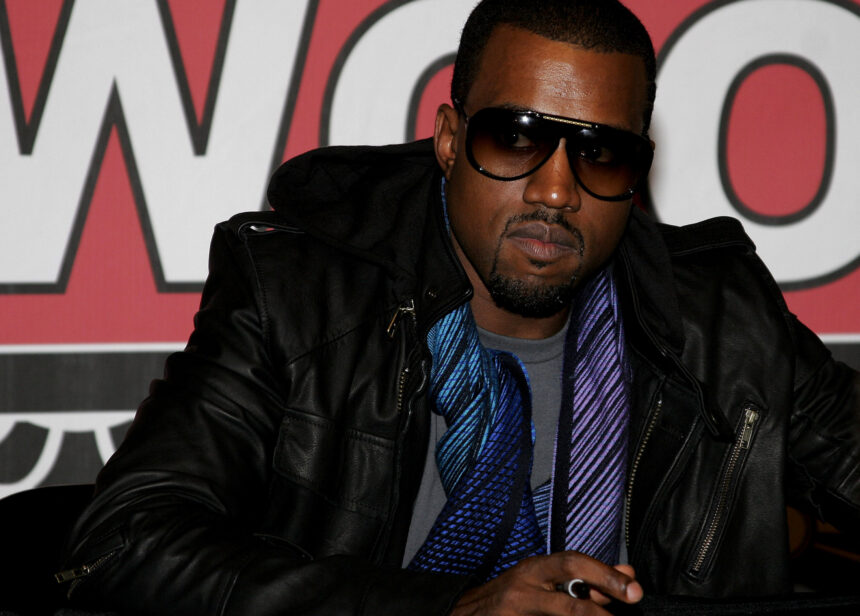
Whatever composure Kanye West brought into the federal courthouse in downtown Los Angeles on Wednesday, it did not last long. The rapper, who now goes by Ye, was called to testify on the third day of a copyright trial that centers on the Grammy-winning track “Hurricane” and a half-million dollar claim that he used a musical sample without proper authorization.
His demeanor shifted noticeably depending on who was asking the questions. When the opposing counsel approached him after a recess, he responded with silence, staring back without acknowledgment. When asked about a period in which he reportedly cycled through multiple lawyers and licensing representatives in quick succession, making himself difficult to contact, his answers were clipped and repetitive. He said he did not recall and did not remember, over and over, with little variation in tone.
How Kanye described his creative process on the stand
The atmosphere in the courtroom shifted when his own legal team took over the questioning. He became visibly more at ease, speaking about what drew him to music in the first place and describing the iterative and often exhausting process he uses to shape a song from concept to release. He described inspiration arriving unpredictably, from a melody that forms in his head while alone to a sample that arrives through a collaborator. He described himself as someone who reworks material endlessly, driven by a commitment to delivering something worthy of his audience.
He appeared in a dark taupe suit with a faintly iridescent finish and arrived at the courthouse with a team of bodyguards dressed in all black who took up positions both inside and outside the courtroom. The theatrics of his arrival were hard to separate from the gravity of the proceedings.
What the Kanye Hurricane trial is actually about
The case was brought by Artist Revenue Advocates, a Texas-based company formed to pursue copyright claims on behalf of working musicians who lack the resources to do so independently. The company is acting on behalf of four composers who created an instrumental track that was allegedly sampled without a license in an early version of “Hurricane,” played at a massive listening event Kanye hosted at a stadium in Atlanta in the summer of 2021.
The damages sought total more than five hundred sixty thousand dollars, calculated from a percentage of ticket and merchandise revenue, streaming income and even a portion of proceeds from a jacket Kanye wore on stage that night and released for sale the following day through his Yeezy collaboration with Gap.
Kanye denied that he or his team had been unresponsive or unwilling to compensate the musicians fairly. He described himself as someone who takes pride in giving collaborators what they are owed and characterized the lawsuit as an attempt to extract more money from him simply because of who he is. He also suggested to the jury that the company pursuing the case was being bankrolled by an unnamed outside party, a point his legal team raised during opening statements as a reason to question the motivations behind the suit.
Where things stand as the trial continues
The musicians transferred their copyrights to Artist Revenue Advocates specifically to gain access to legal resources they would not otherwise have. One of the composers testified earlier in the trial that despite the song’s considerable commercial success, his personal earnings from it amounted to very little.
Kanye’s legal team countered by pointing out that all four musicians were ultimately credited as songwriters on the final released version of “Hurricane,” appearing among a large group of credited writers on major streaming platforms, and that their collective share of composition royalties was substantial, even if the individual cuts were smaller than some of them expected.
The composition claims, which would have represented the more significant financial exposure, were dismissed before the trial began after a judge ruled that prior contracts signed by the musicians were still legally binding. What remains before the jury is narrower but still consequential, both financially and in terms of what the outcome signals to an industry watching closely.