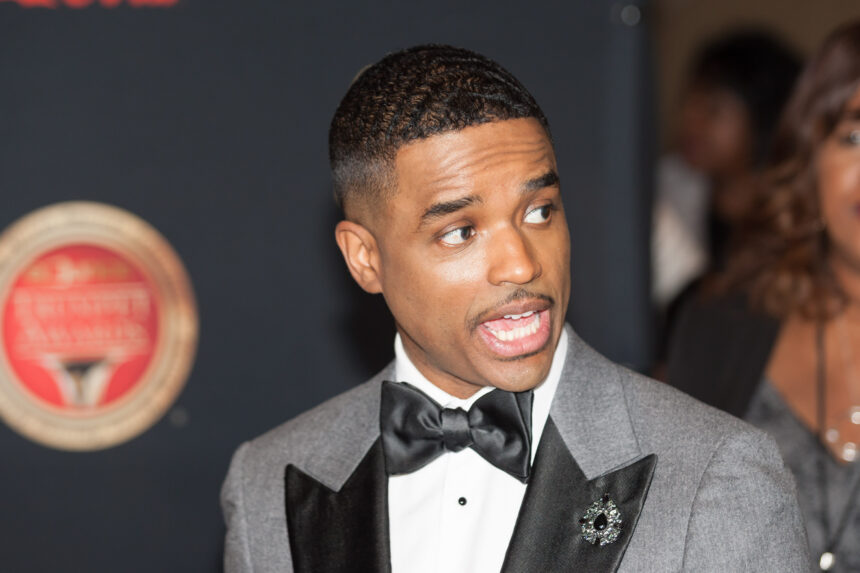
There are moments when a single voice cuts through the noise and says something that feels both personal and perfectly timed. Larenz Tate recently delivered one of those moments. The 50-year-old actor, best known for his roles in films like Love Jones and Menace II Society, opened up about his nearly two-decade marriage to his wife Tomasina and used the conversation to speak directly to Black men about something he considers non-negotiable: never taking the loyalty of Black women for granted.
The message arrived at a particularly charged moment in public discourse. Since April, conversations about the dynamics between Black men and Black women have intensified online, fueled by a troubling uptick in reported violence against Black women and the widespread discussion that followed Megan Thee Stallion’s public announcement that she had ended her relationship with NBA player Klay Thompson. The combination of those events has pushed questions about respect, loyalty and partnership to the front of cultural conversations in a way that has made Tate’s comments feel especially resonant.
What Tate believes about Black love and Black women
He was direct in his assessment. He described Black women’s support as something singular, rooted in a depth of loyalty that deserves to be recognized and honored rather than assumed. He framed it not as a compliment but as a responsibility, something Black men should carry consciously rather than receive passively.
He also spoke to the broader need for healing within Black relationships, acknowledging that years of cultural messaging that encourages distrust between Black men and Black women has done real damage. His position is that those narratives need to be actively challenged, not just ignored, and that the most powerful way to challenge them is through lived example.
He is trying to set that example at home. He spoke about the conversations he has with his sons, encouraging them to approach Black women with openness and genuine curiosity rather than the skepticism that social media and cultural noise can sometimes manufacture. His advice to them is simple and deliberate: give it a real chance, see what it actually is, and let the experience speak for itself.
How Tate thinks about his own marriage
When the conversation turned to his own relationship with Tomasina, he offered a philosophy that resists comparison and outside influence. He described marriage as something that has to be built specifically for the two people inside it, shaped by their particular dynamic rather than by anyone else’s expectations or model.
He has been married for nearly twenty years, a milestone that feels increasingly rare in Hollywood, and he does not seem interested in packaging that longevity as a template for others. His view is that what works in his marriage works because it belongs to him and his wife entirely. It is theirs in a way that cannot be replicated or exported, only respected from the outside.
Tate and the larger conversation this moment demands
The timing of his remarks matters as much as the content. The public debate that has surrounded Black relationships in recent months has often been loud, reductive and more interested in sides than in nuance. Tate’s contribution to that conversation is quieter and more grounded, coming from a place of lived experience rather than argument.
He is not positioning himself as an authority on anyone else’s relationship. He is simply sharing what he knows, what he has built and what he hopes the men around him will take seriously. In a moment when the loudest voices are often the most divisive, that kind of steady, personal testimony has a way of cutting through in ways that declarations rarely do.