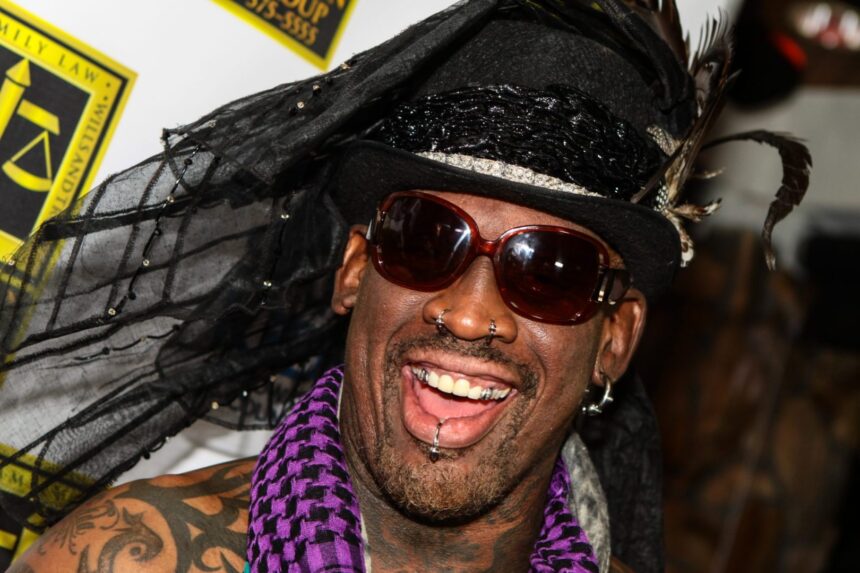
Dennis Rodman was never easy to explain. His personality was singular, his lifestyle deliberately chaotic, and his relationship with money was something most professional athletes would find impossible to understand. While his contemporaries in the NBA were accumulating wealth and building financial empires, Rodman was known to walk into casinos and lose tens of thousands of dollars not out of carelessness but out of a genuine indifference to having it. He once said publicly that losing money was his way of feeling normal.
That indifference, though, had a more generous side. Rodman did not need publicity or cameras to motivate his charity. He gave because he could, and because he remembered in a very personal way what it felt like not to have anything at all.
What Dennis Rodman’s early life taught him about money
Born in New Jersey and raised in Dallas after his father left the family, Rodman grew up without financial stability. He worked odd jobs from a young age, including busing tables and doing janitorial work, and knew firsthand what it meant to be uncertain about where the next meal was coming from. That experience stayed with him long after the NBA contracts arrived.
When a homeless woman approached him in Chicago asking for money to buy food, his response was immediate. He handed over everything he had in his pocket at that moment, which amounted to $250. The gesture was not calculated or performative. It was simply what he had, and he gave all of it.
He later reflected that the amount was never the point. If he had been carrying more, he would have given more. His view was straightforward. There were people in the world more in need of that money than he was, people without shelter and without reliable access to food, and he had simply been fortunate enough to land in a different position. Giving felt like the only sensible response to that fortune.
Dennis Rodman and a pattern of quiet giving
The Chicago encounter was not an isolated moment. During his years playing for the Detroit Pistons, Rodman made regular trips to areas of the city where people were struggling and handed out cash. He spoke about those visits matter-of-factly, framing generosity not as a sacrifice but as a natural extension of having more than he needed. He had made millions. What was a few hundred dollars?
The busboy he once was never fully left him. Sitting in a restaurant one afternoon, he noticed a young man clearing tables and immediately recognized something of himself in the work. He remembered what it felt like to bring home sixty dollars after a long shift at a Dallas restaurant and consider that a good night. By the time he was earning millions per season, the number had changed beyond recognition, but his memory of those earlier days had not.
The person behind the persona
The version of Dennis Rodman that most people carry around is built largely from his most theatrical moments. The hair, the rebounds, the tabloid headlines, the night in Las Vegas. What rarely gets told is the quieter version, the one who grew up with almost nothing and never managed to feel entirely at ease with the wealth his talent eventually produced.
He was most comfortable on a basketball court and most himself when he was doing something useful for someone else. The fame and money that came with his career were things he tolerated. The game and the giving were things he actually wanted. For a man with as complicated a public image as Dennis Rodman, that simplicity is one of the more surprising parts of the story.