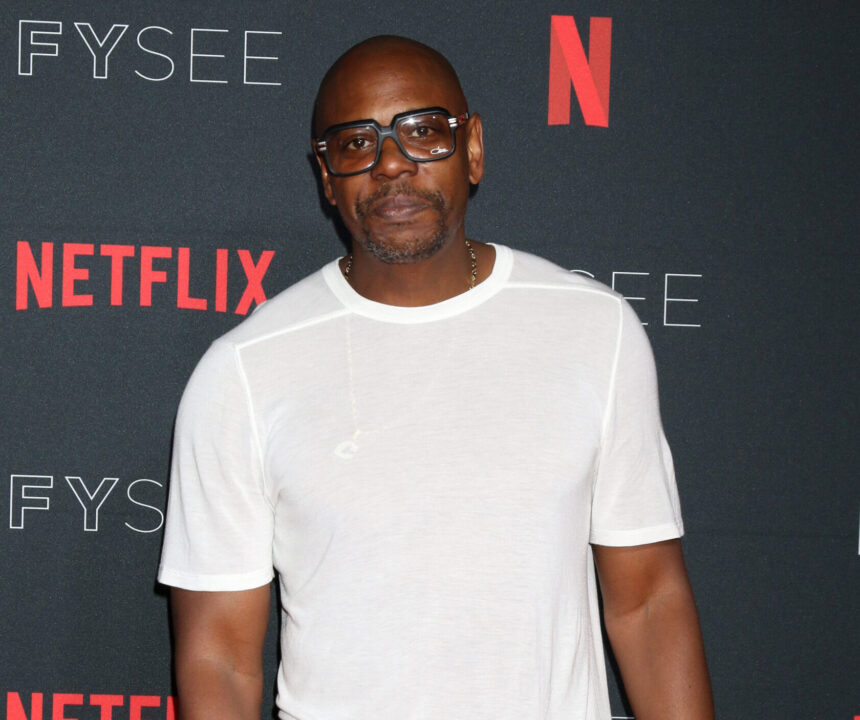
For years the answer was no, and it was not a soft no. Dave Chappelle had made his position on reviving Chappelle’s Show clear and consistent: the chapter was closed. That position appears to have shifted. In a recent interview, the Emmy and Grammy-winning comedian said that in the past several weeks he has begun to seriously consider bringing the show back, a change of stance that marks one of the more unexpected turns in his public career.
The show originally debuted in 2003 and became one of the most culturally resonant sketch comedy series in television history almost immediately. Its blend of sharp racial commentary, political satire and pop culture riffing landed at a moment when that particular combination was both rare and necessary. It ended abruptly in 2006 when Chappelle walked away from the production and a reported $50 million deal at the height of its success. He later described burnout and concerns about the show’s direction as central to that decision.
Life outside Hollywood shaped a different perspective
Chappelle has spent much of his career deliberately outside the traditional structures of the entertainment industry, living in Yellow Springs, Ohio, a small town he has described as essential to maintaining his creative clarity. The distance from industry pressure, he has said, gives him the kind of perspective that allows him to make decisions on his own terms rather than in response to external momentum.
That orientation toward independence has been a consistent thread through his work and his public statements. The sense of knowing where one ends and the outside world begins, he has suggested, is a form of freedom he considers foundational. It is that same framework, apparently, that has allowed him to reconsider Chappelle’s Show on his own timeline rather than in response to public demand.
A career defined by controversy and consistency
Any discussion of a potential revival arrives in the context of the significant backlash Chappelle has faced in recent years over material in his stand-up specials, particularly content involving transgender subjects. His Netflix special The Closer prompted protests both inside and outside the streaming company. Subsequent performances extended and deepened the controversy rather than resolving it.
Chappelle has addressed the criticism directly and repeatedly, and his approach has been consistent: he has not altered his material in response to public pressure and has said he does not intend to. His view, as he has expressed it publicly, is that remaining true to his comedic instincts matters more than managing the reaction to them. His audience, he has noted, has remained with him through years of critical debate over his work.
That combination of unwavering creative confidence and a loyal audience base is precisely what made Chappelle’s Show what it was in its original run. Whether those ingredients can produce something equally significant in the current media landscape is a question that a revival would eventually have to answer.
What a return could look like
No details about format, platform or timeline have been offered. The shift Chappelle described is more attitudinal than logistical, an openness where there was previously a firm refusal. Whether that openness becomes a production is an entirely separate question, and one that may depend on factors well beyond his current mood.
What is clear is that the conversation has changed. A show that shaped how a generation understood comedy, race and satire is now, for the first time in years, a genuine possibility rather than a closed subject. That alone is notable.