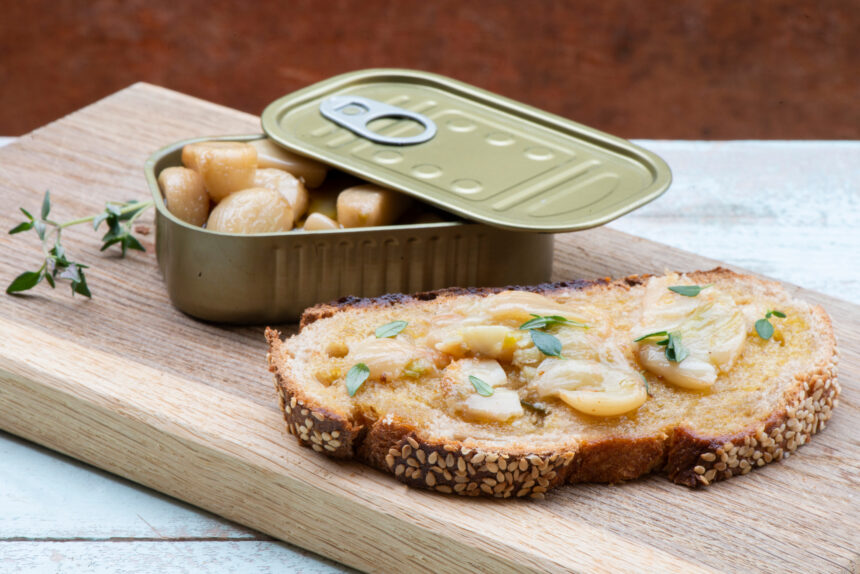
Garlic confit has earned its place as one of the most beloved and versatile preparations in a home cook’s repertoire, and for good reason. The process is simple, the results are deeply satisfying, and the applications are nearly endless. The one thing that has historically made it feel like a project is the peeling. Most recipes call for several full bulbs worth of cloves, and working through all of them by hand can turn an otherwise effortless dish into a tedious chore.
Pre-peeled garlic changes that entirely. It makes garlic confit genuinely accessible on any given weeknight, removing the only real barrier between you and a jar of something wonderful. For anyone who wants to prepare it in larger batches, having a bag of pre-peeled cloves on hand is not a shortcut. It is simply the smarter approach.
How to make garlic confit
The method is refreshingly unfussy. Start with at least two generous cups of peeled garlic cloves, arrange them in an oven-safe dish and pour enough olive oil over the top to fully submerge them. Bake at around 375 degrees Fahrenheit for 30 to 40 minutes. The confit is ready when the cloves yield easily to the gentle press of a fork or butter knife, soft and yielding all the way through.
From there, the flavour possibilities open up. Dried or fresh herbs added to the oil before baking will infuse the entire mixture with a deeper, more complex character. A few sprigs of thyme, a bay leaf or a pinch of crushed red pepper flakes can quietly transform the finished result depending on what you plan to use it for.
Garlic confit storage and safety
One important note before storing: garlic confit must be kept refrigerated at or below 40 degrees Fahrenheit and used within one week. Because garlic is a low-acid food submerged in oil, allowing it to sit at room temperature creates conditions where harmful bacteria can develop. Keeping it properly chilled eliminates that risk and ensures every spoonful is as good as the first.
How to use garlic confit
Once you have a jar ready in the fridge, the question becomes less about what to do with it and more about where to start. Spread it across a thick slice of bread and it becomes something close to a revelation. Stir it into mashed potatoes and the result is richer and more complex than anything butter alone could achieve. Swirled into hummus, it adds a mellow, roasted depth that makes a mezze plate feel considered rather than assembled.
The infused olive oil left behind is equally valuable. Use it as a base for salad dressings, drizzle it over roasted vegetables or use it to finish a bowl of soup. Nothing about it goes to waste.
Adjusting the herbs and spices to suit the final dish is where things get genuinely creative. Bold red pepper flakes work well when the confit is destined for pizza. Woody green herbs like rosemary or thyme are better suited to bread pairings or roasted meats.
A staple worth keeping stocked
The combination of slow-cooked garlic and quality olive oil is one of those rare things that improves nearly everything it touches. With a bag of pre-peeled cloves in the refrigerator and a good bottle of olive oil in the pantry, this is a condiment that can be made fresh almost any time the mood strikes.