New polling shows Minnesotans hold stronger views on Trump’s immigration agenda than the rest of the country
Most national debates about immigration policy play out at a comfortable distance for most Americans — on screens, in headlines, in conversations that feel abstract. Minnesotans, particularly those in Minneapolis and the surrounding metro, did not have that distance. They watched it happen in their neighborhoods, in real time, and new polling suggests the experience changed something.
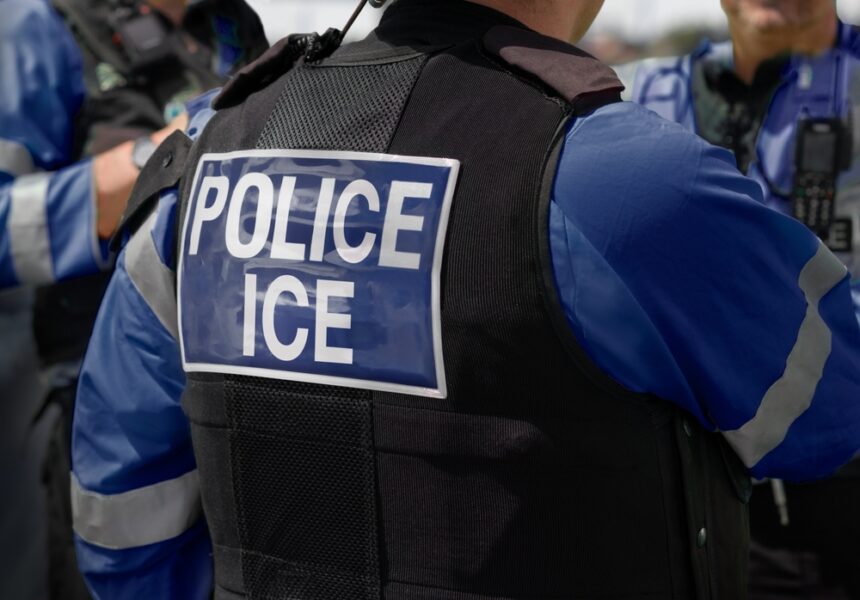
President Donald Trump’s immigration enforcement operation in Minneapolis — a deployment of more than 3,000 federal officers the administration called Operation Metro Surge — left behind a population with sharper, more entrenched views than adults nationwide on virtually every question related to immigration policy. Not just different views. Stronger ones, on both sides.
What the numbers actually show
Two polls conducted in late January and early February capture the shift clearly. Minnesotans were consistently less likely than national adults to land in the middle — the “somewhat approve” or “somewhat disapprove” category — on questions about the Trump administration’s immigration agenda. Instead, they clustered at the extremes. Strongly for. Strongly against. The gray area, already thin in national polling on immigration, nearly disappeared in Minnesota.
On the question of whether law-abiding citizens have nothing to fear from immigration agents, 34% of Minnesota adults strongly agreed — slightly above the 31% national figure. But 46% of Minnesota adults strongly disagreed, compared with 40% nationally. That gap reflects something more than political opinion. It reflects a community that watched two people die.
Two deaths that changed the conversation
In January, federal immigration officers shot and killed two U.S. citizens — Renee Good and Alex Pretti — in separate confrontations during the operation. Videos spread quickly on social media. Protests followed and continued for weeks. The killings became a focal point not just for those opposed to the administration’s approach but for supporters as well, each side drawing entirely different conclusions from the same events.
All but 1 to 2% of Minnesota adults reported having heard at least something about the immigration operation and the killings — a level of awareness roughly 10 points higher than among U.S. adults nationally. When nearly an entire state is paying close attention to the same thing, the opinions that form tend to be less ambiguous than those shaped by partial information from far away.
A state split — and a city split within it
Minnesota Republicans expressed stronger support for the Trump administration’s immigration actions than Republicans nationwide, a notable finding given that national Republican support was already high. But the data gets more granular than a simple partisan divide.
Republicans living in the Twin Cities metro — closer to where the operation, the protests and the shootings actually occurred — were three times more likely than Republicans in the rest of the state to say federal tactics had gone too far. Proximity, it turns out, does something to political certainty that cable news cannot replicate in the opposite direction.
Among Democrats and independents, the skepticism ran deep. More than three-quarters of Minnesota independents said ICE should be changed in some way — roughly half calling for reform and about a quarter calling for abolition. Nearly three-quarters of independents and nearly all Democrats said federal tactics had gone too far. A majority of independents also placed blame for clashes between protesters and federal officers on the Trump administration directly.
What this tells us about national debates played out locally
Minnesota independents still showed more support for the Trump administration than independents nationwide — about 10 points higher on approval of his overall job performance and his handling of immigration. That detail matters. This is not a story of a state that uniformly rejected what happened. It is a story of a state where everyone, regardless of where they already stood, moved further in the direction they were already heading.
That kind of polarization — where shared experience drives people apart rather than toward common ground — is not unique to Minnesota. But rarely does a single operation, in a single city, over a matter of weeks, produce data this clean about how it happens.