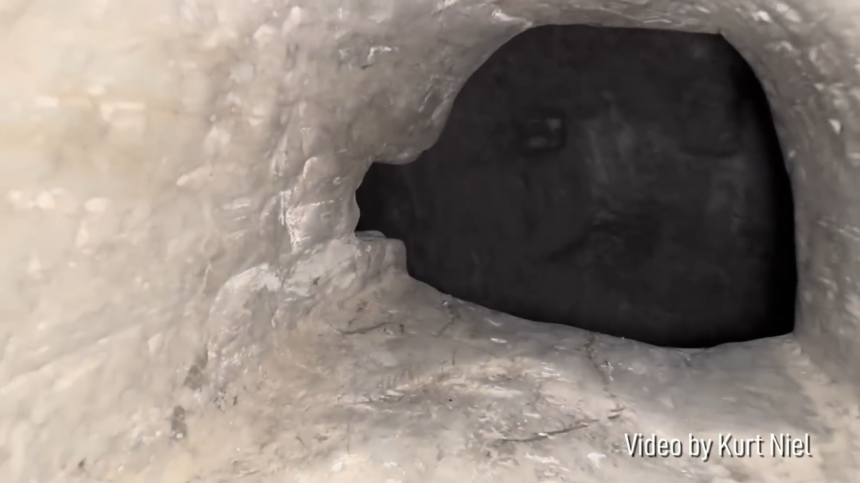
An erdstall with horseshoes, animal bones, and charcoal fires is fueling decades of debate about underground medieval purposes
Archaeologists in Germany discovered something genuinely mysterious in late 2025: a medieval tunnel system called an erdstall buried inside a Neolithic burial site near Reinstedt in Saxony-Anhalt. The Saxony-Anhalt State Office for Heritage Management and Archaeology documented the find at the end of 2025 and announced it publicly in January. What they unearthed a horseshoe, a fox skeleton, bones of small mammals, charcoal deposits, and large stones possibly sealing an entrance raises more questions than answers about medieval life and what these tunnels actually meant to the people who built them.
The name “erdstall” comes from Middle High German: erde meaning “earth” and stelle meaning “place.“ So basically it’s just “earth place,” which is spectacularly unhelpful for understanding what medieval people actually used these underground passages for. The tunnel at Reinstedt measures between one and 1.25 meters in height, 50-70 centimeters wide, and features a gabled, vaulted ceiling in some sections. It’s tight, deliberate, and clearly designed with specific purpose in mind. Thousands of similar tunnel systems have been discovered across Europe. Yet despite all that archaeological data, nobody can definitively say what they were for.
The artifacts found inside tell a strange story
A horseshoe suggests human habitation or use. The fox skeleton raises questions was it trapped inside? Did it die there naturally? The small mammal bones could be accidental or intentional. The charcoal layer at the tunnel’s lower levels is particularly intriguing. Archaeologists believe it was “short-lived, perhaps merely a source of light,” which suggests temporary use rather than sustained habitation. The large stones near one entrance appear to have been intentionally stacked as a seal, indicating someone wanted to close this tunnel off at some point.
Archaeologists also discovered a possible Bronze Age burial mound near the erdstall and Neolithic tomb, which complicates the timeline even further. So you’ve got a Neolithic burial site, a possible Bronze Age mound, and a medieval tunnel system all overlapping in the same location. That’s not just archaeology that’s a palimpsest of human activity across thousands of years, each layer using the same space for completely different purposes.
Theories about erdstall purpose range from practical to spiritual to downright strange
Some researchers thought they were hideouts or escape routes, like tunnels used by Jewish rebels during the Bar Kochba revolt. But archaeologist Lambert Karner rejected this in his 1903 book, arguing the tunnel design made such use impractical. Others propose they were “empty symbolic tombs” spiritual dwellings for ancestors awaiting the Final Judgment, erected by medieval settlers in their new communities. That’s an oddly poetic explanation: underground spaces literally designed to house ghostly presences.
Additional theories suggest initiation rituals, spiritual retreat spaces, or temporary storage for valuable goods during unstable periods. The absence of a second exit complicates the escape route theory how would you actually escape if there’s only one opening? The tunnel locations add to the mystery: basements of old farmhouses, near churches, cemeteries, or deep in remote forests. That geographic diversity suggests multiple purposes or multiple interpretations of the same purpose.
The reality is that medieval tunnel builders left zero instruction manuals, zero journals explaining intent, zero definitively datable materials inside the tunnels. Archaeologists are basically reading tea leaves from horseshoes and fox skeletons, constructing narratives about medieval life based on fragmentary evidence. The Reinstedt erdstall adds another data point to an unsolved mystery that’s been puzzling researchers for decades.
What we know: medieval people built these tunnels intentionally. What we don’t know: basically everything else about why they built them. That gap between knowledge and mystery is exactly what makes archaeology compelling.